Durham Cathedral From The River — History & Facts
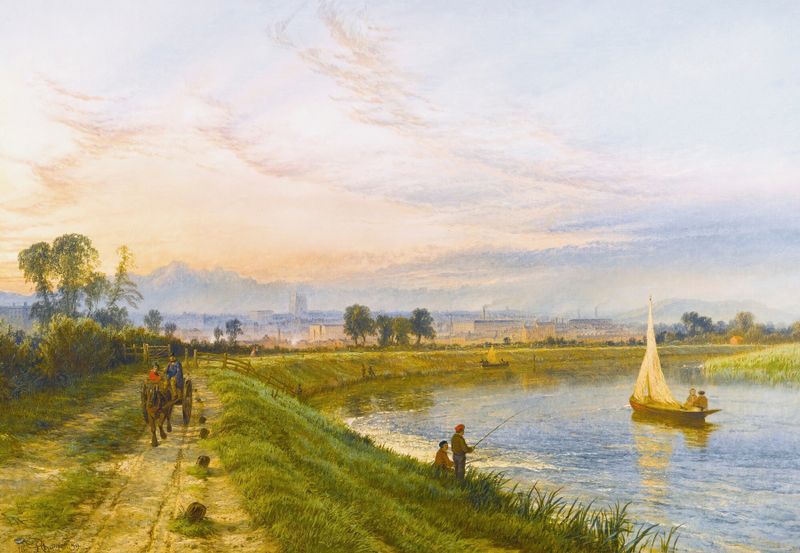
In the quiet of creativity, obsession often finds its voice, shaping landscapes that resonate with the heart. Begin your gaze at the sweeping banks of the river, where the gentle curve of the water beckons you. Notice how light plays upon its surface, reflecting the grandeur of the cathedral in the distance. The architecture rises majestically against the sky, its intricate details captured with a delicate precision that invites you to explore further.
The palette, a soothing blend of greens and blues, exudes tranquility, drawing you into a serene contemplation of nature and human ingenuity. As you delve deeper into the scene, consider the juxtaposition of the steadfast cathedral and the fluid river. The solidity of stone contrasts with the ephemeral nature of water, hinting at a dialogue between permanence and transience. Small ripples on the surface seem to mirror the unwavering presence of the ancient structure, suggesting that beneath the calm exterior lies an undercurrent of obsession — perhaps the artist's relentless pursuit to capture a moment that transcends time. Henry Dawson painted this piece in 1876, amidst a period of burgeoning artistic exploration in Britain.
Living in a time where the Pre-Raphaelites and Impressionists were redefining art, he sought to blend realism with a poetic touch. This painting emerged from his observations of the shifting landscape of Durham, reflecting both personal devotion and a broader artistic evolution that sought to immortalize fleeting beauty.