On the Ribble, near Preston, Harvest time — History & Facts
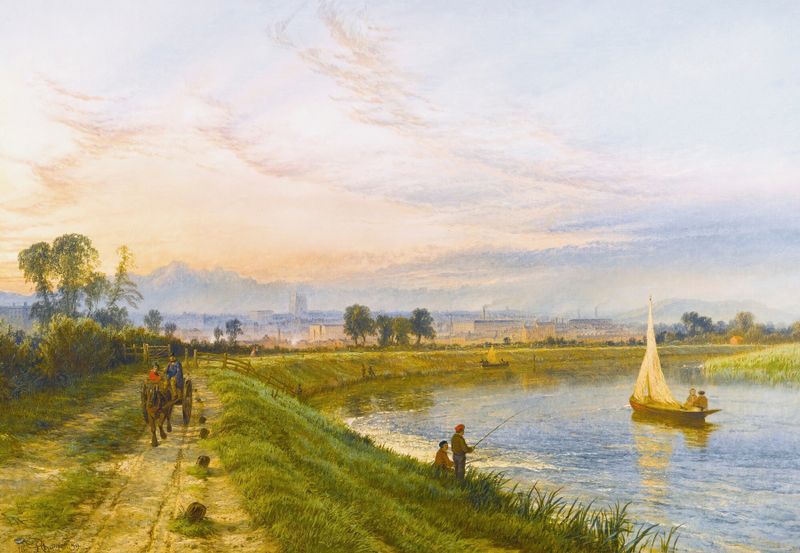
Is this a mirror — or a memory? The painting unveils a serene landscape that evokes a longing for simpler times, where nature and humanity intertwine in harmony. Look to the left at the gentle curve of the river, its surface shimmering in soft hues of blue and gold, reflecting the warm glow of autumn light. The distant hills, painted with a delicate touch, cradle the scene, while clusters of trees dot the landscape, their leaves kissed by the seasonal shift. The figures, small but significant, labor in the fields — their gestures a testament to the timeless cycle of harvest, each brushstroke capturing the weight of their toil and the fleeting beauty of the moment. Beneath the pastoral tranquility lies a deeper emotional current.
The contrast between the bright fields and the muted sky suggests an impending change, reminiscent of transitions in life. This duality speaks to the viewer's nostalgia, as we grapple with the passage of time. The intertwined lives of the figures and the land echo a universal longing for connection and continuity, inviting us to reflect on our own roots and the fleeting seasons of existence. In 1866, Henry Dawson painted this work amid a burgeoning interest in naturalism and landscape painting in Britain.
Living in a period marked by industrialization, he sought to capture the essence of rural life before it was irrevocably altered. This painting represents not only a moment in time but also a profound appreciation for the natural world, as Dawson innately understood the significance of preserving these quiet, fleeting glimpses of human life against the backdrop of an ever-changing society.