Dusk — History & Facts
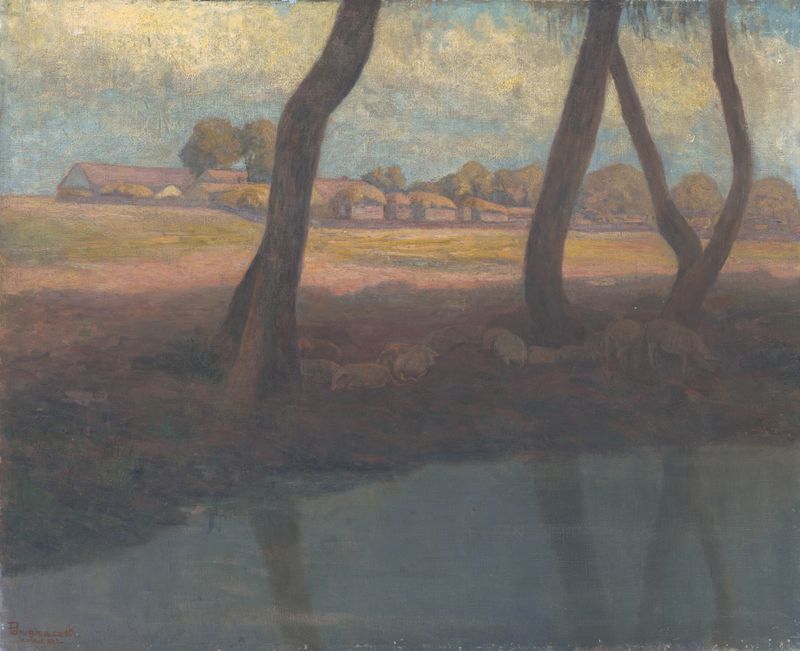
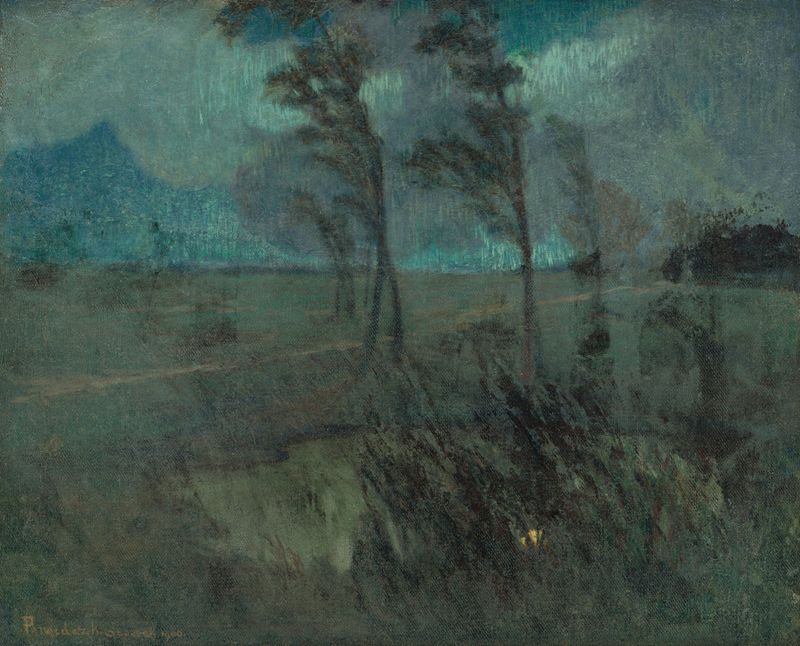
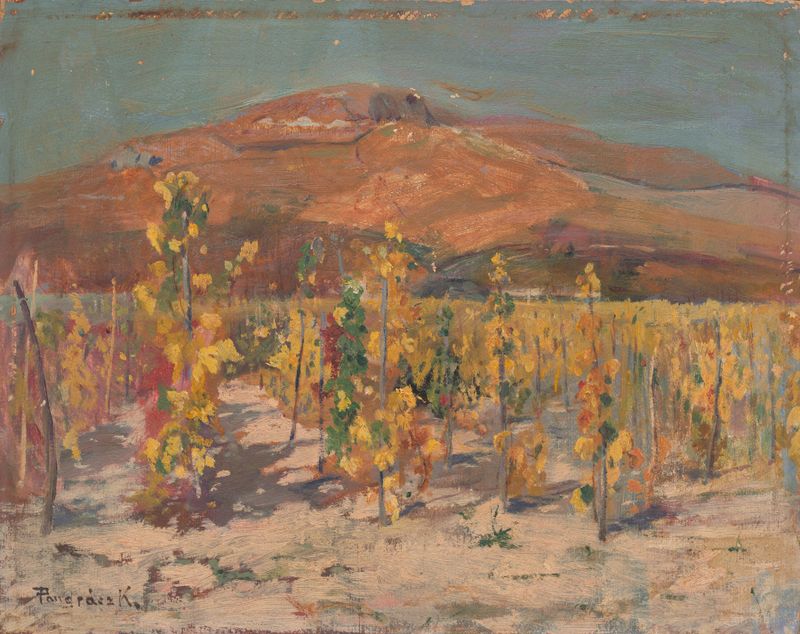
Where does light end, and longing begin? In Dusk, the interplay of shadow and illumination draws the viewer into a poignant exploration of transition and emotion. Look to the lower left corner, where the deep blues and purples of the sky meld seamlessly into the gentle, fading warmth of the horizon. Notice how the light softly caresses the edges of the landscape, accentuating the fine details of the trees and the undulating hills that rise and fall like whispers in the twilight. The artist’s brushstrokes create a shimmering quality, inviting you to linger in this moment of serene melancholy, where day surrenders to night. The emotional tension in the work is palpable.
The encroaching shadows seem to symbolize unfulfilled desires and the passage of time, while the last rays of sunlight evoke a sense of nostalgia. The contrast between light and dark serves not only as a visual element but as a metaphor for hope and despair, capturing the essence of fleeting moments that linger in our memories. Each element, from the delicate branches silhouetted against the sky to the gentle ripples of the distant landscape, speaks to the fragile beauty of existence. Karol Pongrácz painted Dusk in 1903 while living in Hungary, a time when his work was gaining recognition within the Symbolist movement.
The late 19th and early 20th centuries were marked by profound changes in society and art, as traditional values were challenged, and artists sought new forms of expression. In this context, Pongrácz's painting reflects not only his personal journey but also the broader artistic currents of his time, as he navigated the delicate balance between realism and the emotive power of color and light.