Village in Winter — History & Facts
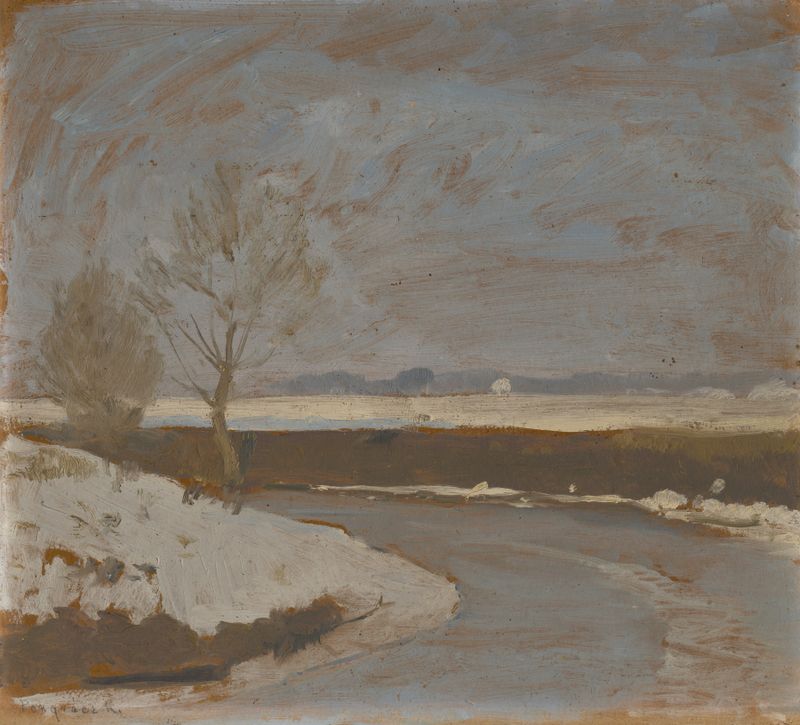
What if beauty was never meant to be finished? This question lingers in the stillness of a winter village, where the frozen landscape both captivates and evokes a sense of longing. Look at the center of the canvas, where soft snow blankets the rooftops of quaint houses, their shapes emerging like whispers against the backdrop of an iron-gray sky. The delicate brushstrokes create a sense of texture, allowing the viewer to almost feel the chill of winter air. Notice how the muted palette of whites and grays is interrupted by the warm browns of wooden structures, suggesting a hidden warmth within the stark beauty of the scene. Hidden within this tranquil depiction are layers of emotional tension.
The cold, quiet atmosphere invites contemplation, yet the cluster of houses hints at the warmth of community, suggesting an interplay between isolation and togetherness. The way the light filters through low-hanging clouds creates a paradox of hope amidst the harshness, reminiscent of the resilience found in human connection, even in the bleakest conditions. Created between 1920 and 1930, this work reflects the artist's deep engagement with rural life and the changing European landscape during a time of uncertainty. Working in the interwar period, he sought to capture the essence of daily life and its rhythms against the backdrop of a world grappling with the aftermath of war.
His focus on nature and community echoes the larger movements in art of the time, celebrating simplicity and the profound beauty found in the ordinary.