Dusk, Woodstock, New York — History & Facts
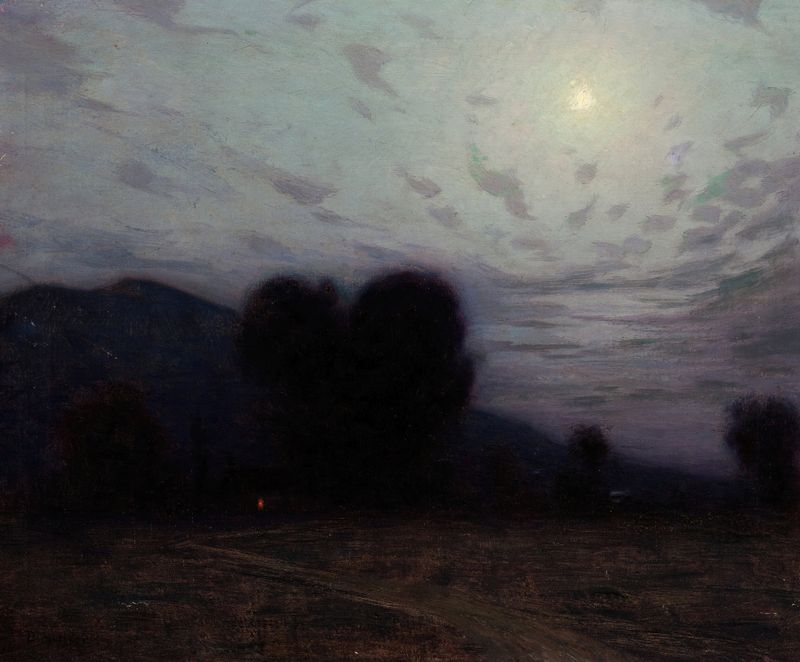
In the delicate twilight, time whispers softly, enveloping the quiet landscape in shades of blue and gold. Look to the horizon, where the sun dips low, casting a golden hue that softly kisses the treetops. Notice how the trees stand sentinel, their silhouettes rich with detail, each leaf a tiny testament to the day’s last light. The artist employs broad strokes and a muted palette, blending colors to evoke the fading warmth of dusk, inviting you into a tranquil embrace that feels both ethereal and fleeting. Here, in this serene scene, contrasts emerge: the vibrancy of the dying day against the encroaching night, the warmth of the earth meeting the coolness of the air.
Each color choice amplifies the sense of transition, while the gentle brushwork suggests a lingering moment suspended in time. The stillness of nature speaks volumes, reminding us of the beauty found in endings and the promise of renewal with tomorrow’s dawn. In 1910, the artist painted this evocative piece while living in Woodstock, a hub for artists escaping urban life. This era was marked by a burgeoning interest in American landscapes, as artists sought to capture their immediate environments with authenticity.
Harrison, influenced by the Tonalist movement, aimed to convey mood through color and light, reflecting the tranquility and beauty of the natural world in a transformative moment that resonates deeply within us.