Winter’s Cabin at the Curve — History & Facts
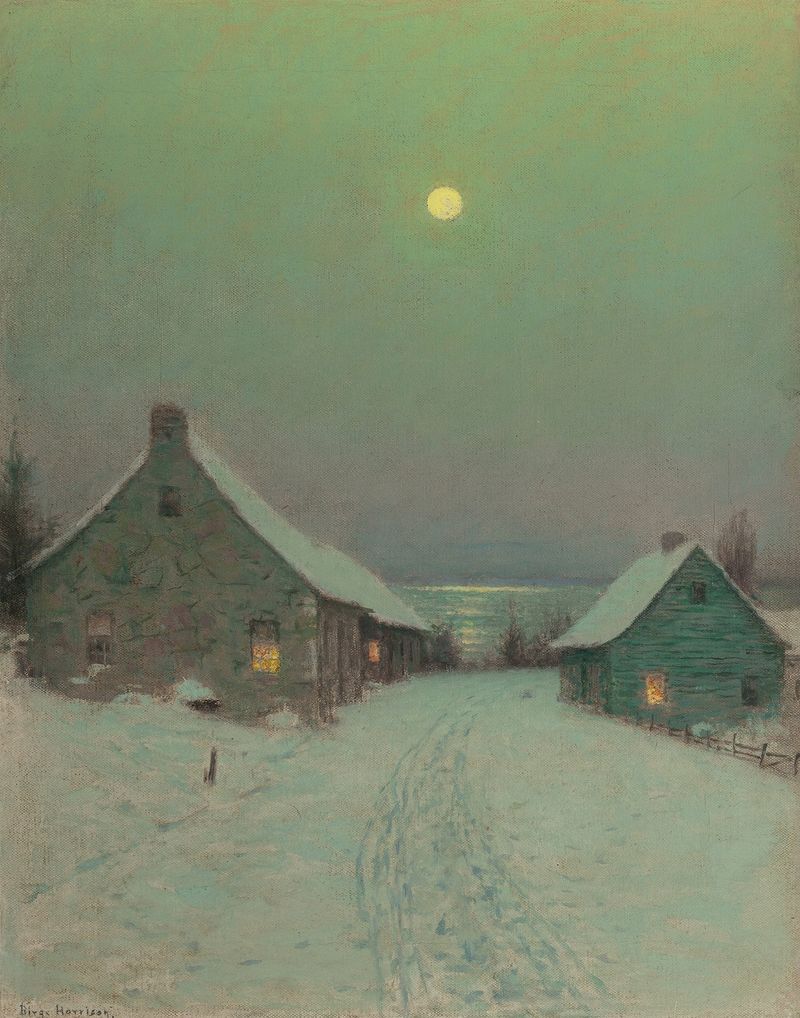
What if silence could speak through light? In the hush of winter, the quietude of a cabin sheltered in snow invites contemplation and balance. Focus on the soft, muted tones that dominate the canvas; the pale blues and grays create a serene yet palpable tension. Look to the center where the cabin stands, elegantly positioned against the backdrop of gently undulating hills. Notice how the light filters through the trees, casting delicate shadows that dance across the ground, suggesting the warmth of life within, while the thick layer of snow hints at the stark chill outside. Beyond the immediate scene, the contrasts invite deeper reflection.
The harmony of nature and man-made structure exists in a fragile equilibrium, with the cabin emblematic of a sanctuary amidst the harshness of winter. The gentle curve of the hills mirrors the curve of the cabin’s roof, symbolizing a perfect balance between the organic and the constructed. Each brushstroke breathes life into the scene, where tranquility meets solitude, encapsulating the essence of winter's embrace. Birge Harrison created this work during a period when American art was increasingly turning towards the celebration of nature and atmospheric effects.
Active in the early 20th century, he was part of the American Tonalist movement, seeking to capture the emotional responses elicited by landscape. The artist’s experimentation with light and color in this piece epitomizes both his personal exploration of balance and a broader cultural shift towards introspection in the face of a rapidly changing world.