Winter Sunset — History & Facts
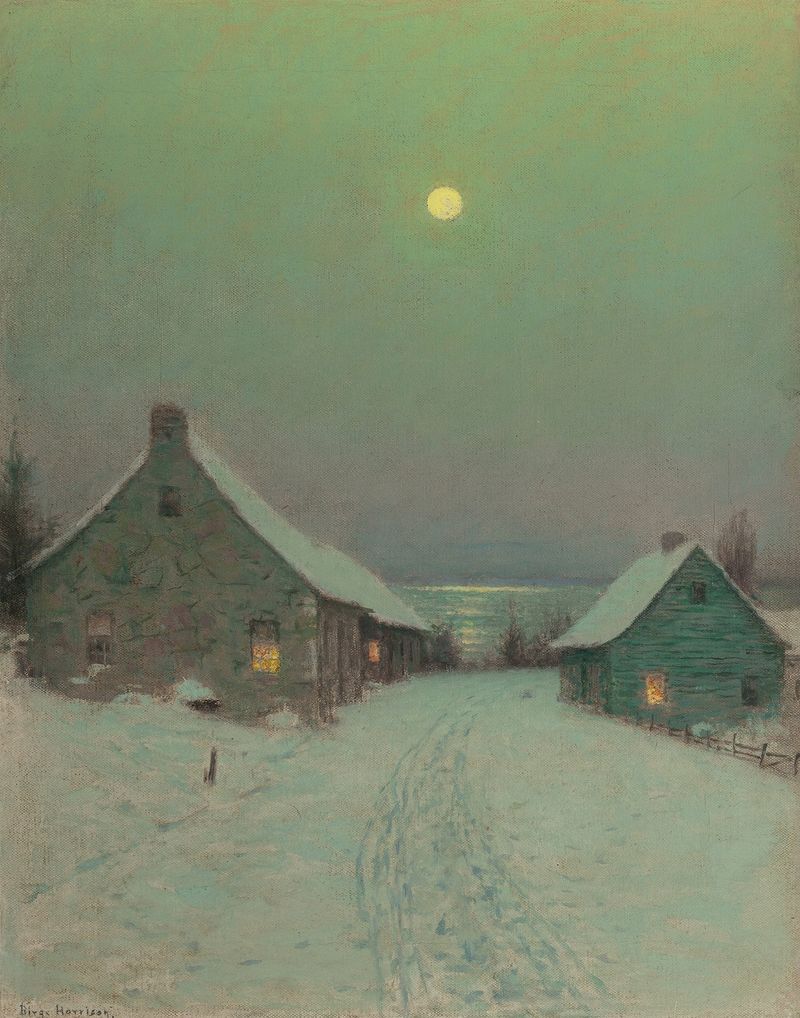
Could beauty survive in a century of chaos? In Winter Sunset, the answer resonates with an undeniable hope, inviting us to linger in the warmth of fading light amid a cold, stark landscape. Look to the horizon where the sun, a molten orb, gently dips behind the snow-blanketed trees. The soft brushstrokes of crimson and gold contrast sharply with the icy blues of the sky, drawing the viewer's gaze toward the horizon where day melts into night. The delicate interplay between color and light produces a serene yet dynamic atmosphere, as if time itself holds its breath in anticipation of the evening's embrace. Within the tranquil scene, contrast emerges: the chill of the winter landscape is juxtaposed with the warmth of the sunset, evoking a sense of calm in the face of inevitable darkness.
The silhouettes of barren branches stand resilient against the fleeting light, symbols of endurance amid the harshness of nature. Each stroke embodies a delicate balance of melancholy and beauty, suggesting that even in the coldest times, a glimmer of hope persists. In 1890, Birge Harrison was painting during a period of significant artistic evolution. Based in the United States, he was influenced by the Tonalist movement, which favored the harmony of color and atmosphere.
This was a time when artists were seeking to capture the nuances of light and emotion in nature, aiming to connect their inner experiences with the external world. As he painted Winter Sunset, Harrison found himself embracing the beauty of the natural landscape while subtly challenging the viewer to find solace amid the chaos of life.