Dutch Farm — History & Facts
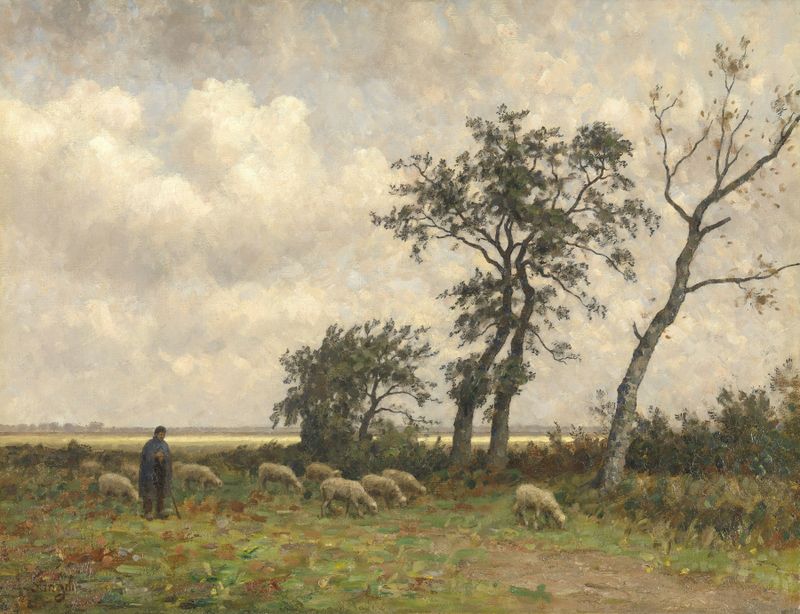
In the heart of serenity, the chaotic beauty of rural life finds its expression. The rural landscape, a canvas of vibrant colors, brings forth the madness of nature, lovingly tamed by the artist's hand. Look to the center of the composition where a peaceful farmstead emerges, nestled among rolling fields. The play of light captures the sheen of golden wheat, while deep greens swirl around, evoking a sense of life and abundance.
The brushstrokes possess a rhythmic quality, detailing the textures of the earth and the sky, imbuing the scene with a palpable vibrancy. Notice how the farmer's figure, though small against the vastness of the landscape, becomes the focal point, illustrating the harmony between man and nature. Beneath the surface, contrasts simmer; the idyllic farm represents the struggle of existence and the relentless cycle of labor. The juxtaposition of light and shadow hints at unseen burdens; the beauty of the landscape is tinged with the weight of toil.
Every stroke seems to echo the madness of the artist’s own experience—the blend of tranquility and turbulence mirrors the duality of rural life, where peace is often found amidst relentless efforts and unpredictable wildness. Created during an undefined period in the artist's life, this piece reflects the burgeoning interest in pastoral scenes that characterized much of the late 19th century. Stengelin, surrounded by the changing landscape of art and society, embraced the romanticism of rural existence, capturing both its tranquility and underlying chaos. At a time when industrialization threatened the essence of agrarian life, his work serves as a poignant homage to the enduring spirit of the countryside.