
Dutch Fishing Boats — History & Facts
What first catches the eye in Dutch Fishing Boats is the sweep of wind and water, the restless energy of the sea made visible in the churning waves and the taut, angled sails. The boats lean into the wind, their hulls riding low, while flags snap at their masts—each detail a signal of purpose and direction. Hulk’s brushwork animates the surface: the creamy foam at the bow, the play of sunlight on canvas and wood, the vast, cloud-filled sky that dwarfs the vessels below.
The low horizon draws the viewer’s gaze outward, giving the sky dominance and suggesting the endlessness of the sea. Every element in the composition seems to move, inviting us to imagine the salt spray and the calls of the crew. Works like this belong to a long tradition of Dutch marine painting, a genre shaped by the country’s intimate relationship with the water. In the nineteenth century, artists such as Abraham Hulk continued this legacy, capturing the working life of fishing fleets that were the backbone of coastal communities.
Paintings of this kind were often collected by prosperous merchants or displayed in civic spaces, serving as reminders of both livelihood and national identity. The precise date and medium of this work remain unrecorded, and history has kept few traces of its journey before joining the Art UK collection. Yet the scene still holds its charge: a record of daily labor, a testament to the enduring pull of sea and sky.
More Artworks by Abraham Hulk

A freshening breeze
Abraham Hulk
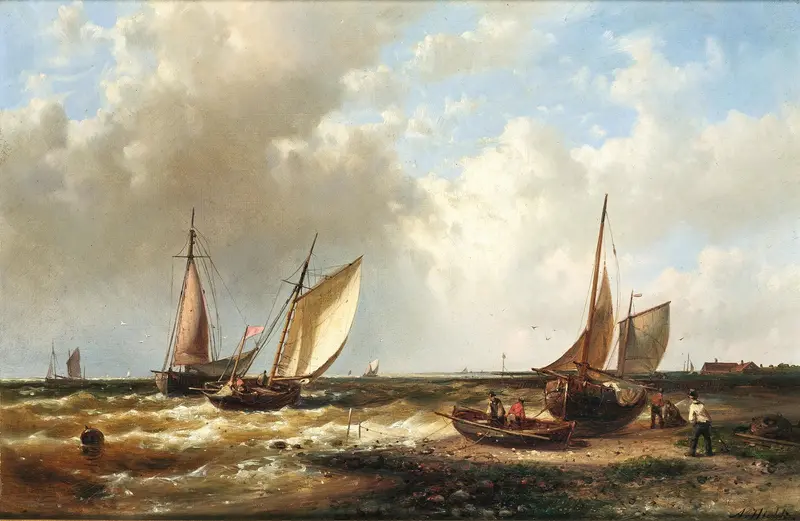
Fishermen at the Seaside
Abraham Hulk

Shipping off the coast
Abraham Hulk
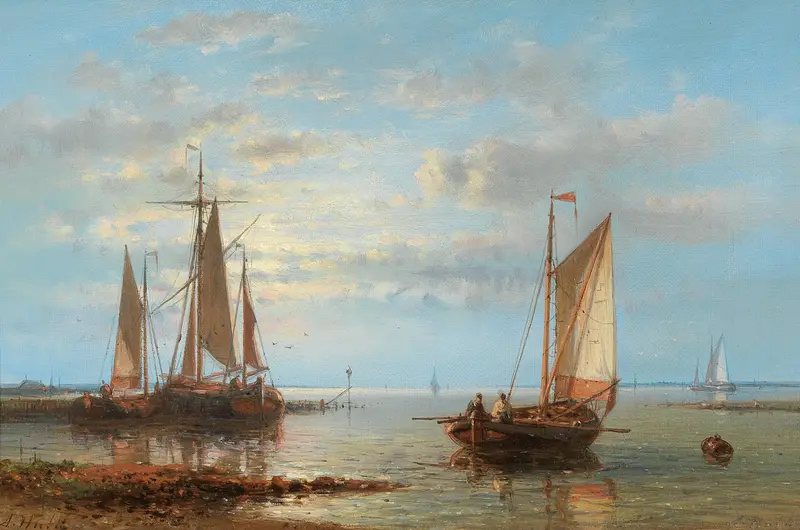
Sailing Boats on Rough Seas
Abraham Hulk
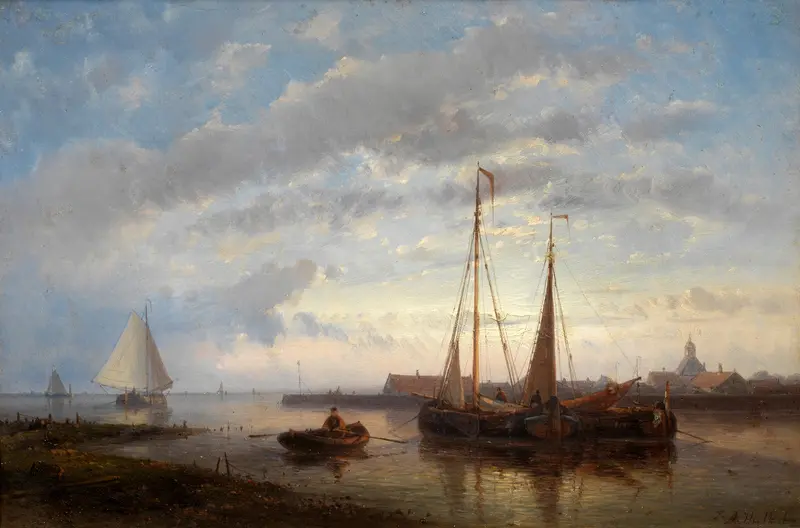
Fishermen at sunset
Abraham Hulk
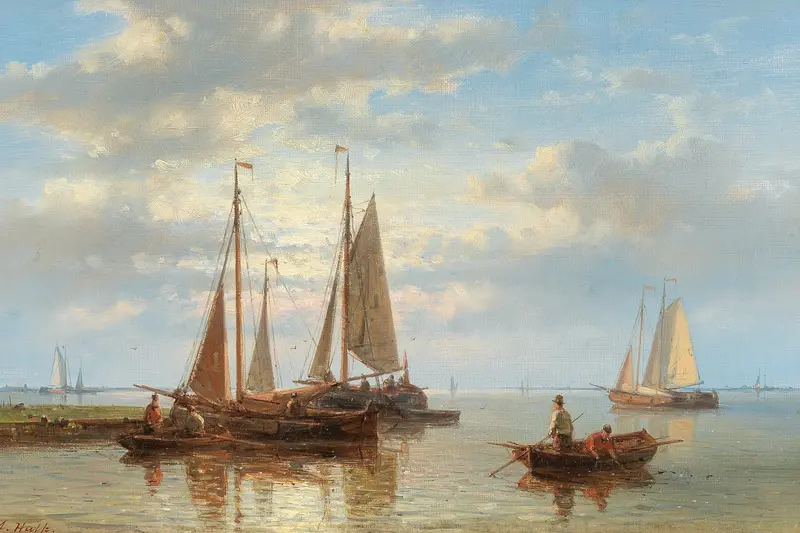
Sailing Boats On Rough Seas
Abraham Hulk
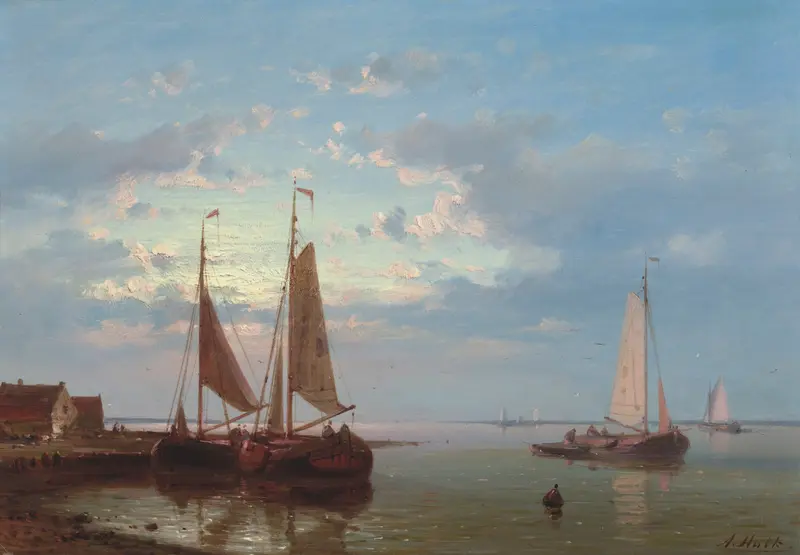
Fishing boats moored in a calm harbour
Abraham Hulk
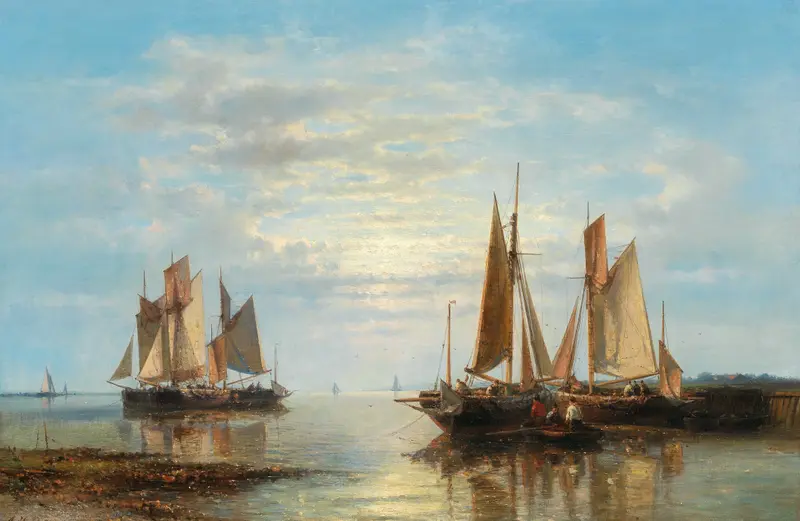
Sailing Boats On A Calm Sea
Abraham Hulk
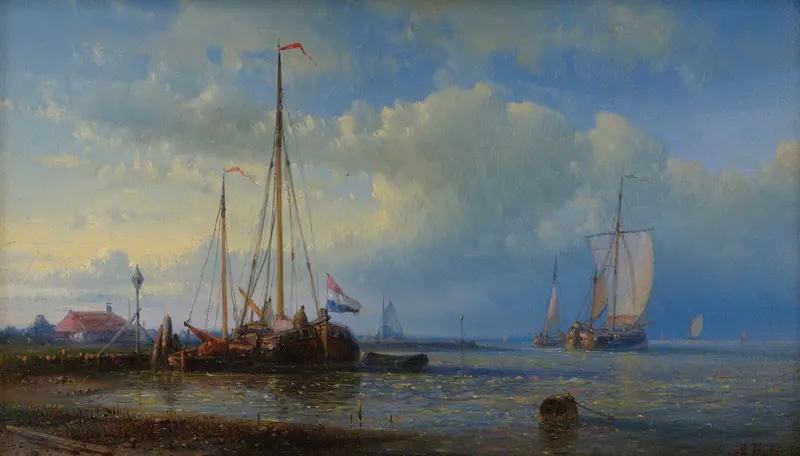
Seascape
Abraham Hulk
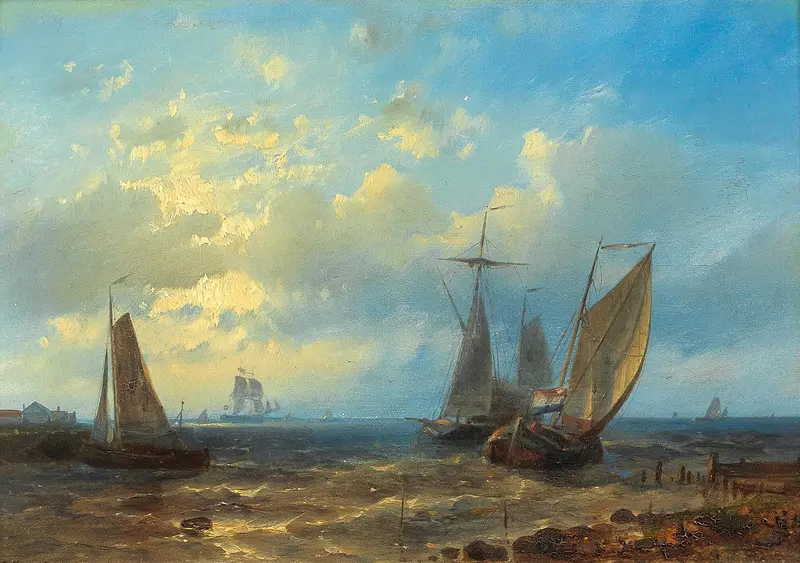
Fishing Boats By The Coast
Abraham Hulk





