
Dutch winter in the Gooi — History & Facts
In the quiet embrace of a winter's morning, each layer of paint pulses with the life of the landscape it depicts, capturing the essence of awakening amidst the chill. Look to the bottom right of the canvas, where delicate frost blankets the ground, each crystalline structure telling a story of nature’s resilience. As your gaze moves upward, the cool, bluish tones of the sky contrast with the warm hues of the distant houses, their chimneys sending wisps of smoke into the air, suggesting the presence of life within. The meticulous detail in the tree branches, heavy with snow, draws one into the depth of the scene, while the soft light highlights the serene beauty of a world that is both tranquil and alive. Beneath the surface, a tension exists between the stillness of winter and the promise of renewal.
The snow, while beautiful, also signifies a dormancy, hinting at the rebirth that spring will eventually bring. The winding path leads the viewer's eye through the scene, suggesting movement forward in a landscape that is otherwise frozen in time. This juxtaposition of stillness and potential echoes the human experience of waiting for change, reinforcing the painting's emotional weight. In 1828, Barend Cornelis Koekkoek painted this work during a period marked by a growing appreciation for Romanticism in the Netherlands.
The artist, then based in Hilversum, sought to capture the interplay of nature and emotion, aligning his work with a movement that emphasized the beauty and drama of the natural world. As he painted, the landscape of the Gooi region was emerging as a popular subject among artists, reflecting both a personal connection to the land and a broader cultural shift toward the sublime.
More Artworks by Barend Cornelis Koekkoek
Browse all →
Italian Landscape
Barend Cornelis Koekkoek
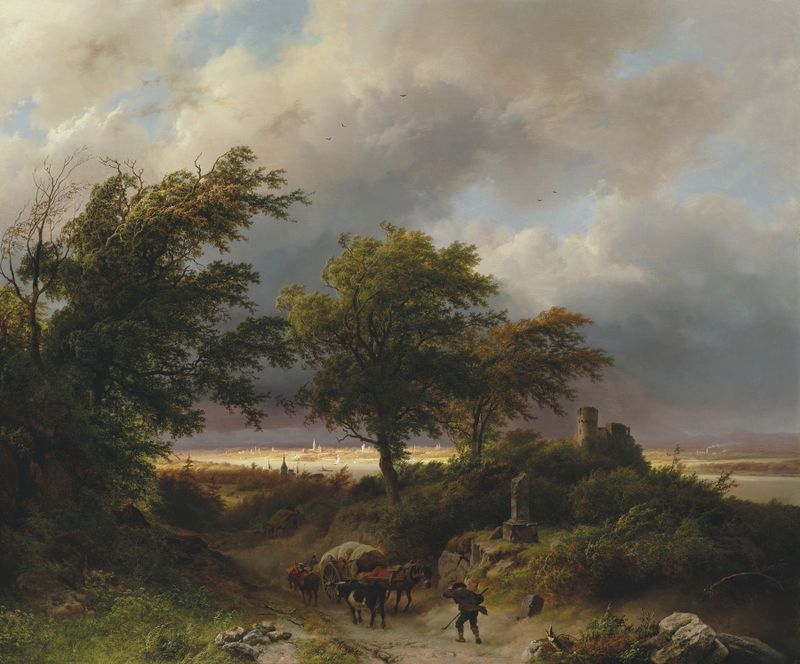
A wooded landscape
Barend Cornelis Koekkoek

Panoramalandschaft am Mittelrhein
Barend Cornelis Koekkoek
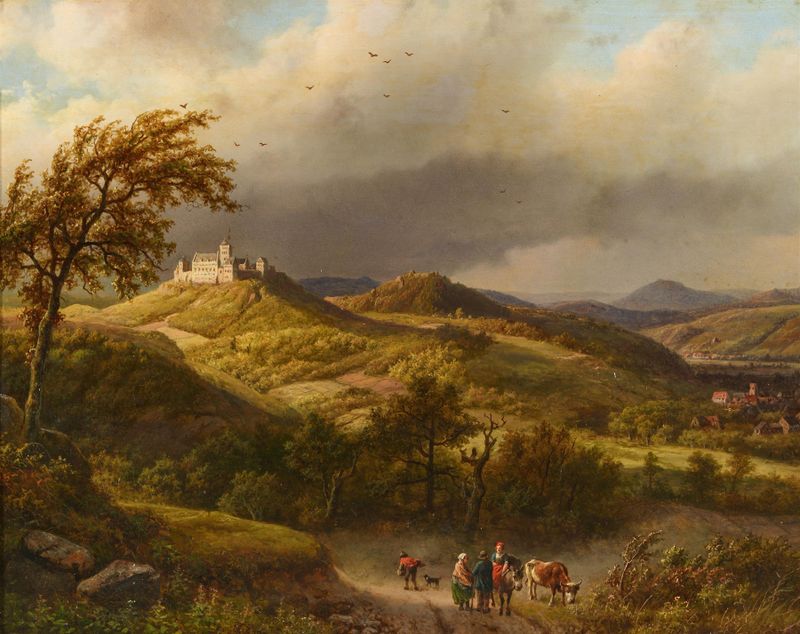
Die Wartburg bei Eisenach
Barend Cornelis Koekkoek
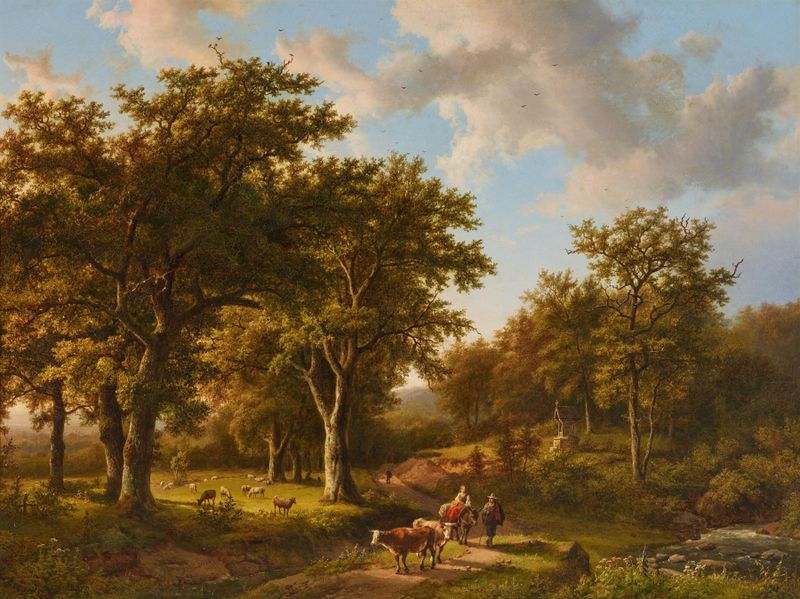
Waldlandschaft mit Hirten und Vieh
Barend Cornelis Koekkoek
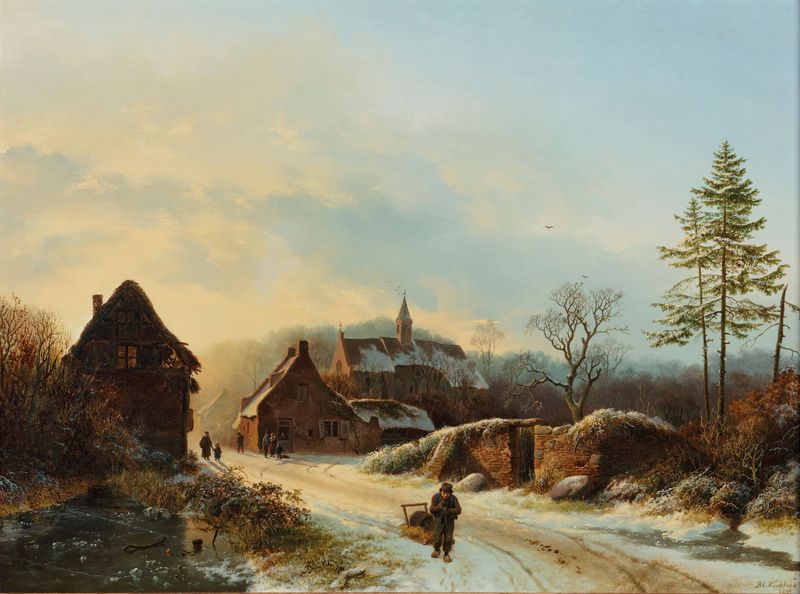
A winter’s day
Barend Cornelis Koekkoek

Travellers On A Road
Barend Cornelis Koekkoek
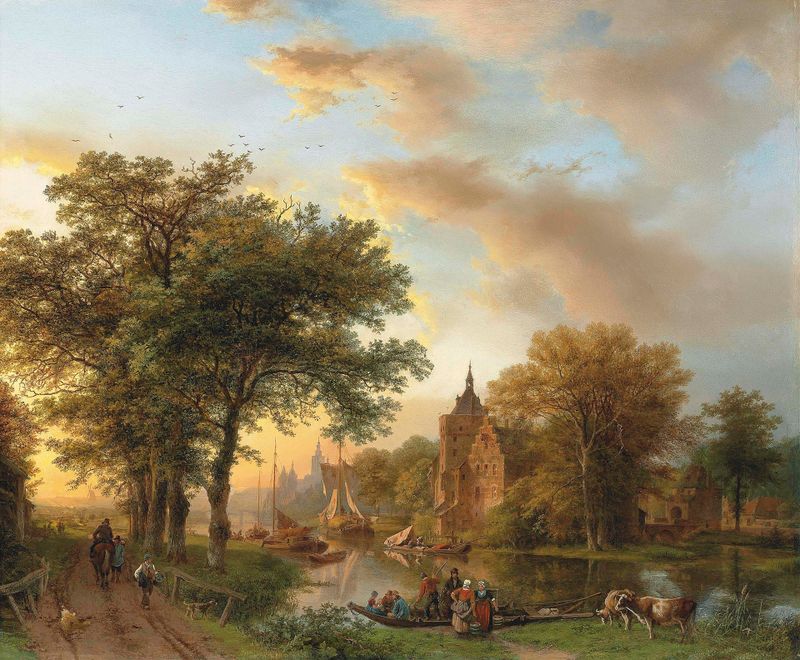
A River Landscape in Holland at Sunset
Barend Cornelis Koekkoek

A panoramic landscape with a view on the Middle-Rhine with a castle
Barend Cornelis Koekkoek
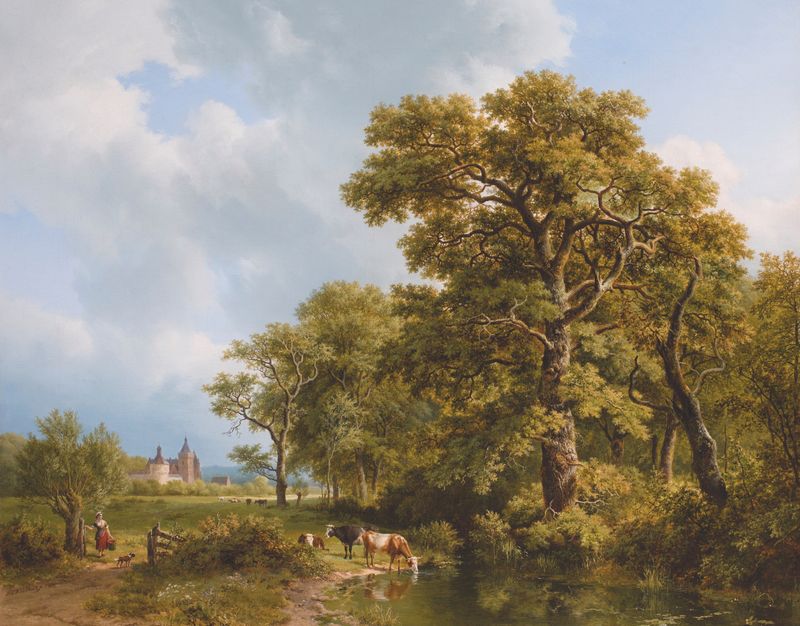
A Summer Landscape With cows Watering, A Castle In The Distance
Barend Cornelis Koekkoek





