Efterår i Søndermarken — History & Facts
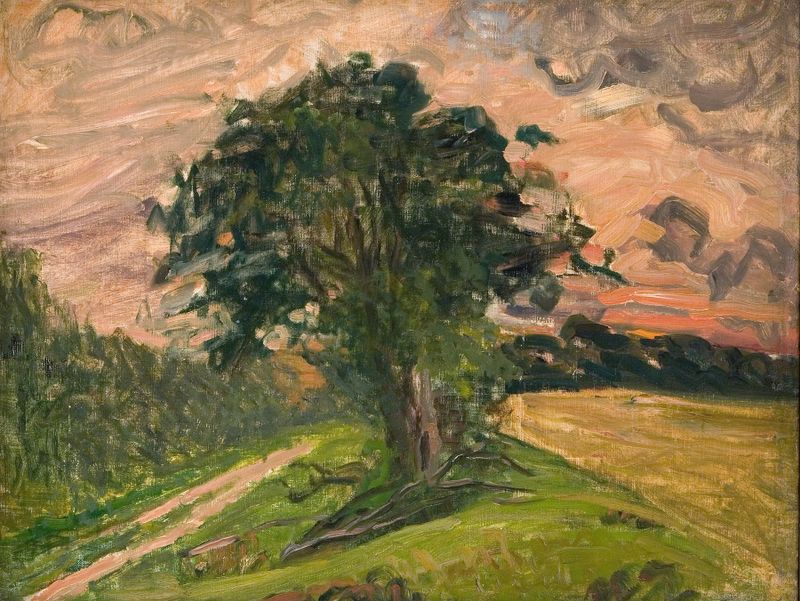
In the gentle embrace of autumn’s light, a quiet revelation unfolds, inviting introspection and reflection on the fleeting nature of time. Look to the vibrant palette that dances across the canvas, where warm ochres and deep russets dominate the scene. The scattered leaves whisper of change, while the soft, diffused light emanates a sense of tranquility. Notice how the illumination filters through the canopy, casting ephemeral shadows that seem to hold their breath, emphasizing the stillness of the moment.
The composition draws the viewer’s eye towards the path winding through the trees, hinting at both a physical and metaphorical journey. Within this serene landscape lies a profound emotional tension. The contrast between the vibrant foliage and the impending chill of winter evokes a bittersweet awareness of life’s transience. Each fallen leaf on the ground symbolizes a lost moment, while the light that bathes the scene offers a fleeting glimpse of hope and warmth.
This duality stirs a complex resonance, prompting a meditation on what is cherished and what is inevitably left behind. In 1885, Albert Gottschalk painted Efterår i Søndermarken during a period marked by a shift towards more personal and intimate landscapes in Danish art. Living in Copenhagen, he was influenced by the natural beauty surrounding him, as well as the burgeoning Impressionist movement that inspired artists to capture ephemeral moments. This artwork reflects both his mastery of light and his deep connection to the changing seasons, encapsulating a moment that speaks to the heart of human experience.