Lyngbyvejen ved Vintappergården — History & Facts
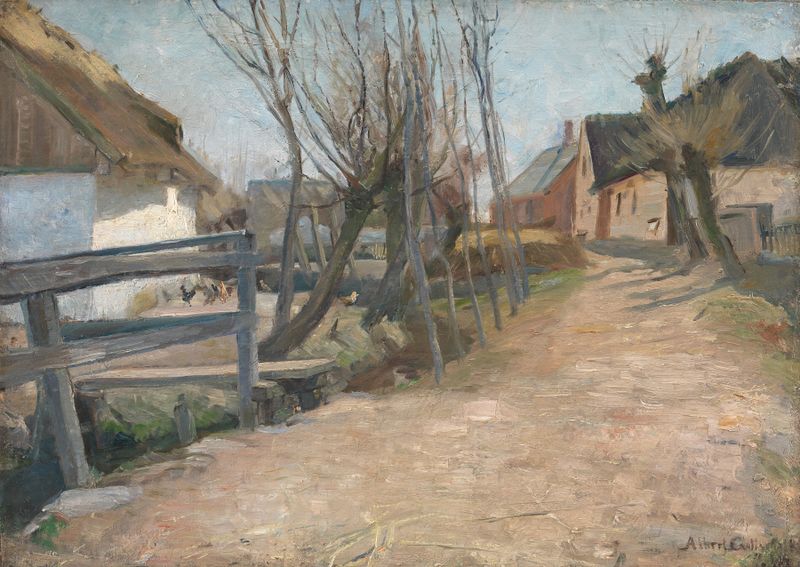
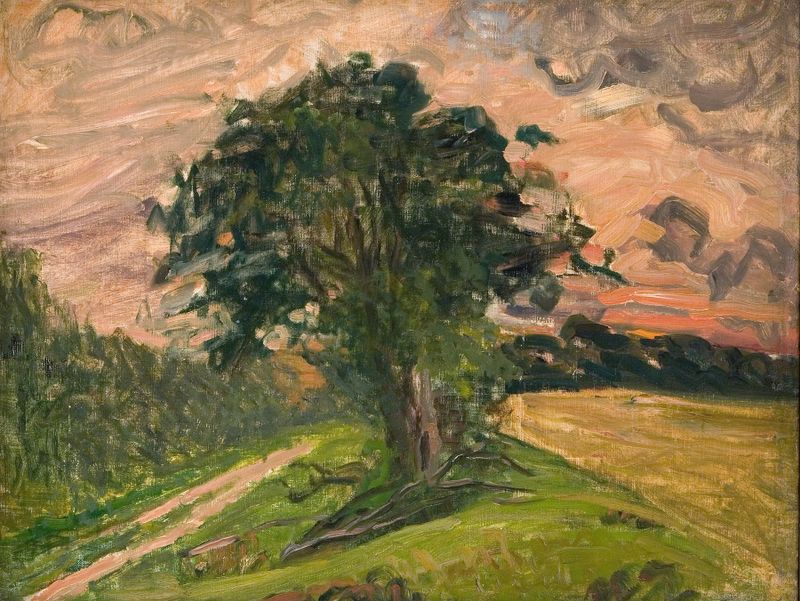
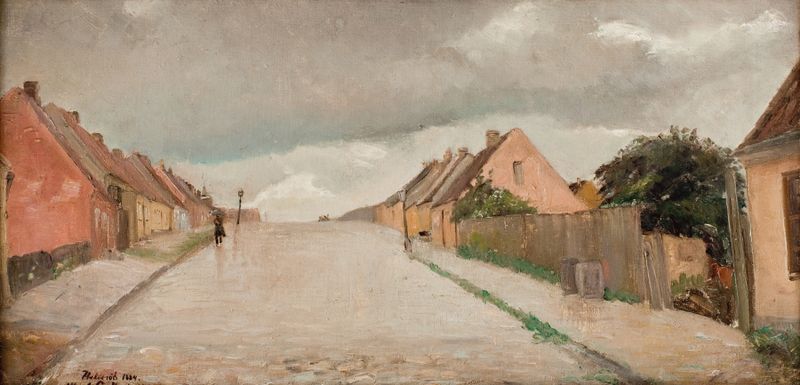
In the quietude of nature, faith whispers through the brushstrokes, inviting us to pause and contemplate the unseen. Look to the left at the soft, undulating hills that cradle the scene, bathed in warm, golden light. The meandering road, a subtle pathway through the landscape, beckons our gaze further into the embrace of the trees, their rich greens contrasting beautifully with the gentle blues of the sky. Notice how the artist employs a delicate balance of color and light, creating a serene atmosphere that reflects both the tranquility of nature and the depth of introspection. As the viewer, you might sense the harmony between the vibrant foliage and the muted tones of the earth, suggesting a deeper connection between humanity and the divine.
The play of light filtering through the leaves serves not only as a visual delight but also as a metaphor for faith—illuminating paths in moments of uncertainty. Small details, like the wisps of clouds or the distant figures along the road, symbolize journeys both literal and spiritual, challenging us to consider our own paths of belief and trust. In 1902, while painting this landscape, the artist was immersed in the burgeoning Danish art movement that sought to blend realism with impressionistic influences. Living in Denmark, Gottschalk was influenced by the natural beauty surrounding him, which fueled his desire to capture the ephemeral qualities of light and color.
This period was marked by a return to nature and a contemplation of life's simplicity, reflecting both personal exploration and broader shifts in the art world.