Winter Landscape. Utterslev near Copenhagen — History & Facts
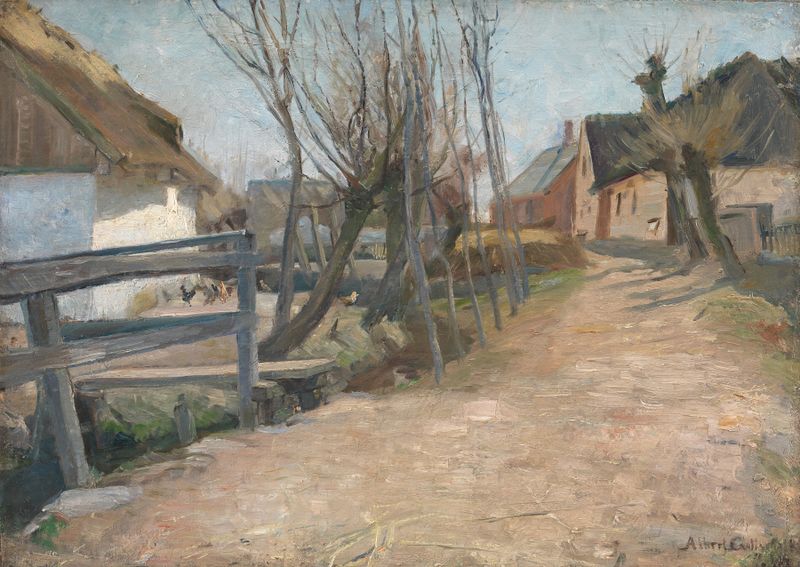
In the quiet of winter, the heart longs for warmth, just as the landscape yearns for the sun's caress. Each stroke captures a moment suspended in time, inviting reflection on what lies beneath the surface of stillness. Look to the left, where a soft expanse of snow blankets the ground, shimmering under a pale light that resonates with the chill of the air. Notice how the trees, stripped of their leaves, stand like sentinels against the pale blue sky, their silhouettes etched in delicate lines.
The muted palette of whites and soft blues is punctuated by hints of earth tones, suggesting life hidden beneath the frost. The composition draws your gaze towards the horizon, embodying a sense of both isolation and freedom. Yet, beneath this serene facade, there lies a poignant contrast. The starkness of the barren trees speaks to loneliness, while the horizon's suggestion of distance embodies hope and possibility.
The layering of textures evokes a palpable tension between despair and the anticipation of spring’s return, a reminder of the cyclical nature of longing and fulfillment. Here, the landscape mirrors the human experience, providing a space for contemplation. Albert Gottschalk painted this work during a time of personal introspection and artistic exploration in the early 20th century, likely while residing in Denmark. The period was marked by a growing interest in capturing evocative emotions through natural scenes, reflecting broader trends in Nordic art.
His focus on the winter landscape not only showcases his technical skill but also serves as a meditative expression of both his inner world and the changing seasons around him.