Tidlig forårsdag i Glostrup — History & Facts
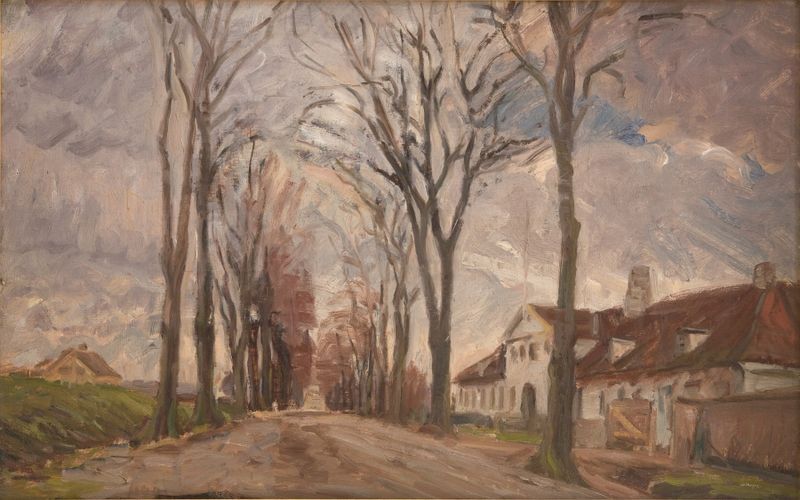
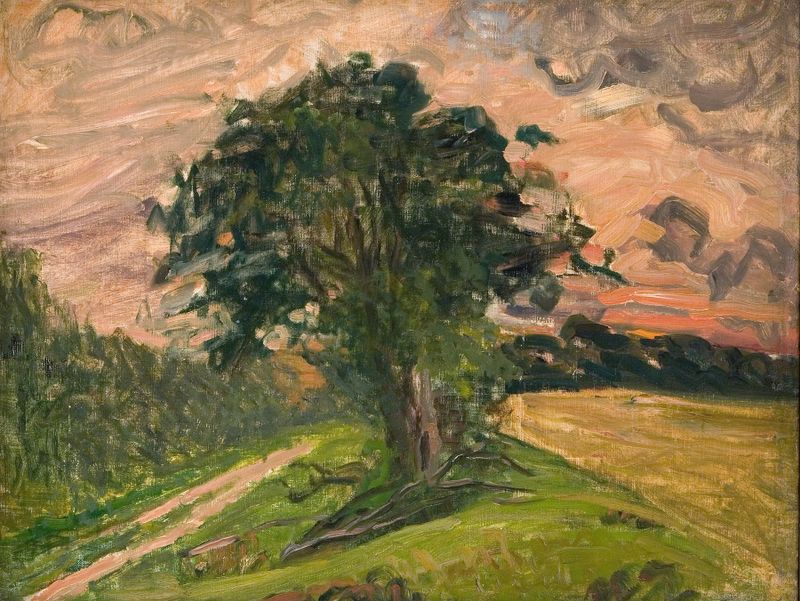
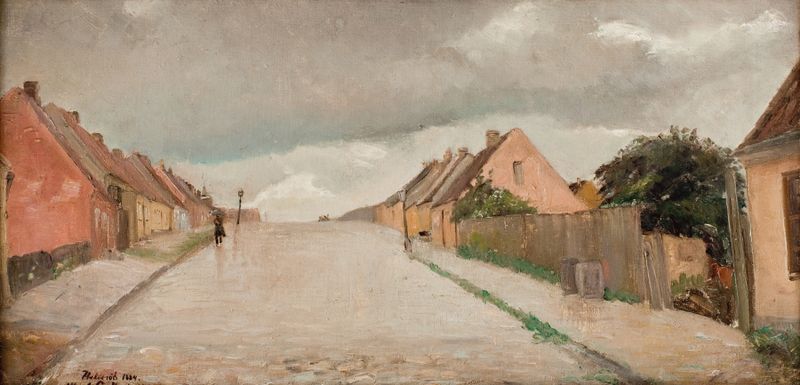
Who listens when art speaks of silence? In Tidlig forårsdag i Glostrup, quietude becomes a profound dialogue between nature and the viewer, inviting an introspection that reaches deep within the soul. Look to the soft hues that define the landscape, where early spring awakens with gentle greens and tender blues. The painting's composition draws your gaze across the meandering path, leading you into the embrace of blossoming trees and sprawling fields. Notice how the light filters through the foliage, casting delicate shadows that enhance the serene atmosphere, each brushstroke a testament to the artist’s mastery over color and form. Yet, beyond the tranquil beauty lies a deeper resonance.
The juxtaposition of budding life against the stillness of the scene evokes a sense of hope and renewal, while the absence of human figures prompts contemplation on isolation and connection with nature. The soft, almost ethereal quality of the landscape invites the viewer to ponder the fleeting nature of time and the silent stories held within the earth's embrace. In 1887, during a pivotal period in Danish art, Albert Gottschalk painted this work in Denmark, amidst a burgeoning interest in naturalism and impressionism. He sought to capture the ephemeral beauty of everyday scenes, reflecting a broader cultural shift towards depicting the ordinary with profound depth.
This artwork emerged during a time of personal and artistic exploration for Gottschalk, aligning with a growing appreciation for the subtleties found in the natural world.