Ein Durchgang im Inneren der Grabeskirche in Jerusalem — History & Facts
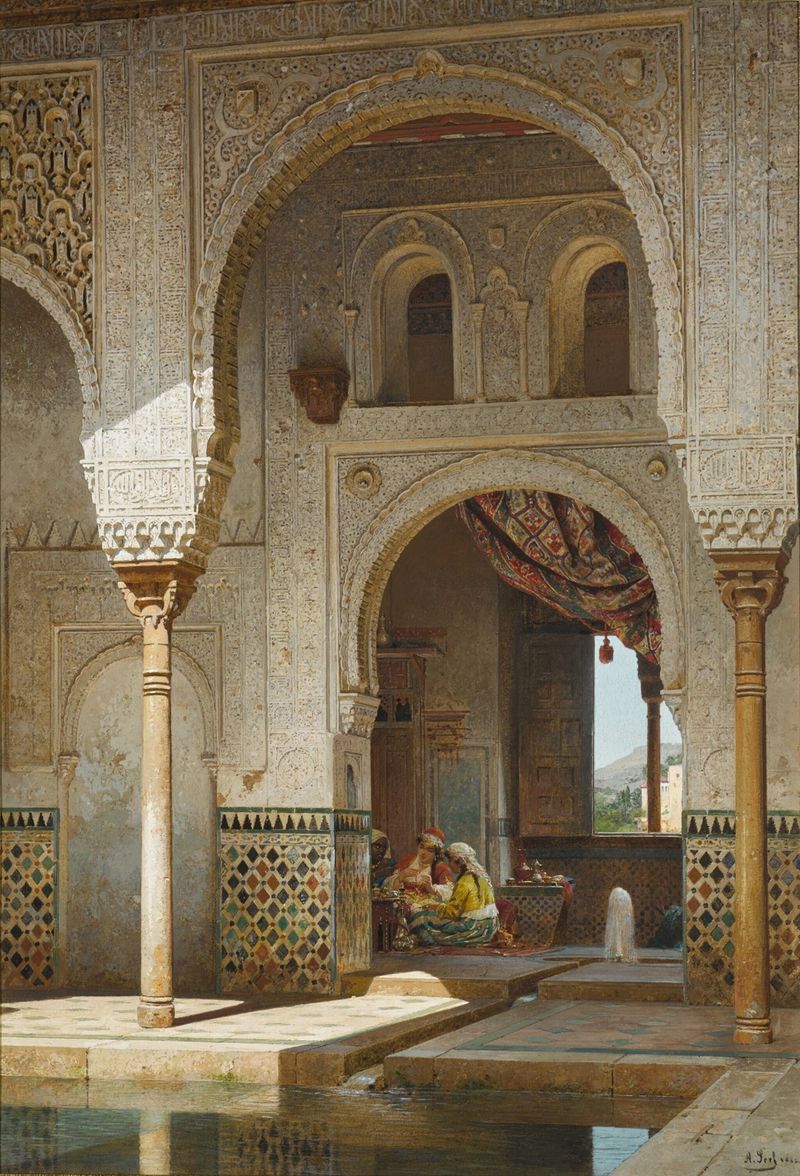
Could beauty survive in a century of chaos? In the quiet recesses of a sacred space, one can sense an overwhelming obsession with the moment captured, a testament to a world teetering on the brink of uncertainty. Look to the center of the composition, where the intricate arches draw the eye upward, creating a sense of grandeur. Notice how the light filters through the stained glass, casting vibrant hues that dance upon the stone surfaces. The careful brushwork reveals textures, from the weathered stones to the soft, subtle shadows that hint at the passage of time.
Each element is meticulously rendered, inviting contemplation about the interplay between human artistry and divine architecture. As you explore further, hidden meanings emerge. The juxtaposition of deep shadows and luminous highlights suggests a battle between despair and hope, evoking the spiritual turmoil of the era. The figures that populate the scene appear both reverent and distant, symbolizing the human quest for connection amidst the overwhelming weight of history.
This echoes the obsession with faith and identity that permeated the 19th century, offering a glimpse into the soul of a turbulent age. Created in 1874, this work emerged during a time when Adolf Seel was deeply engaged with capturing religious and historical themes in his art. Living in Germany, he was influenced by the Romantic movement, which celebrated the emotional experience and spirituality. This piece reflects his exploration of sacred spaces during an era marked by industrialization and unrest, highlighting the enduring quest for beauty even in the face of chaos.