Spanischer Innenhof — History & Facts
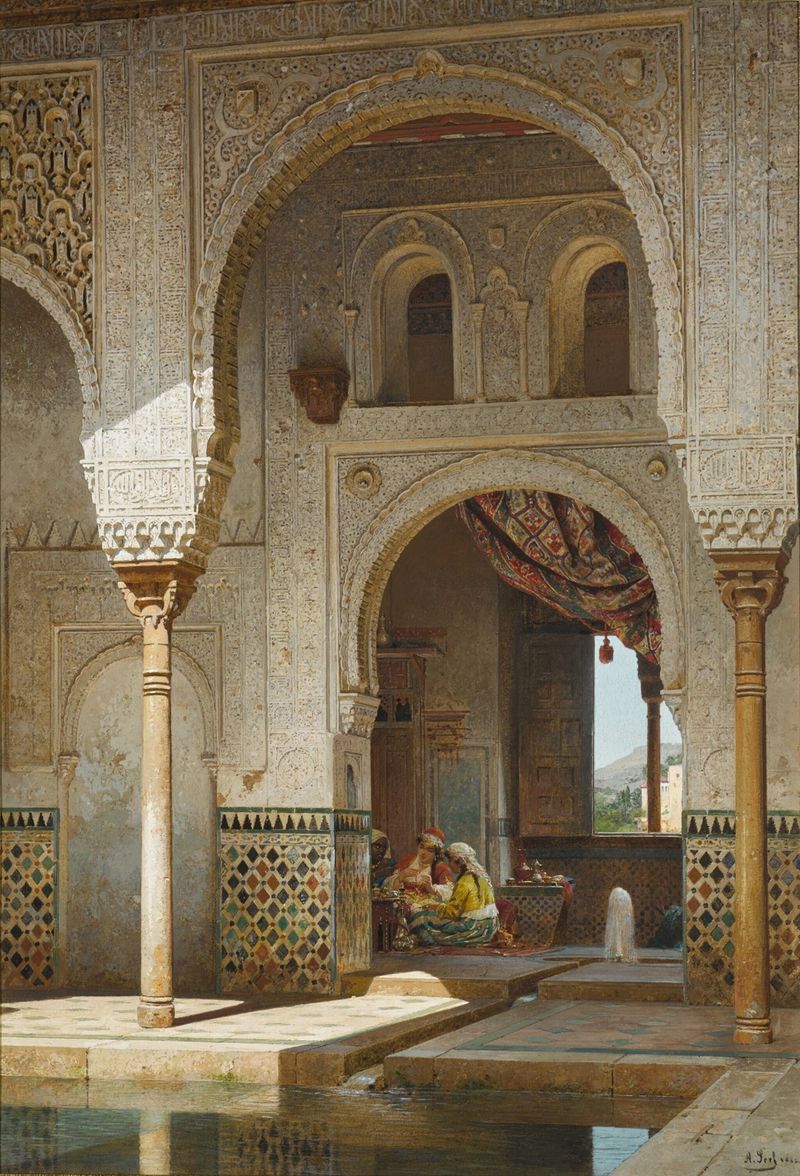
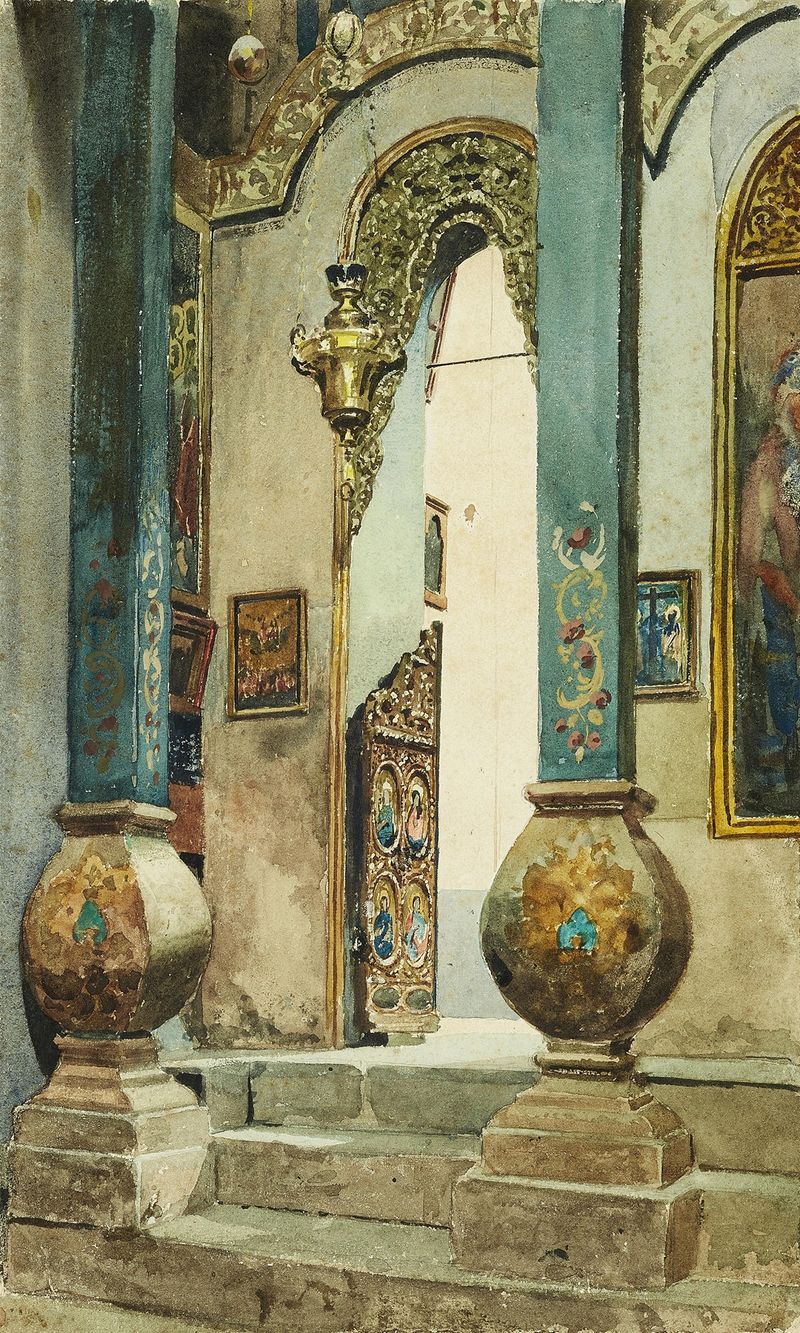
In the quiet recesses of memory, vivid hues whisper stories untold, longing to rekindle a sense of place and time. Look closely at the interplay of light and shadow, where the warm terracotta walls of the courtyard invite you in. Notice how the soft, dappled sunlight filters through the delicate foliage above, casting intricate patterns on the ground. The gentle yet rich palette of earthy tones exudes both warmth and calm, creating a serene atmosphere that invites contemplation. Within this tranquil space, contrasts abound—between the solid permanence of the architecture and the ephemeral dance of light, between the vibrancy of life and the stillness of a moment frozen in time.
The single potted plant stands as a symbol of resilience amid the starkness of the stone, while the empty benches suggest a narrative of absence, evoking memories of those who might have once gathered here, sharing laughter and dreams. Created during a time of artistic exploration in the late 19th century, the work reflects Adolf Seel's fascination with capturing everyday beauty. Living in Germany and influenced by the burgeoning Impressionist movement, he sought to bridge the gap between reality and the ethereal quality of memory within his art, capturing not just the scene, but the resonance of life imprinted in every corner of the courtyard.