Einem verwundeten Offizier wird die letzte Ölung erteilt 3617 Kunsthistorisches Museum — History & Facts
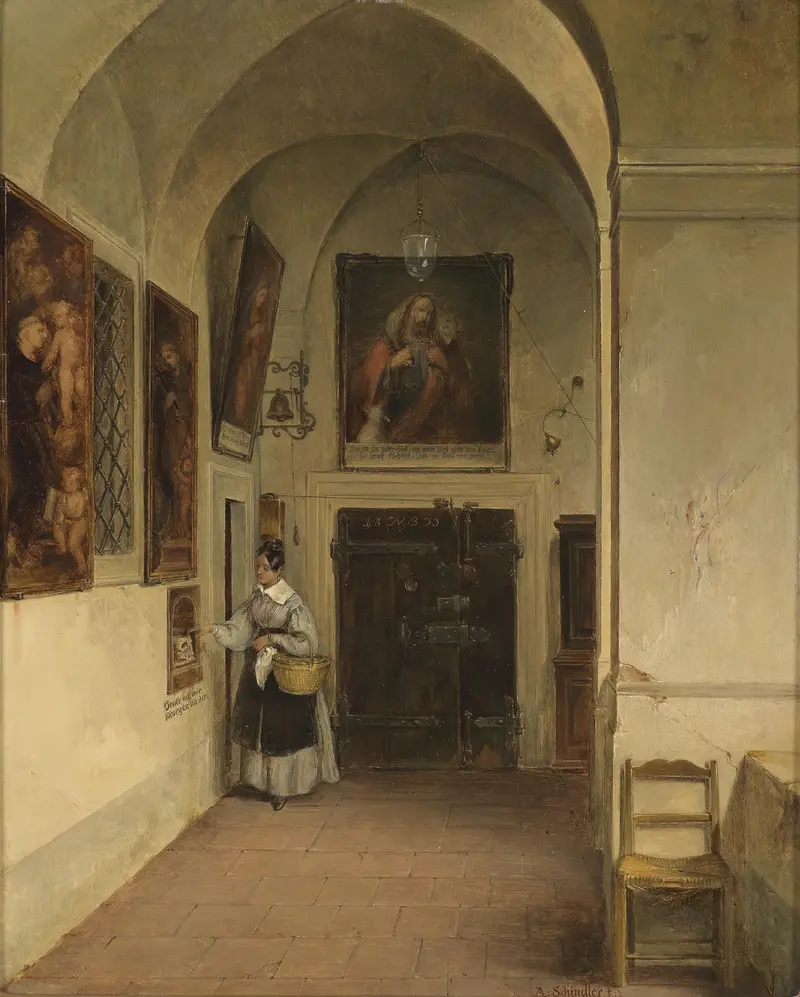
What first grips the viewer in Einem verwundeten Offizier wird die letzte Ölung erteilt by Albert Schindler is the hush that seems to settle over the humble interior, as if time itself pauses for the ritual unfolding at the bedside. The eye is drawn to the wounded officer, propped up by a companion, his pallor and limp hand signaling the gravity of the moment. The priest bends close, offering the sacrament with a chalice that catches the light, while a young altar boy kneels, his small lantern illuminating the shadowed floor.
The composition funnels our gaze down the corridor, but always returns us to the fragile exchange at the center, where the drama is not in movement, but in the solemn stillness and the quiet gestures of care. Painted in 1834, this work belongs to a time when scenes of everyday heroism and private faith were finding their way into art, reflecting a growing interest in the dignity of ordinary lives and the rituals that mark their passages. In the early nineteenth century, such images were often commissioned for private devotion or to honor the values of duty and compassion, especially in the aftermath of war. The careful rendering of the architecture, the objects on the windowsill, and the interplay of warm and cool tones speak to a world that prized both narrative detail and emotional truth.
Today, the painting resides in the collection of the Kunsthistorisches Museum, a quiet testament to the way art can hold a moment of farewell, inviting us to look again and find the story in a single gesture.