
Im Klostergang — History & Facts
What draws the eye first in Im Klostergang is the quiet choreography of daily charity, caught in a shaft of gentle light. A woman stands alone in a vaulted corridor, her hand extended toward a small opening in the wall—a turnstile for alms or offerings, perhaps, or a way to deliver food unseen. Her white collar and apron glow against the muted ochres and browns of the stone, drawing us into her world of silent duty.
Around her, religious paintings hang in careful order, their sacred scenes watching over this moment of humble exchange. The artist leads us from the shadowed foreground to the illuminated act at the heart of the picture, then upward to the compassionate gaze of a saint or Christ above the door, as if blessing the work below. Painted by Albert Schindler by 1861, this scene belongs to a tradition of 19th-century genre painting that found poetry in the rituals of ordinary life, especially within the cloistered walls of religious institutions. Such works were often commissioned or collected by the rising bourgeoisie, who prized glimpses into the ordered, moral world of convents and monasteries—settings both familiar and faintly exotic to a rapidly modernizing society.
The painting’s presence in the Dorotheum collection hints at its journey through the Central European art market, but history has kept few traces of its early life. What remains is this measured, luminous record of a world where charity, faith, and routine met in the quiet corridors of the everyday—inviting us to linger and look again.
More Artworks by Albert Schindler

Einem verwundeten Offizier wird die letzte Ölung erteilt 3617 Kunsthistorisches Museum
Albert Schindler

Die Witwe des Landwehrmannes (Bauernstube) 3627 Kunsthistorisches Museum
Albert Schindler
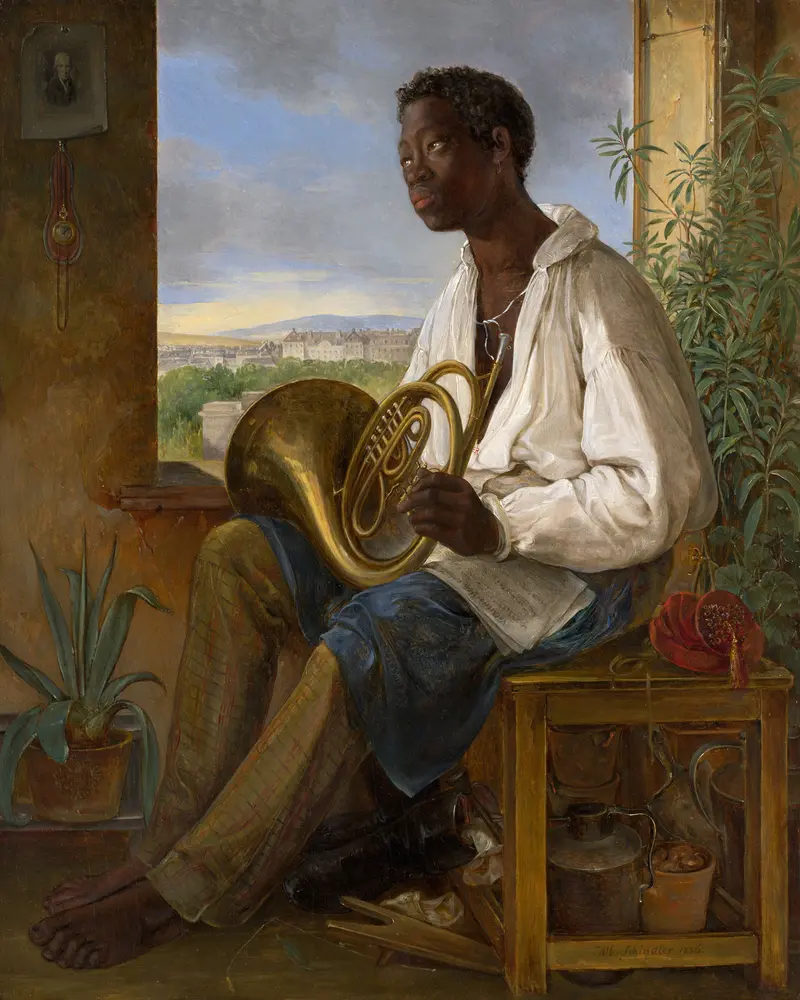
Portrait of a Gardener and Horn Player in the Household of the Emperor Francis I
Albert Schindler
Portrait of Emmanuel Rio
Albert Schindler
More Genre Scene Art

Banquet of the Officers of the St George Civic Guard
Frans Hals

Rembrandt and Saskia in the Scene of the Prodigal Son
Rembrandt van Rijn

Bal du moulin de la Galette
Pierre-Auguste Renoir

Quadrille at the Moulin Rouge
Henri de Toulouse-Lautrec

A Burial at Ornans
Gustave Courbet

When Will You Marry?
Paul Gauguin