El abeto — History & Facts
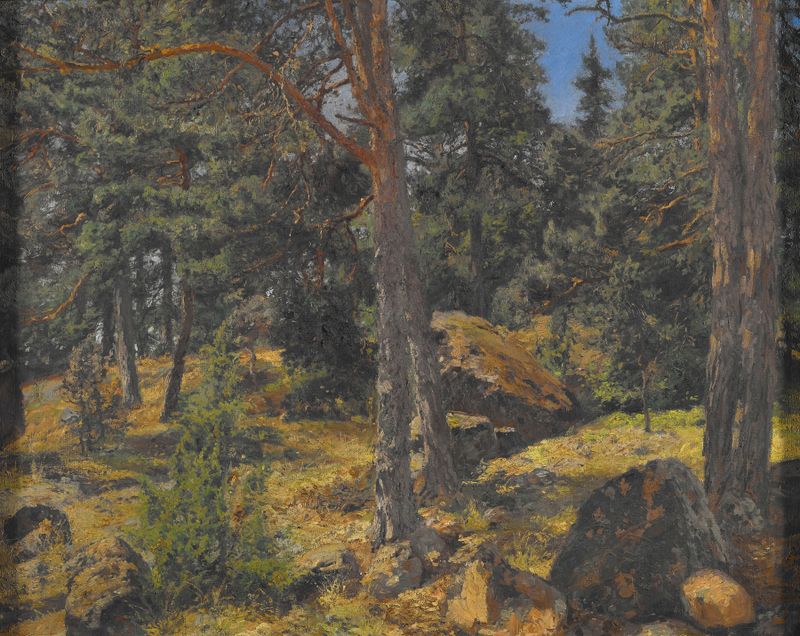
In a world where noise overwhelms, the quiet whispers of nature can reveal profound truths. Look to the center of El abeto, where a majestic fir tree stands sentinel, its branches silhouetted against a serene sky. The artist’s deft brushwork captures the nuanced textures of the tree’s bark, inviting the viewer to trace the intricate patterns with their eyes. Surrounding foliage bursts with varying shades of green, harmonizing with the gentle gradient of the sky—soft blues blending into warm yellows—illuminating the scene with a tranquil glow. Beneath its vibrant surface, the painting conveys a contrast between solidity and transience.
The tree, rooted firmly, represents endurance and the passage of time, while the ephemeral light that dances across its leaves evokes a sense of fleeting beauty. There’s a tension between the stillness of nature and the underlying movement of life, inviting contemplation on existence and the impermanence of all things. The viewer may also sense a spiritual undertone, as if the fir is a conduit between the earth and the sky, symbolizing transcendence and connection. Created in 1909, El abeto embodies Kallsteniüs's exploration of natural scenes during a time of shifting artistic currents.
Living in Sweden, the artist was influenced by the emerging movements of expressionism, which sought to evoke emotions through color and form. This piece represents a moment of introspection in his career, where he distilled the essence of nature into a profound visual language, reflecting both his personal journey and the broader exploration of human experience in art.