
Embarkation of the Elector Palatine in the 'Prince Royal' at Margate, 25 April — History & Facts
A flotilla bristling with banners and anticipation fills the stage of Embarkation of the Elector Palatine in the 'Prince Royal' at Margate, 25 April by Adam Willaerts. The eye is pulled first to the great ship at center, sails furled but decks crowded with figures—soldiers, sailors, dignitaries—each face turned toward the shore or the water, caught in the tension of departure. The artist orchestrates a choreography of movement: boats jostle in the foreground, their oarsmen straining, while on the bustling shore, a dense crowd waves hats and hands in farewell.
The sweep of the white cliffs and the distant windmills anchor the scene in a very real English landscape, but the drama belongs to the sea and the ships, their flags snapping with the promise of a journey that is both political and personal. This is the world of early seventeenth-century Europe, where grand marriages were matters of state, and paintings like this one served as both record and celebration. The event commemorated here—the 1613 departure of Frederick, Elector Palatine, and Princess Elizabeth, daughter of James I—was a spectacle of Protestant hope, witnessed by crowds and immortalized by artists. In the hands of Willaerts, a Dutch painter known for his lively marine scenes, the moment becomes a living tableau: the low horizon gives the sky and ships a heroic scale, while the careful detail of faces and gestures draws the viewer into the human drama.
Painted in 1622, this work now resides in a public collection, a reminder of how art could turn a fleeting historical moment into a scene that invites us, centuries later, to linger and look again.
More Artworks by Adam Willaerts
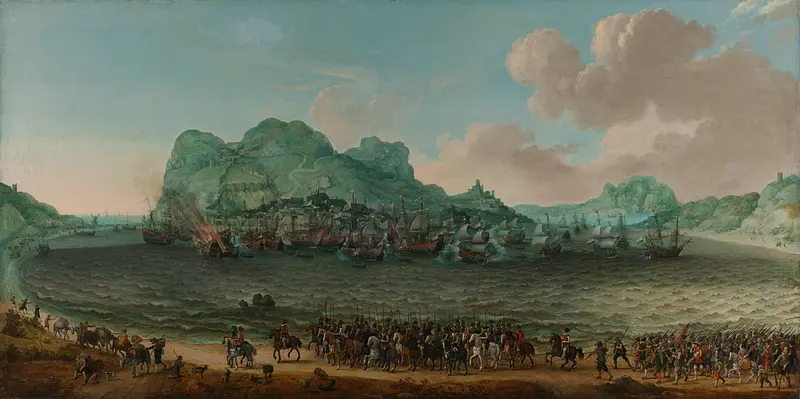
Victory over the Spanish near Gibraltar by a Fleet Commanded by Admiral Jacob van Heemskerck, 25 April 1607
Adam Willaerts
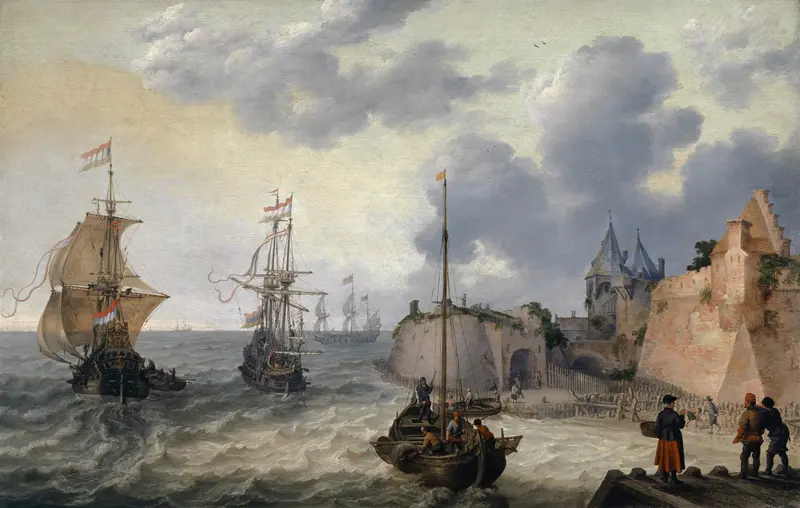
Dutch Harbour with Sailing Ships
Adam Willaerts
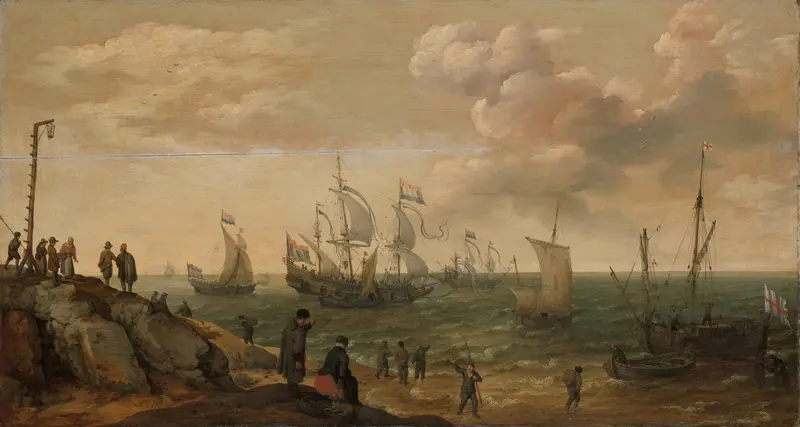
Ships along the Shore
Adam Willaerts
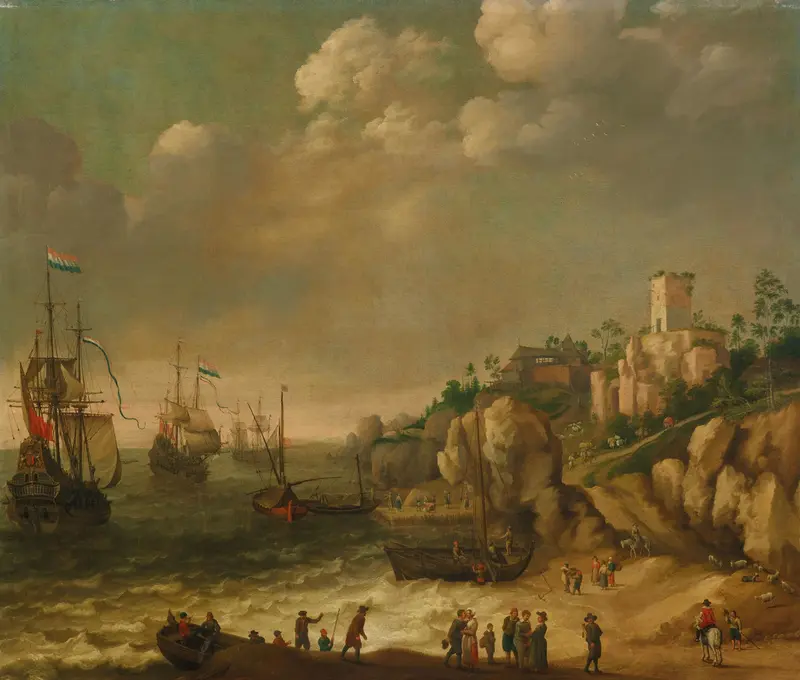
Dutch ships in front of a rocky coast with figures, buildings beyond
Adam Willaerts
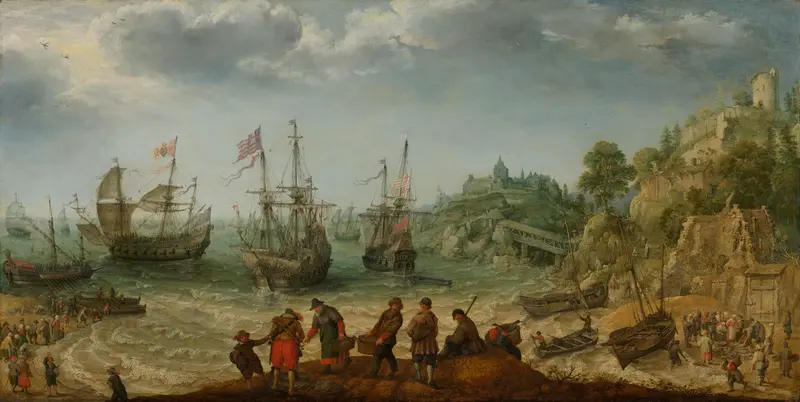
Ships off a Rocky Coast
Adam Willaerts
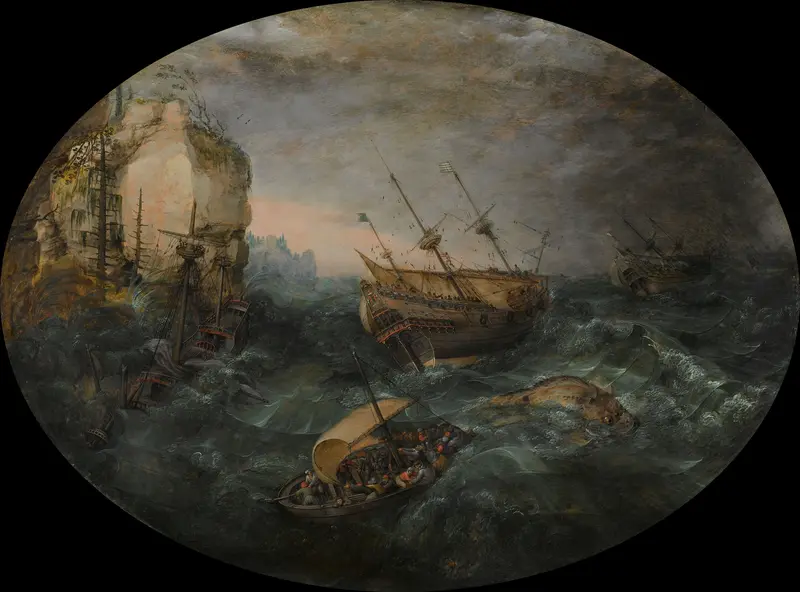
Shipwreck off a Rocky Coast
Adam Willaerts
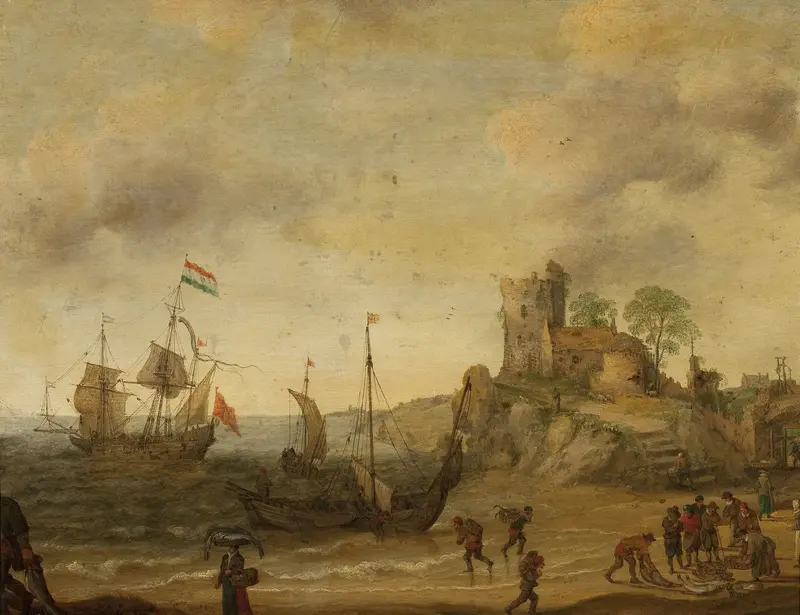
Fishermen at the seaside
Adam Willaerts
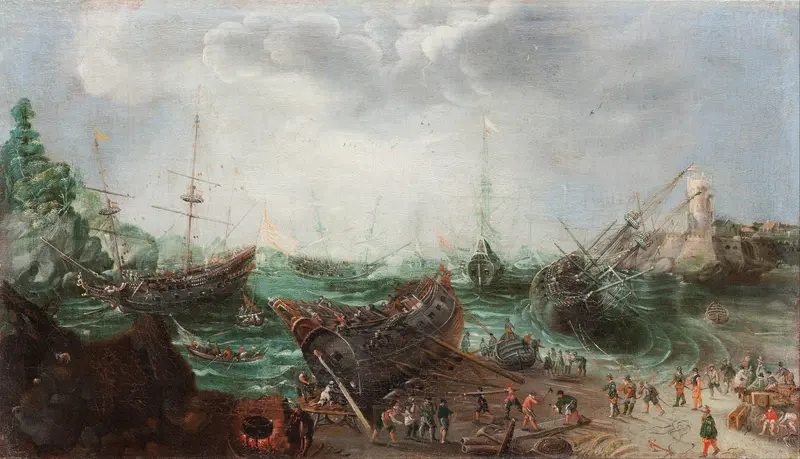
Harbour scene
Adam Willaerts
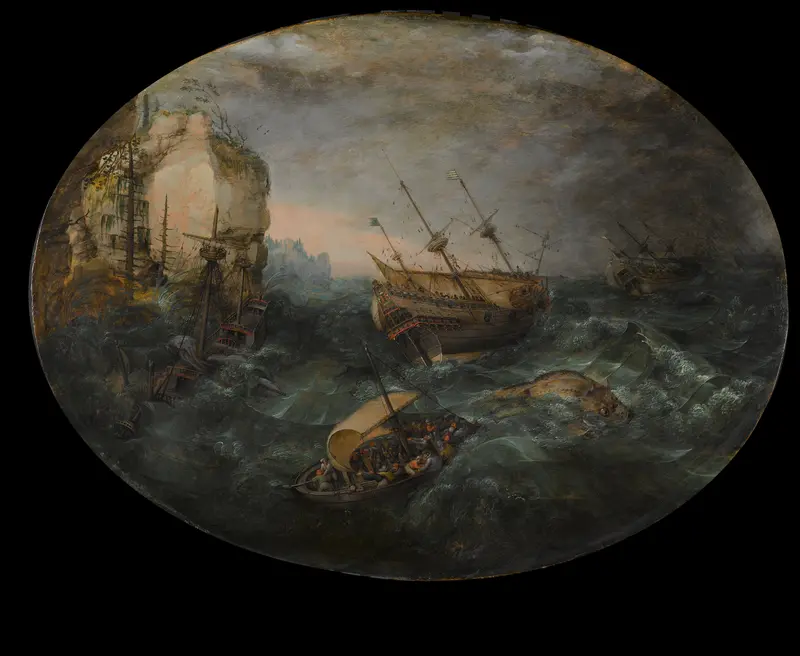
Shipwreck off a Rocky Coast
Adam Willaerts
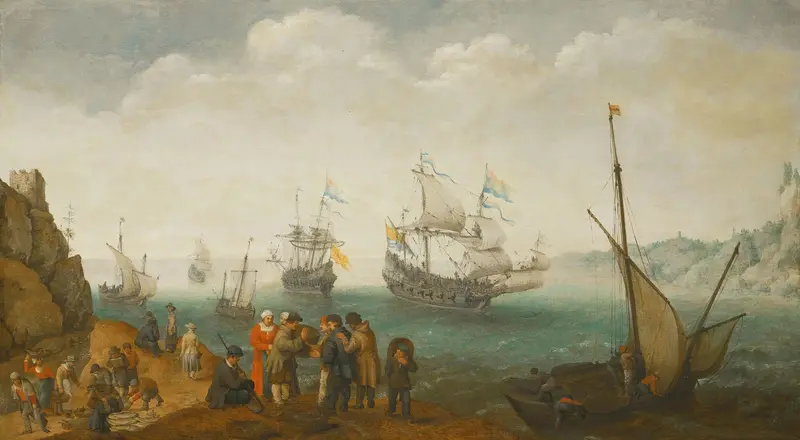
A Marine With Five Vessels Out To Sea And Another In Port, And With Groups Of Largely Male Figures Engaged In Buying Or Selling Fish Or Other Wares
Adam Willaerts





