En hyrdedreng med sine får ved Cività d’Antino — History & Facts
In the tender embrace of nature, where the heart yearns for connection, the essence of desire becomes palpable, echoing through the strokes of paint. Look to the foreground, where a shepherd boy gently clasps a staff, his gaze focused yet distant. The soft hues of his clothing blend harmoniously with the verdant landscape, evoking a sense of tranquility. Notice how the vibrant greens of the pasture meet the warm browns of the sheep, creating a comforting balance that invites the viewer to linger.
The sunlight spills over the scene, casting subtle shadows that dance around the figures, while the distant hills fade into a gentle blur, anchoring the boy in this serene moment. Yet beneath this calm surface lies a deeper yearning. The boy's solitary posture speaks of isolation, a longing to connect with the world beyond the horizon. The sheep, though companions, highlight his solitude, emphasizing the tension between duty and desire for freedom.
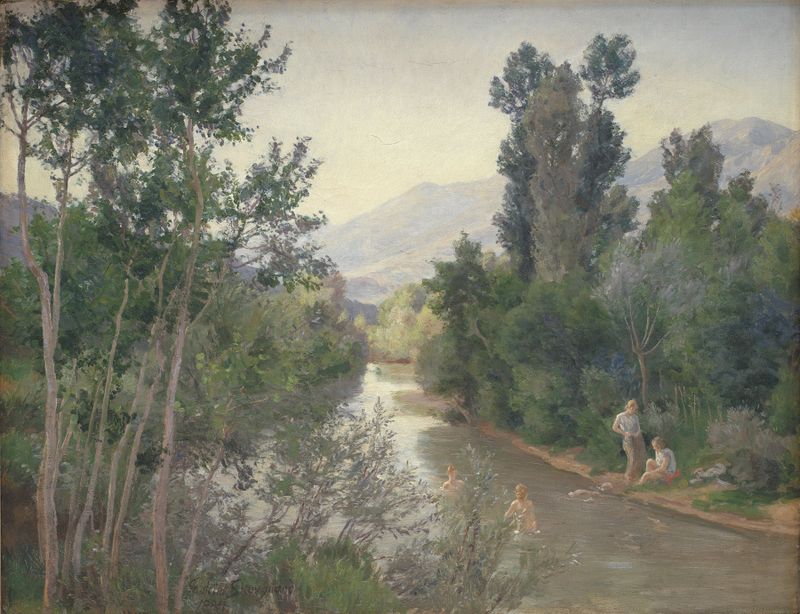
The contrast between the vibrant life surrounding him and the boy's contemplative stance invites a reflection on our own aspirations and the silent battles we face in their pursuit. Painted between 1885 and 1886, the work came at a time when Joakim Skovgaard was deeply engaged in the ideals of naturalism and the exploration of rural life. Living in Denmark, he sought authenticity through his art, drawing inspiration from the pastoral landscapes of Italy, where he spent time. This period marked a pivotal moment in his career, as he sought to fuse the emotive power of color with the simplicity of everyday moments, revealing the profound desires that lie within the human experience.