Sommerlandskab — History & Facts
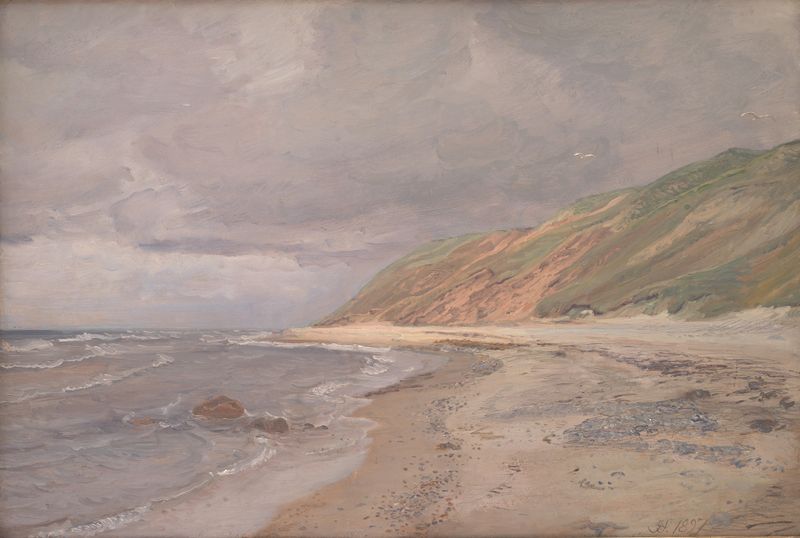
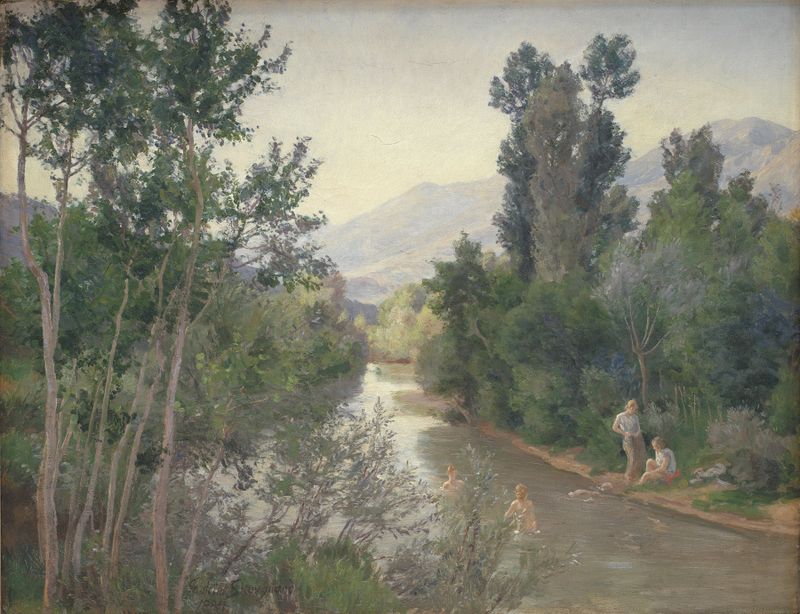
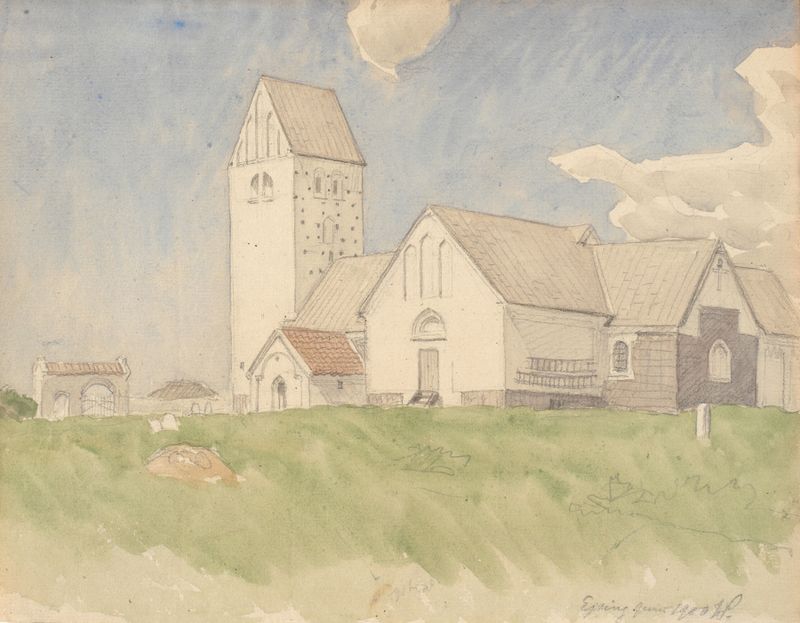
What if silence could speak through light? In Sommerlandskab, a tranquil landscape invites reflection, each brushstroke whispering a narrative woven from faith and nature's embrace. Focus on the horizon, where gentle hills roll under a soft, expansive sky painted with muted pastels. The light falls delicately across the canvas, illuminating patches of lush greenery and bathing the scene in a warm, ethereal glow. Notice how the artist captures the interplay of shadow and light; the foreground bristles with vibrant textures, drawing the viewer into the heart of a serene moment, while the distant sky invites contemplation and reverie. Deeper still, the contrast between the lively foreground and the calm, almost transcendent background reveals a tension between earthly life and spiritual longing.
The scattered wildflowers seem to nod in silent agreement with the presence of the vast sky above, suggesting a harmony that dwells in the silence of nature. Each element is carefully placed, reflecting the artist's sense of faith in the beauty and the promise of the world around him. Created between 1876 and 1877 in Denmark, Skovgaard painted Sommerlandskab during a transformative period in his career. A prominent figure in the Danish Golden Age, he sought to capture the essence of his homeland's landscapes while aligning them with a deeper, almost spiritual resonance.
As Romanticism began to wane, Skovgaard's work bridged the gap, merging realism with idealism, and laying the groundwork for future explorations of faith in the natural world.