
Engelse kerk te Leiden — History & Facts
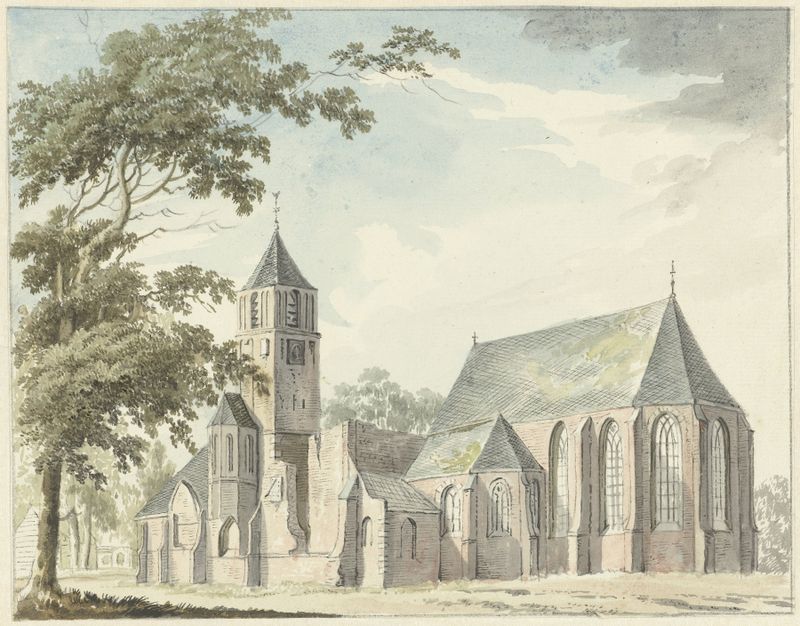
In Engelse kerk te Leiden, movement pulses through the canvas, the stillness of the church contrasting sharply with the life that surrounds it. The viewer feels a gentle yet insistent tug, beckoning them to delve deeper into the harmony of architecture and nature. Look to the left at the vibrant burst of greenery, where leaves sway gently, beckoning a breeze that seems almost palpable. The church, with its towering spire and solemn facade, stands resolute in the center, yet the play of light reflects a dance of shadows on its stone.
Notice how the curated palette of muted earth tones enhances the structure's stoicism while the warm sunlight filters through, inviting an emotional warmth that balances the coldness of the edifice. Hidden meanings emerge upon closer inspection: the juxtaposition of the church’s permanence against the ephemeral breaths of nature hints at the tension between faith and the fleeting moments of life. The soft reflections in the water suggest a transient beauty, a reminder that while the church stands as a beacon for many, life continues to ebb and flow around it, weaving stories in its wake. Each detail, from the flickering shadows to the flowing water, reminds us that existence is both still and dynamic. Hendrik Tavenier crafted this piece in 1789, during a time when the Dutch art scene was transitioning, embracing Romantic influences while still rooted in tradition.
Living in Leiden, he found inspiration in the architectural beauty of his surroundings, reflecting a society grappling with change yet steadfast in its heritage. This painting captures not just a moment in time but a nuanced conversation between the past and the present.
More Artworks by Hendrik Tavenier
Browse all →


More Architecture Art
Browse all →
The statue of Liberty
Frédéric Auguste Bartholdi

View of Houses in Delft, Known as ‘The Little Street’
Johannes Vermeer

View of Houses in Delft, Known as ‘The Little Street’
Johannes Vermeer

The Cathedral in Rouen. The portal, Grey Weather
Claude Monet

The yellow house
Vincent van Gogh

The Church in Auvers-sur-Oise, View from the Chevet
Vincent van Gogh