Kerk te Aalsmeer — History & Facts
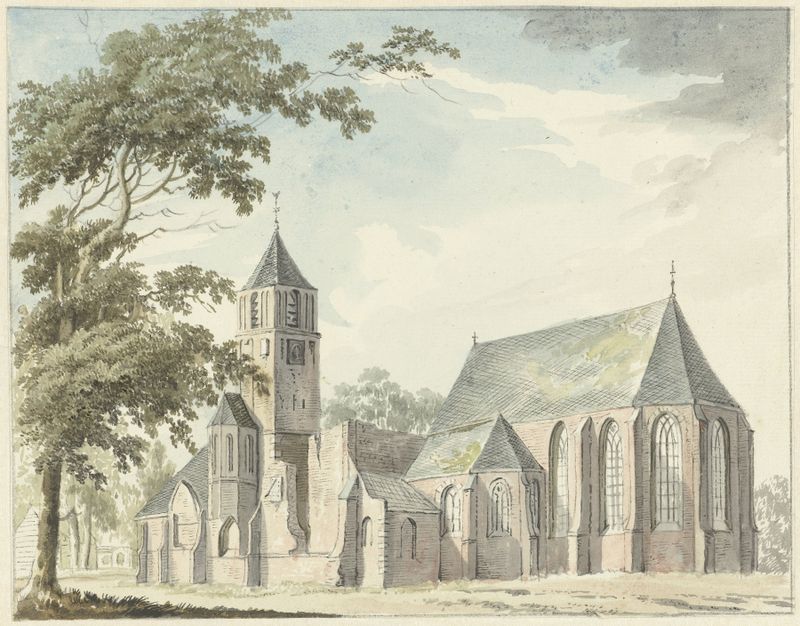
In the stillness of a winter's evening, a dreamscape unfolds where reality and imagination entwine, inviting the viewer to step beyond the visible. Look to the right at the delicate spire of the church, its silhouette framed by an icy sky. The cold palette of muted blues and greys creates an ethereal quality, while the warm glow spilling from the windows hints at life within. Notice how the artist meticulously captures the details of the architecture, from the ornate carvings to the textures of the stone, inviting you to trace their lines with your eyes.
Each brushstroke speaks of intention, crafting not just a building, but a sanctuary of thought. Beneath the surface, a deeper tension emerges. The contrasting warmth of the illuminated church against the chilling expanse of the wintry landscape evokes a sense of longing, of shelter in solitude. The barren trees surrounding the structure symbolize both isolation and resilience, while the subtle play of light and shadow hints at the fleeting nature of time.
This interplay captures the essence of a moment suspended in a dream, lingering between memory and desire. In 1776, Hendrik Tavenier painted this piece while residing in the Netherlands, a time of burgeoning artistic exploration amidst the Neoclassical movement. As artists sought to capture the elegance of their environment, Tavenier’s focus on the church in Aalsmeer reflects a personal connection to his homeland, revealing both a commitment to detail and a yearning for a deeper understanding of place within the tapestry of life.