Kerk te Broek in Waterland — History & Facts
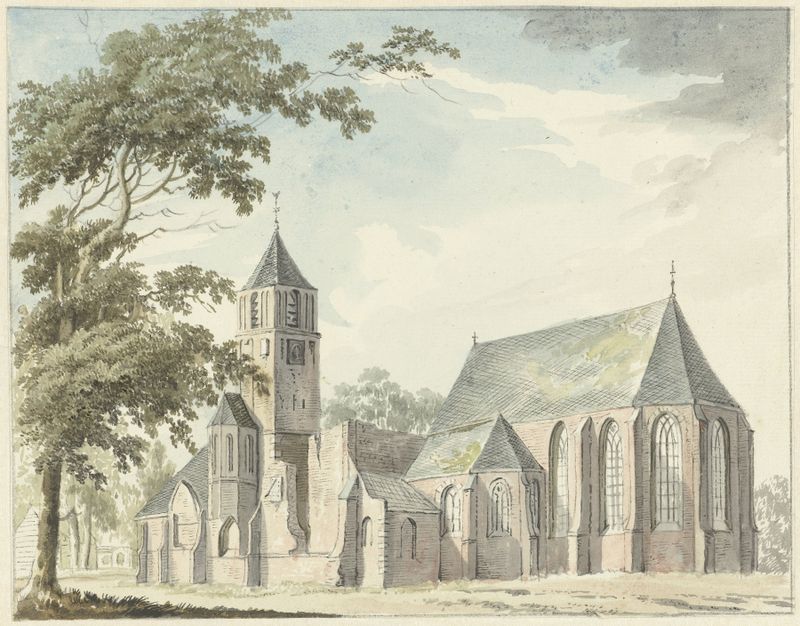
What secret hides in the quiet of the canvas? As shadows stretch across the sunlit churchyard, the stillness of Kerk te Broek in Waterland invites the viewer to ponder the weight of human existence and the inevitable passage of time. Look to the left at the weathered church, its tall steeple piercing the sky, framed by lush trees that sway gently in a whispering breeze. The artist employs a delicate palette of earthy tones, marrying rich greens with soft blues that evoke a sense of harmony and tranquility. Notice how the light falls upon the cobblestone path, creating a gentle contrast between the warmth of the sunlit foreground and the cooler tones of the shadowed areas, guiding the eye through the tranquil scene. Within this serene portrayal lies a tension between life and mortality.
The church stands as a testament to faith and community, while the encroaching shadows hint at the transient nature of existence, suggesting that even in sacred spaces, the cycle of life persists. Small details, such as the solitary figure on the path, serve as a poignant reminder of human solitude amidst the collective history contained within these walls—a reflection of our shared journey toward the unknown. In 1789, Hendrik Tavenier captured this intimate moment in the Dutch village of Broek in Waterland, a period marked by a flourish of neoclassical influences in art. As the world confronted changes brought on by the Enlightenment, Tavenier’s focus on tranquil landscapes offered a counterpoint, emphasizing the importance of place and the enduring relevance of spirituality amidst evolving cultural perspectives.