English Warships in a Roadstead in Calm Weather — History & Facts
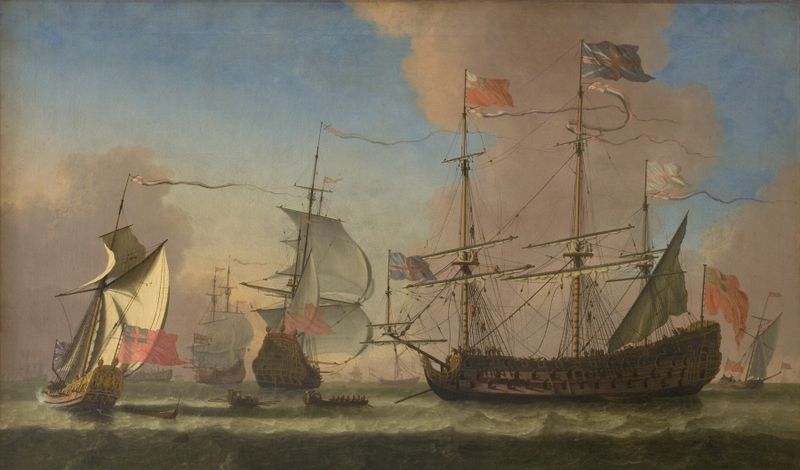
In a world where the passage of time often feels like a relentless tide, nostalgia reveals itself as the anchor of our collective memory. Look to the center of this serene composition, where the English warships rest gracefully on the undulating surface of the water, their sails gently catching the whisper of a distant breeze. The meticulously rendered details of each vessel contrast beautifully with the soft hues of a pastel sky, creating a sense of calm that envelops the viewer. Notice how the light dances upon the water, reflecting shades of blue and gold—inviting us to linger, to reflect, and to dream. Beneath the tranquil surface lies a subtle tension, a juxtaposition of strength and vulnerability.
The formidable warships, symbols of power and conquest, sit idle in a peaceful roadstead, evoking a poignant reminder of the transient nature of conflict. Each vessel, while crafted for battle, finds itself cradled in the gentle embrace of nature, suggesting the fragility of human ambition against the backdrop of time. This interplay of dominance and serenity resonates deeply, whispering the stories of past endeavors that have shaped nations. Jan Karel Donatus van Beecq painted this work in 1677 while residing in the Netherlands.
During this period, Europe was rife with maritime competition and colonial ambitions, as nations sought to expand their empires. His focus on naval themes reflected contemporary interests in sea power and trade, serving as both a celebration of naval engineering and a meditation on its implications in a rapidly changing world.