
Battle of Tobago, 1677 — History & Facts
The air is thick with tension as ships clash, their sails billowing against a backdrop of tumultuous clouds. Cannons roar, sending plumes of smoke spiraling into the sky, while sailors scramble on deck, faces etched with fear and determination. Among them, a lone figure stands at the bow, both commanding and isolated, lost in the chaos of war. Focus on the center of the painting where the tumultuous sea meets the two opposing vessels, their masts intricately detailed against the swirling sky.
Notice how the artist employs a vibrant palette of blues and grays, contrasting the lively colors of the ships with the bleakness of the stormy atmosphere. The wave crests, painted with dynamic brushstrokes, seem almost alive, pulling the viewer into the tumult of battle while casting shadows that further emphasize the disarray. Amidst the frenetic action, a profound sense of loneliness emerges. The fiercely clashing ships represent not just the battle for territory but the isolation experienced by those caught in conflict.
The sailors’ fierce expressions reveal their individual struggles, while the chaos around them echoes the loneliness that often accompanies warfare—a poignant duality between unity in purpose and the stark solitude of survival. In 1684, Jan Karel Donatus van Beecq created Battle of Tobago amidst the evolving landscape of European naval power. Operating primarily in the Netherlands, he was influenced by the ongoing conflicts of the time, especially as European nations vied for dominance in the Caribbean. This painting, rich in historical detail, captures not only the physical confrontation but also the emotional weight of a soldier's solitude in the face of overwhelming conflict.
More Artworks by Jan Karel Donatus van Beecq
Browse all →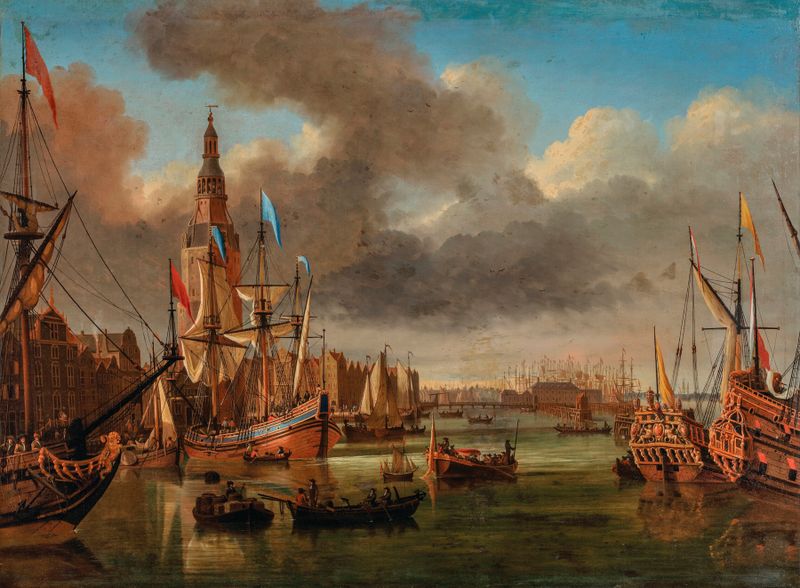
More Historical Art
Browse all →
The Night Watch Militia Company of District II under the Command of Captain Frans Banninck Cocq
Rembrandt van Rijn

Lincoln Memorial
Henry Bacon

The Third of May 1808
Francisco de Goya

Isaac and Rebecca, Known as ‘The Jewish Bride’
Rembrandt van Rijn

The Charge of the Mamelukes (1814)
Francisco de Goya

De vier ruiters van de apocalyps
Albrecht Dürer