
Entry to the Park at St. Cloud — History & Facts
In this stillness, the illusion of nature beckons, inviting us to engage with the world Bertin has meticulously crafted. Each brushstroke invites contemplation, igniting a dialogue between reality and artistic representation. Look to the left at the lush trees, their dark greens contrasting with the soft, golden light that bathes the scene. Notice the delicate interplay of shadows cast by the foliage, which not only defines the depth but also hints at the tranquility of a late afternoon.
The careful arrangement of figures along the path draws the viewer’s eye deeper into the composition, where the winding trail promises a journey through both the park and the imagination. As you explore the canvas, consider the symbolism of the arching branches, which suggest a threshold between the mundane and the extraordinary. The figures, often lost in their own reveries, embody the tension between solitude and companionship, echoing the universal human experience of seeking solace in nature. The vibrant yet serene palette evokes a sense of nostalgia, inviting us to ponder the fleeting nature of beauty itself. Created in 1810, this work emerged during a period when Romanticism began to influence the art world, where emotions and nature took precedence over classical ideals.
At this time, Bertin was establishing his reputation in Paris, where the burgeoning interest in landscape painting allowed him to explore the poetic possibilities of the natural world—setting the stage for a legacy that would resonate through generations.
More Artworks by Jean-Victor Bertin
Browse all →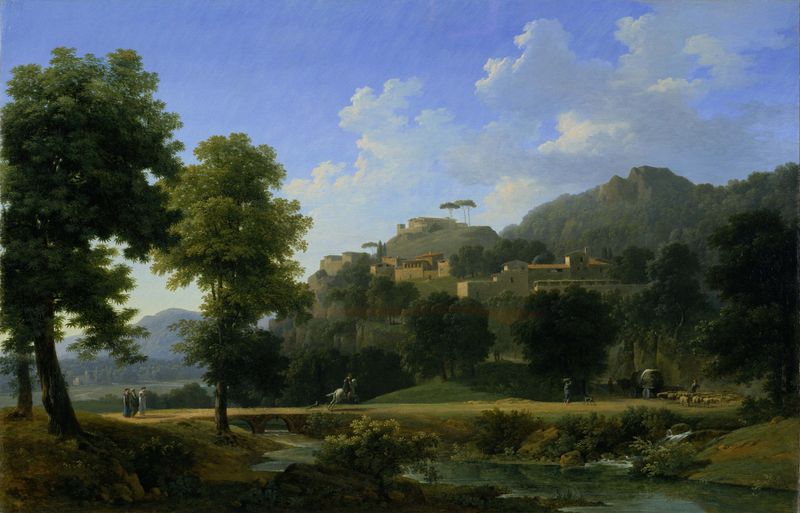
Italian Landscape
Jean-Victor Bertin
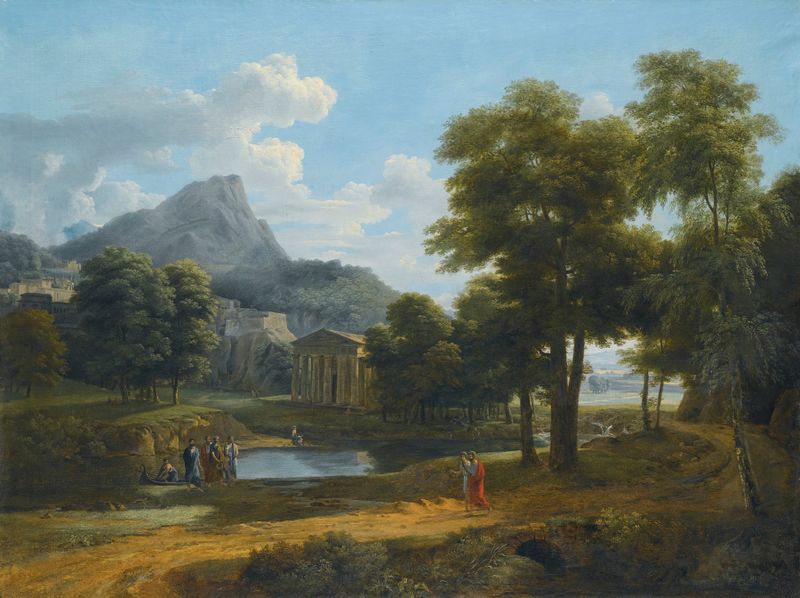
A Mountainous Landscape, With A View Of Pheneos And The Temple Of Minerva Caphyes
Jean-Victor Bertin
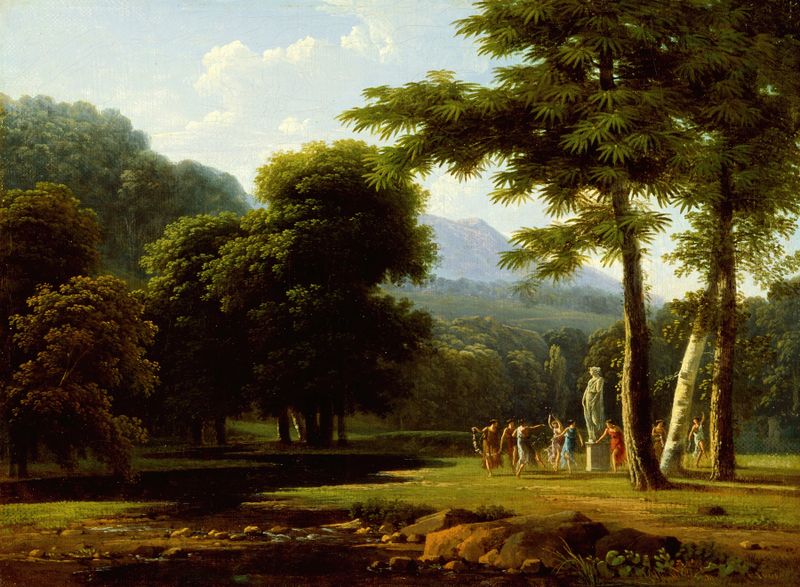
Landscape
Jean-Victor Bertin
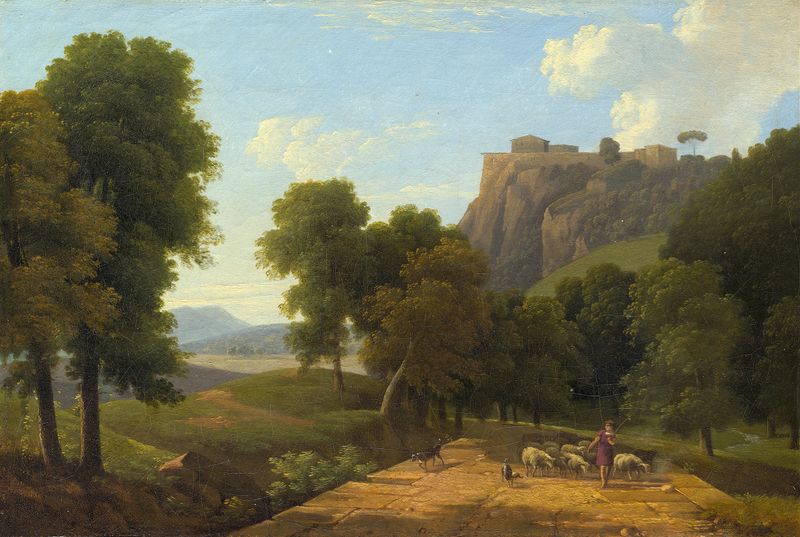
Shepherd with his Flock
Jean-Victor Bertin
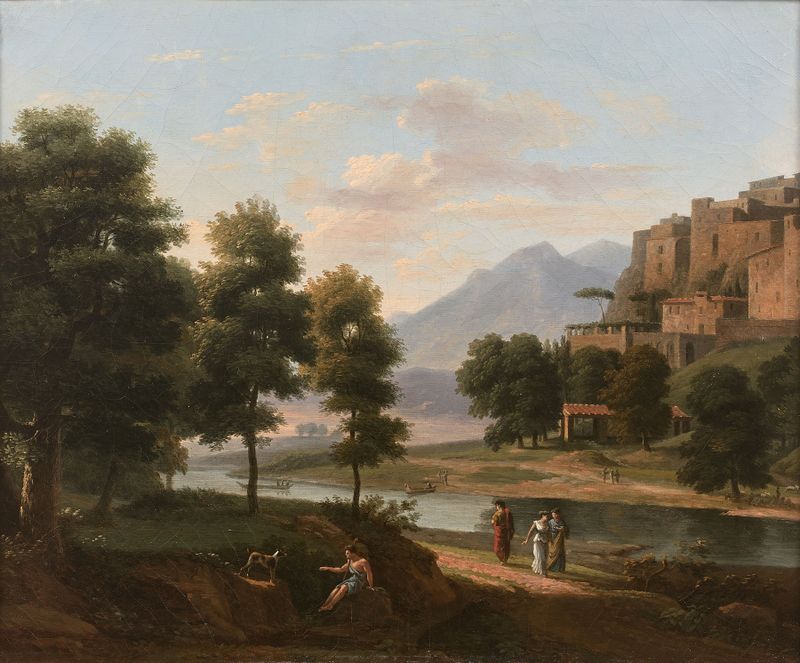
Paysage d’Arcadie animé de personnages
Jean-Victor Bertin
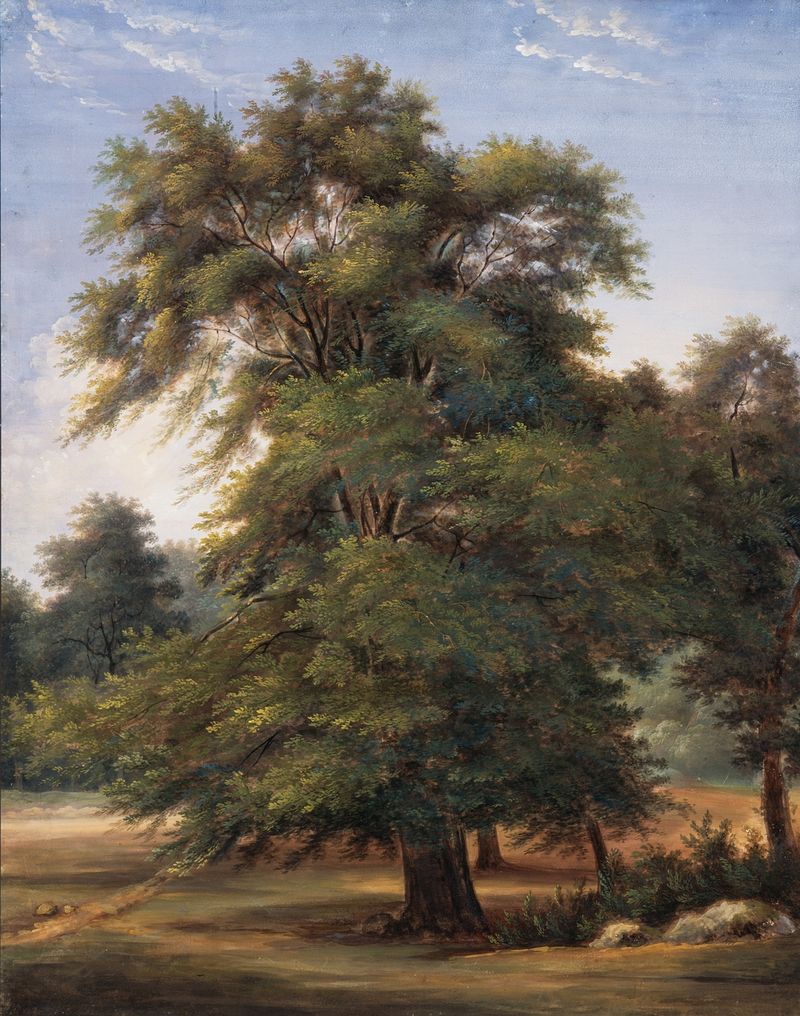
Study of a Tree
Jean-Victor Bertin
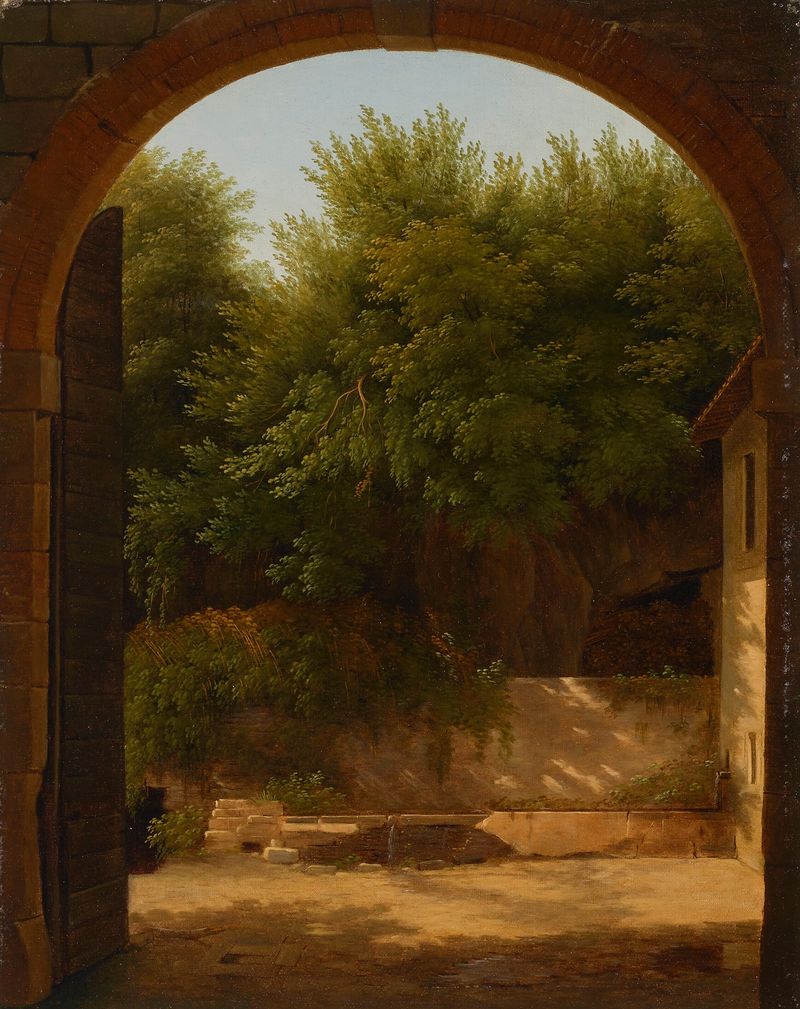
A view of a sunlit courtyard with a trough, seen through an archway
Jean-Victor Bertin
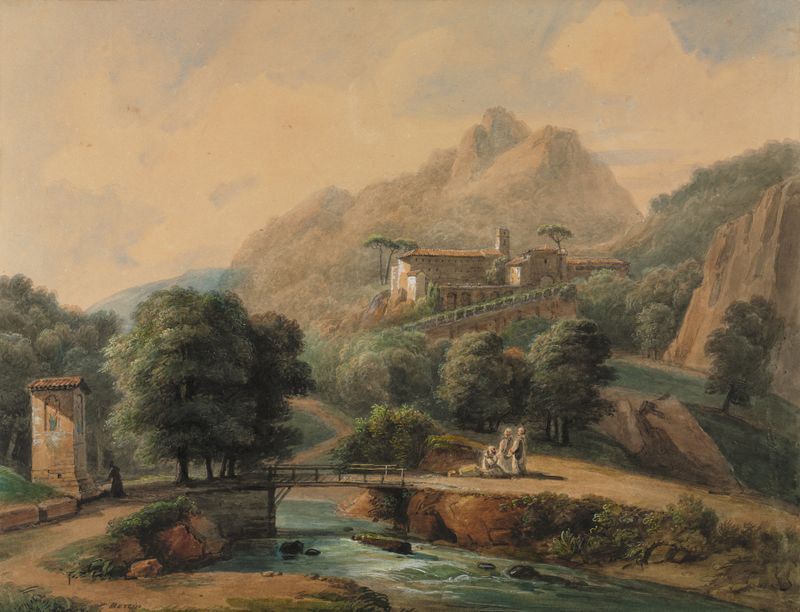
Paysage Italien; L’Abbaye et Les Religieux
Jean-Victor Bertin
View of a Town in the Sabine Hills
Jean-Victor Bertin
A Forest with Apollo and Daphne
Jean-Victor Bertin





