
Landscape — History & Facts
Did the painter know this moment would outlive them? In a world where time relentlessly erases the ordinary, every brushstroke becomes a quiet act of defiance against oblivion. Look to the horizon, where soft hues of dawn merge into the expansive sky, illuminating verdant hills that seem to whisper secrets of the past. Notice how the light filters through the delicate clouds, casting a gentle glow on the serene landscape below. The meticulous attention to detail in the foreground reveals a tranquil river, its reflective surface perfectly mirroring the tranquil tones above, inviting the viewer to pause and breathe in the tranquility. Beneath this serene surface lies a tension between the stillness of nature and the inevitable passage of time.
The gentle undulation of the hills contrasts starkly with the rigid lines of the distant mountains, hinting at the complexities of existence. It speaks of impermanence, where the beauty of the moment is forever captured yet always slipping away, a poignant reminder of life’s fleeting nature. In 1804, while residing in Paris, the artist created this landscape during a period marked by a burgeoning fascination with Romanticism. This movement emphasized emotion and nature, as the artist sought to escape the confines of urban life.
At the time, France was navigating the aftermath of the Revolution, leading to a collective longing for a return to simpler, more idyllic scenes away from the chaos of political turmoil.
More Artworks by Jean-Victor Bertin
Browse all →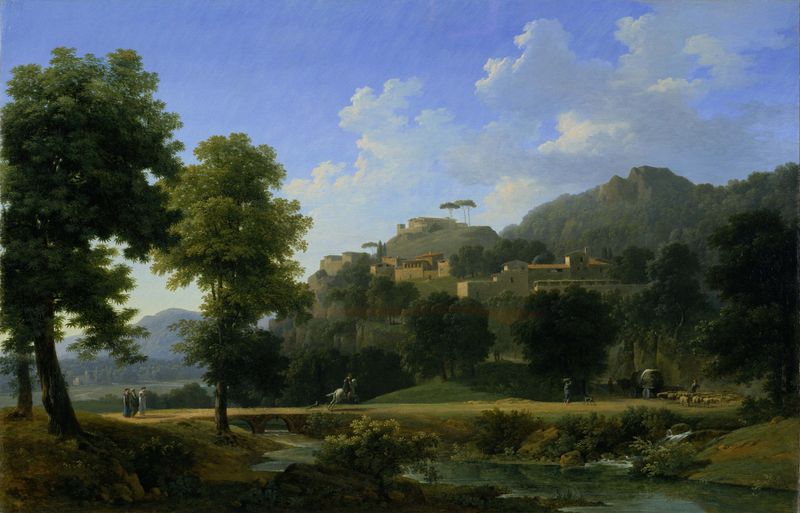
Italian Landscape
Jean-Victor Bertin
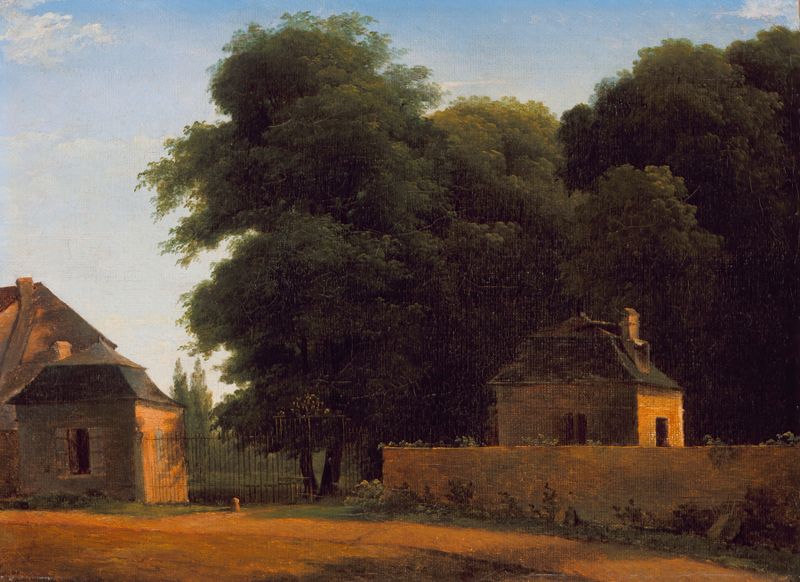
Entry to the Park at St. Cloud
Jean-Victor Bertin
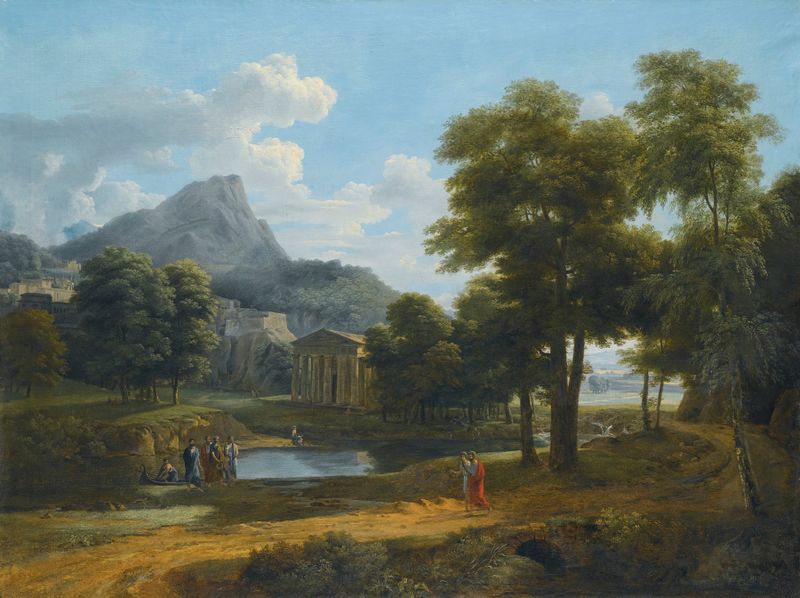
A Mountainous Landscape, With A View Of Pheneos And The Temple Of Minerva Caphyes
Jean-Victor Bertin
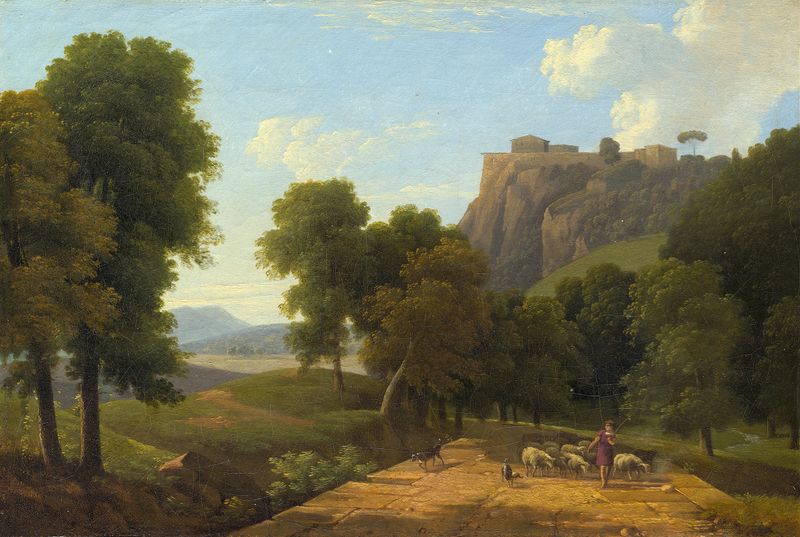
Shepherd with his Flock
Jean-Victor Bertin
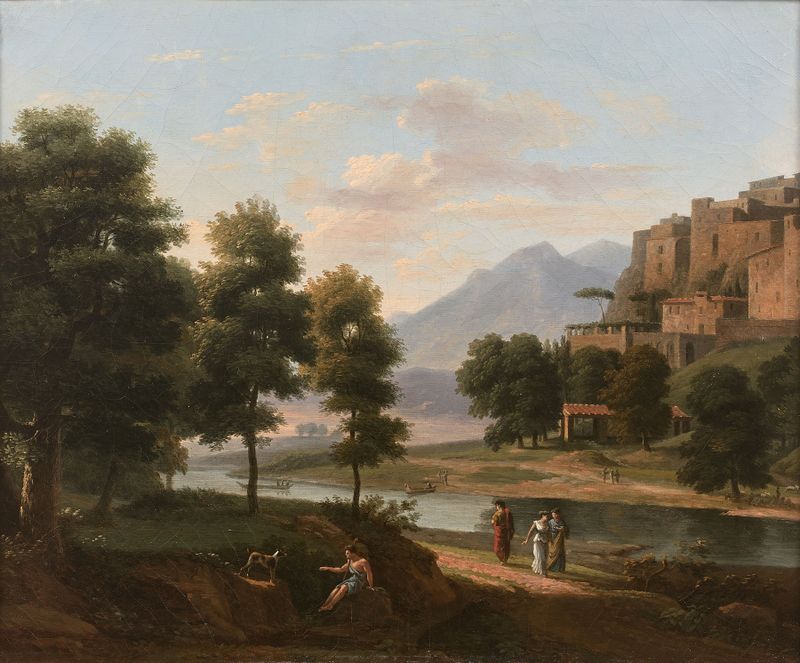
Paysage d’Arcadie animé de personnages
Jean-Victor Bertin
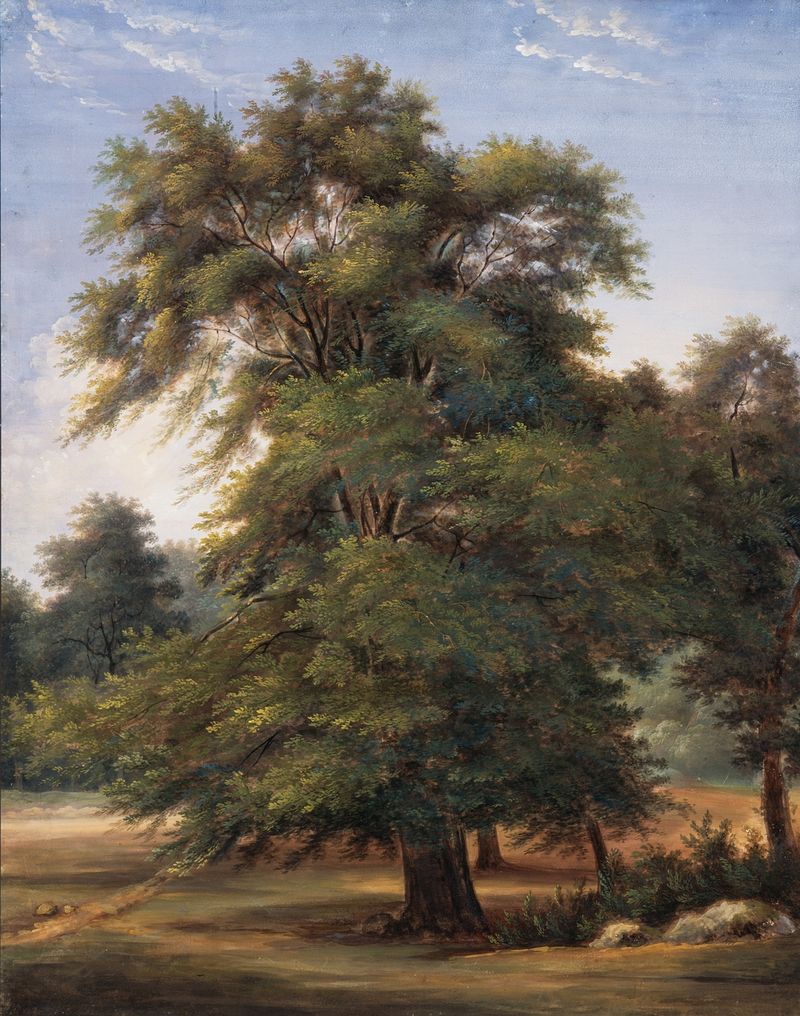
Study of a Tree
Jean-Victor Bertin
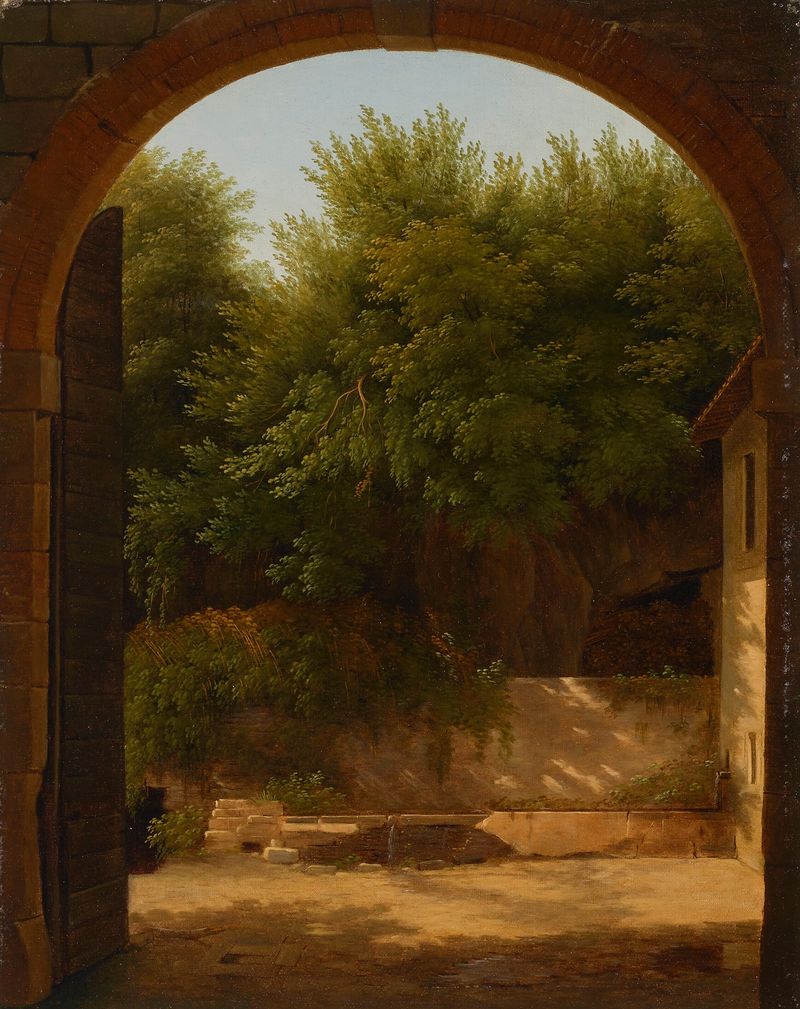
A view of a sunlit courtyard with a trough, seen through an archway
Jean-Victor Bertin
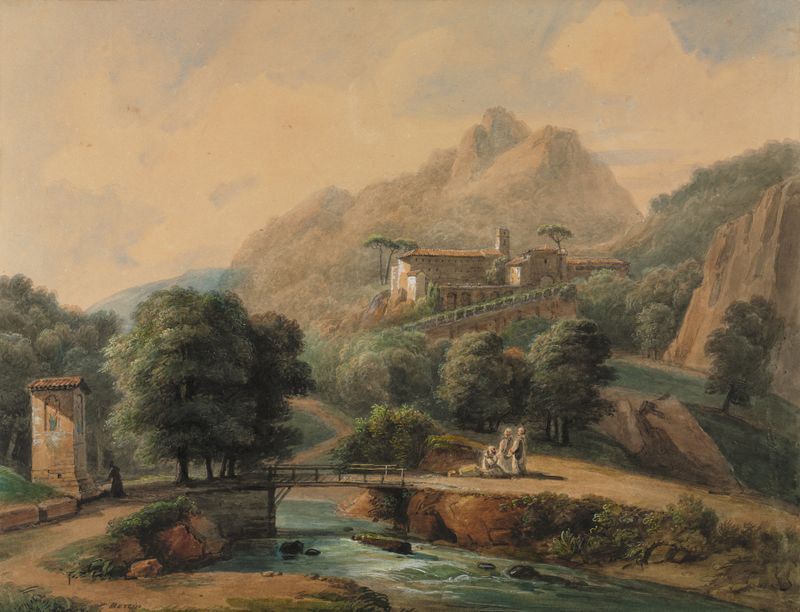
Paysage Italien; L’Abbaye et Les Religieux
Jean-Victor Bertin
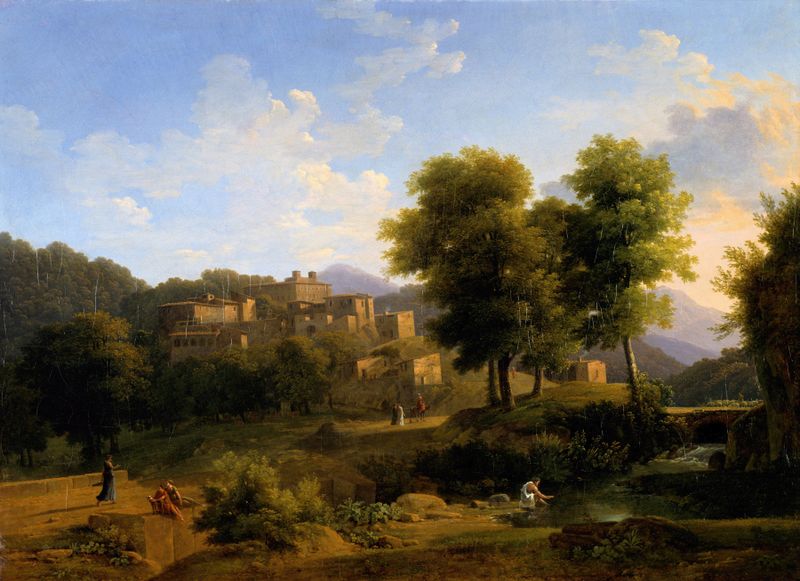
View of a Town in the Sabine Hills
Jean-Victor Bertin
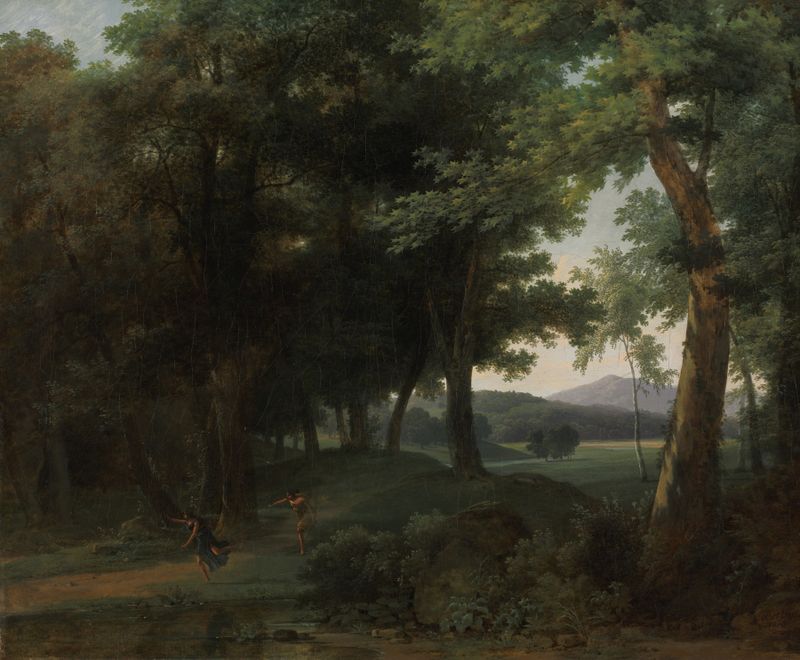
A Forest with Apollo and Daphne
Jean-Victor Bertin





