
Erntefeld am Niederrhein — History & Facts
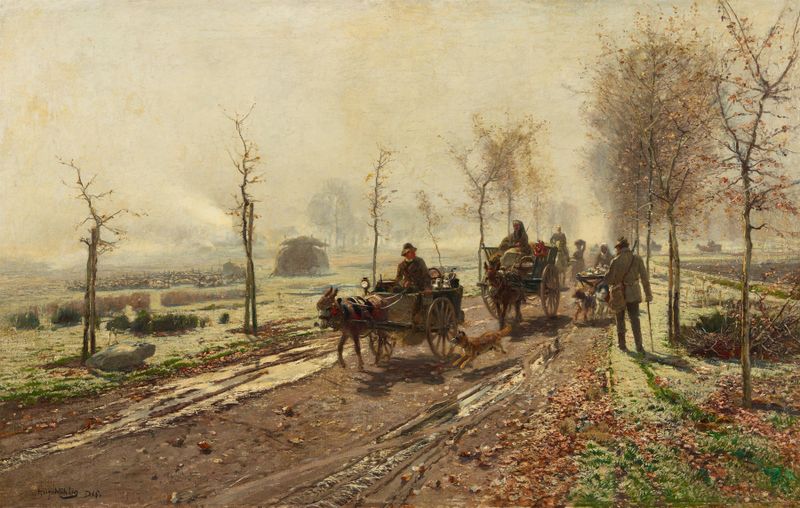
Did the painter know this moment would outlive them? In the vibrant fields, life pulsates through every stroke, a reminder of nature's eternal dance. Look to the left at the luscious crops, each blade of grass swaying gently in the breeze, rendered with a striking array of greens and golds. Notice how the light falls upon the ripened wheat, illuminating the ears as they sway, creating a shimmering effect that almost beckons the viewer into the scene. The brushwork captures not just the landscape, but a sense of movement, as if the field is breathing, alive and aware. The emotional tension lies in the delicate balance between tranquility and the urgency of harvest.
The figures engaged in their labor, though absorbed in their task, appear to be part of a greater cycle, hinting at the fleeting nature of life and time. The juxtaposition of the vibrant field against the distant horizon speaks to the inevitable passage of seasons, each carrying its own story of growth and decay. Hugo Mühlig painted this work in 1900, during a time when the art world was transitioning towards modernism, seeking to capture the essence of everyday life. Living in Germany, he found inspiration in the rural landscapes that surrounded him, reflecting a growing admiration for naturalism amid the industrial changes of the era.
This piece represents a moment of stillness before the inevitable shift, a testament to both the artist's vision and the world he inhabited.
More Artworks by Hugo Mühlig
Browse all →
Sommerliche Heuernte
Hugo Mühlig

Holzfäller am Feuer
Hugo Mühlig

Horse cart on a hill
Hugo Mühlig
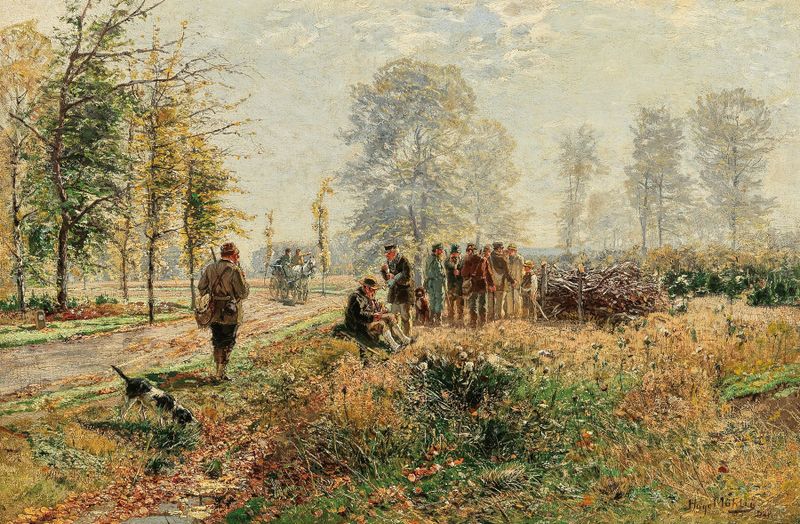
Aufbruch zur Jagd
Hugo Mühlig

Schäfer auf dem Heimweg
Hugo Mühlig
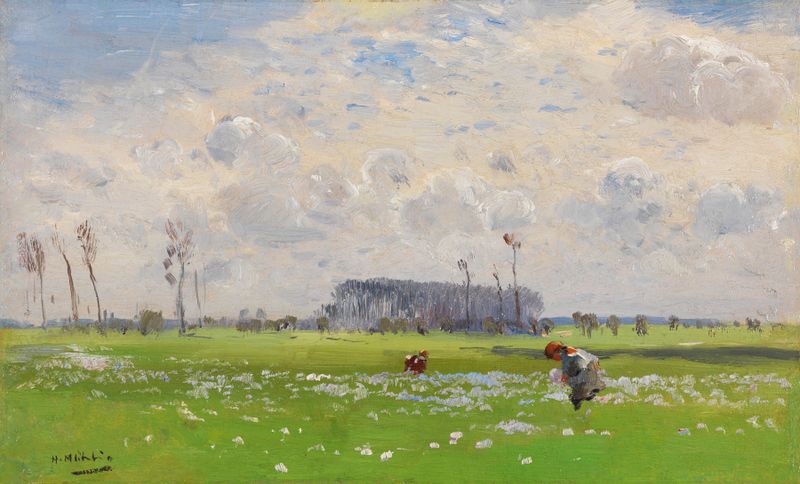
Sommerwiese mit blumenpflückenden Mädchen
Hugo Mühlig
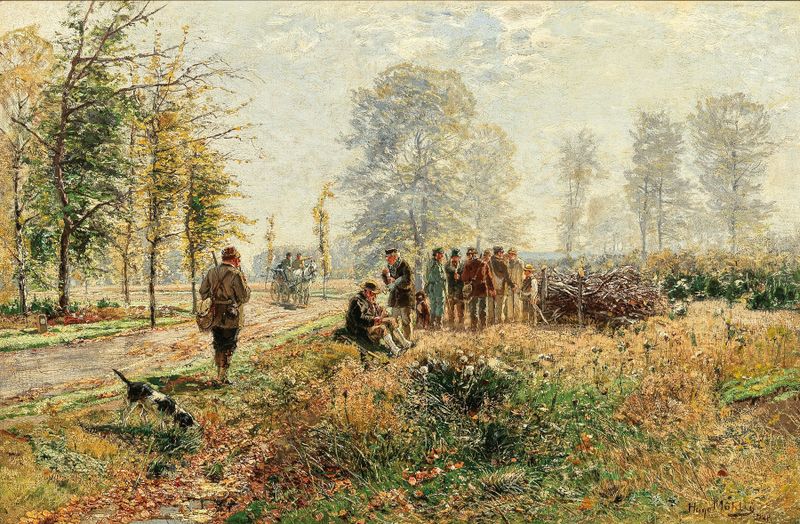
Off to the Hunt
Hugo Mühlig

Bei der Ernte (Niederrhein)
Hugo Mühlig
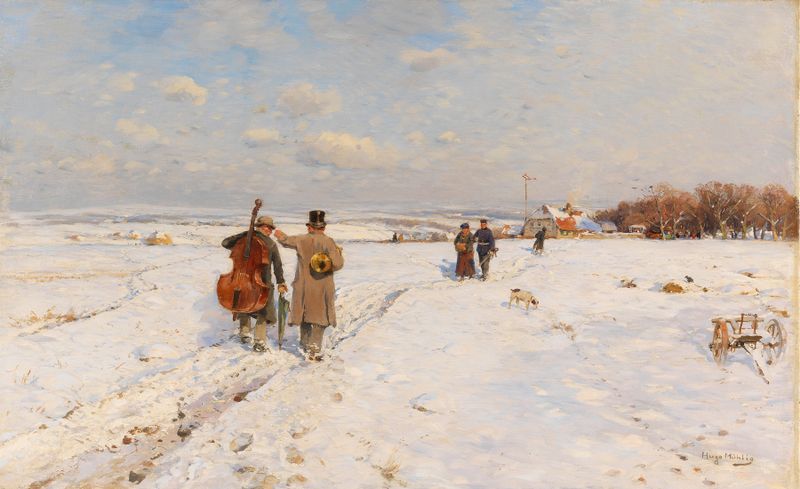
Heimkehrende Musikanten im Schnee
Hugo Mühlig
Herbstmorgen am Niederrhein
Hugo Mühlig





