
Sommerwiese mit blumenpflückenden Mädchen — History & Facts
In a world filled with the chatter of voices and the rush of fleeting moments, there lies a solitude in remembering—an ache that whispers in the quiet corners of the heart. Look to the left at the vibrant tapestry of wildflowers, each petal meticulously rendered in hues that pop against the sepia-toned background. The light cascades gently from above, illuminating a young girl, her delicate fingers grasping the stems of blooming daisies. Notice how the soft brushwork contrasts with the sharp clarity of the flowers, inviting you to linger in this moment—each bloom a testament to both beauty and fragility. As you take in the scene, consider the emotions woven into the fabric of the canvas.
The girl’s solitary act of flower-picking speaks of innocence and joy, yet there is an underlying current of loneliness that permeates the air. The expansiveness of the meadow both liberates and isolates her, suggesting that even in nature's embrace, one can feel the pull of solitude—a reminder of the longing that exists within us all. Hugo Mühlig painted Sommerwiese mit blumenpflückenden Mädchen in 1902, during a time when the arts were undergoing rapid transformation. Living in Germany, he witnessed the shift from Romanticism to a more modern approach, yet he chose to capture a timeless, pastoral scene.
In this period, artists sought to express the nuances of individual experience, and Mühlig’s work reflects a yearning for connection amidst the changing tides of life and art.
More Artworks by Hugo Mühlig
Browse all →
Sommerliche Heuernte
Hugo Mühlig

Holzfäller am Feuer
Hugo Mühlig

Horse cart on a hill
Hugo Mühlig
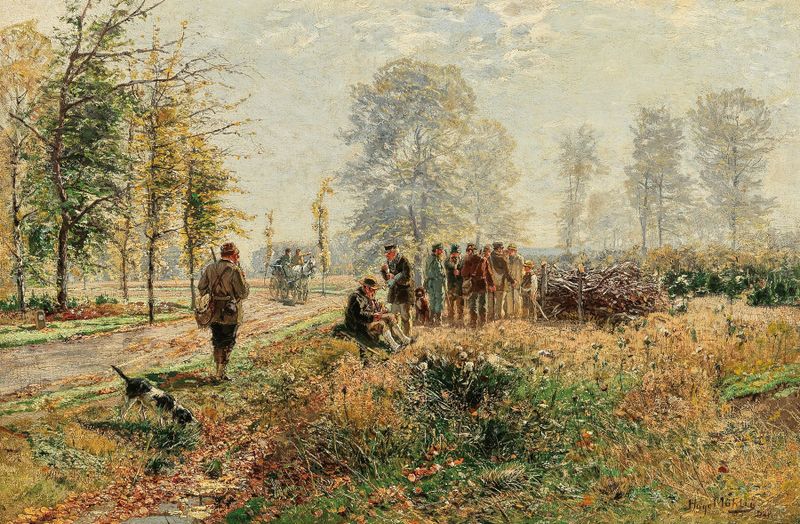
Aufbruch zur Jagd
Hugo Mühlig

Schäfer auf dem Heimweg
Hugo Mühlig
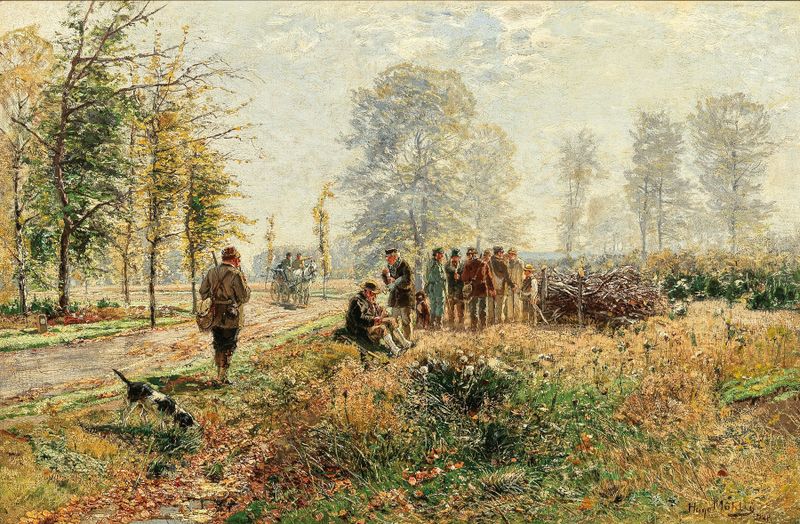
Off to the Hunt
Hugo Mühlig

Bei der Ernte (Niederrhein)
Hugo Mühlig
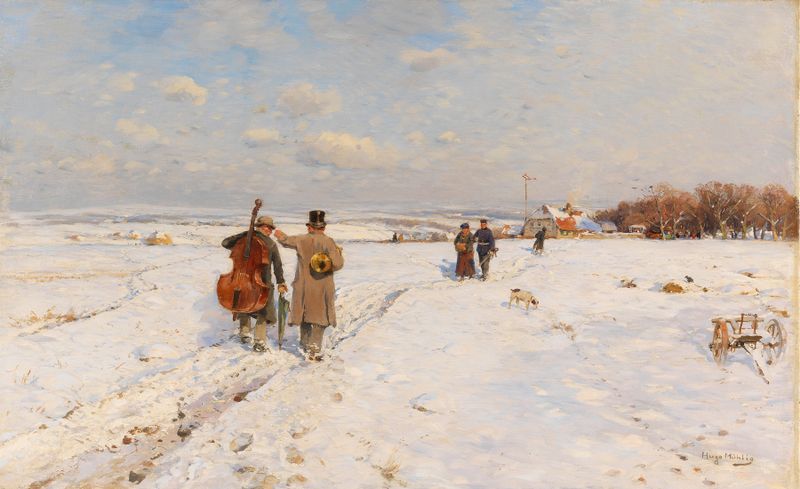
Heimkehrende Musikanten im Schnee
Hugo Mühlig
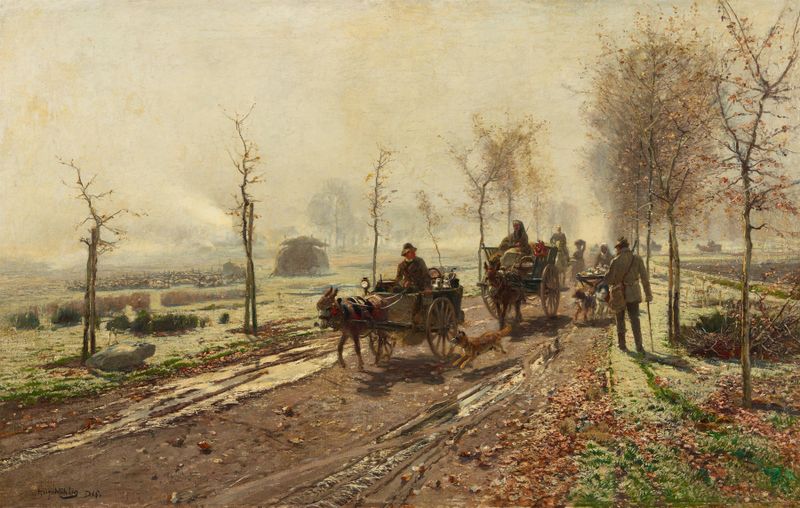
Herbstmorgen am Niederrhein
Hugo Mühlig
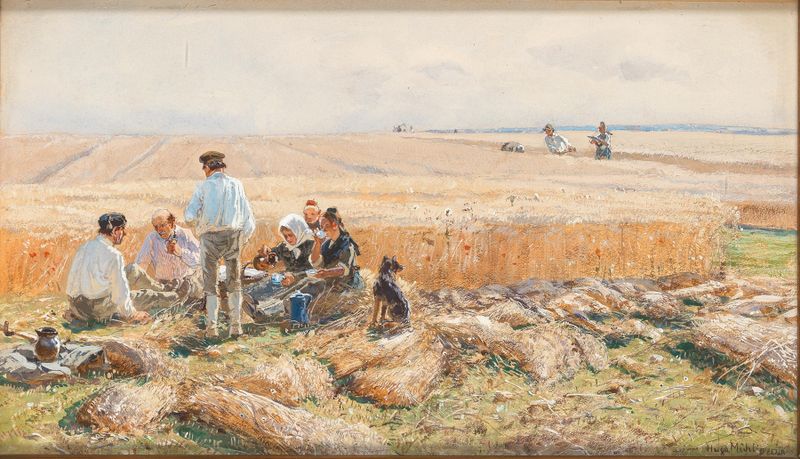
Rest in the field
Hugo Mühlig





