
Bei der Ernte (Niederrhein) — History & Facts
Can beauty exist without sorrow? In the heart of Bei der Ernte (Niederrhein), this question lingers like a whisper in the wind across a golden field. The artwork invites us to witness a moment of labor, where joy and toil intertwine, revealing the duality of existence—every harvest is tinged with a bittersweet revelation. Look closely at the figures in the foreground, their hands busy with sheaves of wheat, illuminated by the soft, warm light of a setting sun. The rich hues of golden yellows and earthy browns form a tapestry of life, while the distant horizon blurs in gentle blues and greens.
Notice the rhythm of their movements, the way bodies bend and stretch, embodying the grace of labor while framing a scene pulsating with vitality. Each stroke captures not merely a moment, but the essence of the season—a dance of men and women entwined in nature’s cycle. Yet, amid the vibrancy lies an undercurrent of struggle. The contrast between the laborers’ industriousness and the expansive fields evokes a sense of humility before nature’s grandeur.
The harvest, while a symbol of abundance, also whispers of the relentless march of time and the inevitable toll it exacts. This juxtaposition illustrates life’s fragile balance—beauty gained through perseverance, and yet, always shadowed by the specter of loss. In 1900, Hugo Mühlig was working in Germany, where the art world was undergoing a shift toward Impressionism and Realism. As he painted this piece, he was likely influenced by the burgeoning interest in capturing everyday life and the beauty of simple moments.
At this crossroads in art, Mühlig sought to illuminate the richness of rural existence, a theme resonating deeply during a time of social change and industrialization.
More Artworks by Hugo Mühlig
Browse all →
Sommerliche Heuernte
Hugo Mühlig

Holzfäller am Feuer
Hugo Mühlig

Horse cart on a hill
Hugo Mühlig
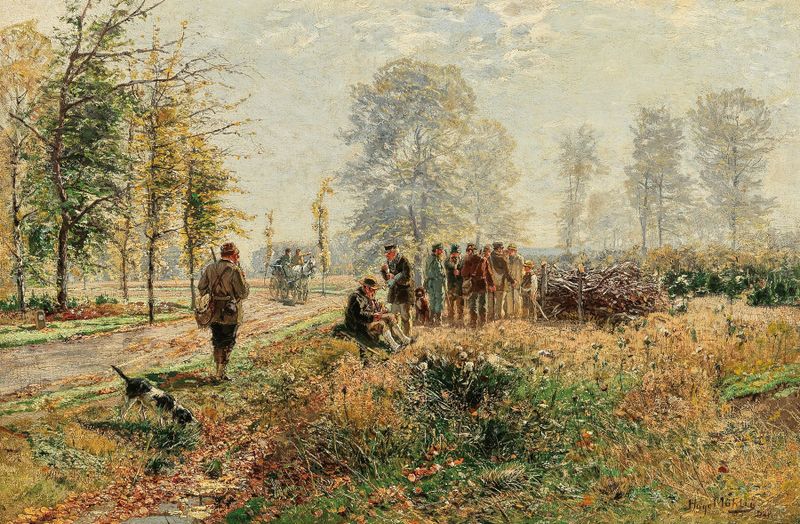
Aufbruch zur Jagd
Hugo Mühlig

Schäfer auf dem Heimweg
Hugo Mühlig
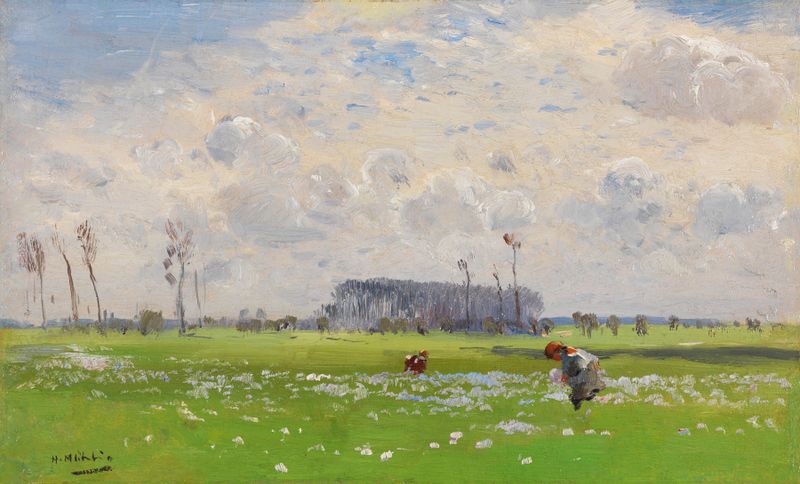
Sommerwiese mit blumenpflückenden Mädchen
Hugo Mühlig
Off to the Hunt
Hugo Mühlig
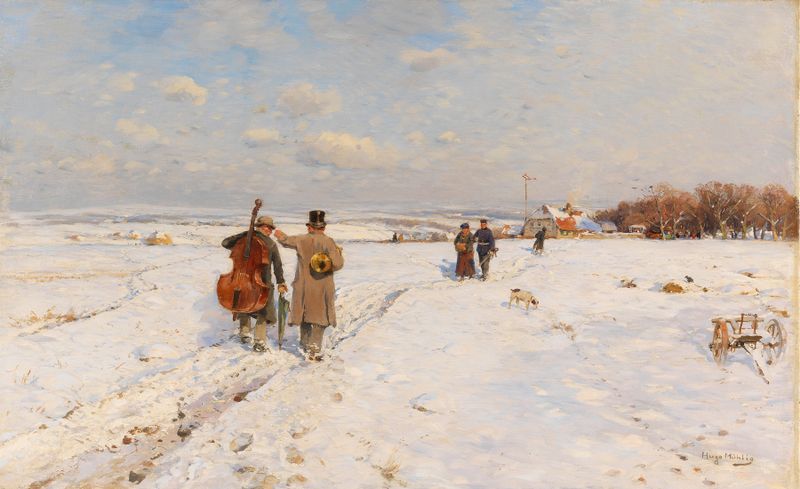
Heimkehrende Musikanten im Schnee
Hugo Mühlig
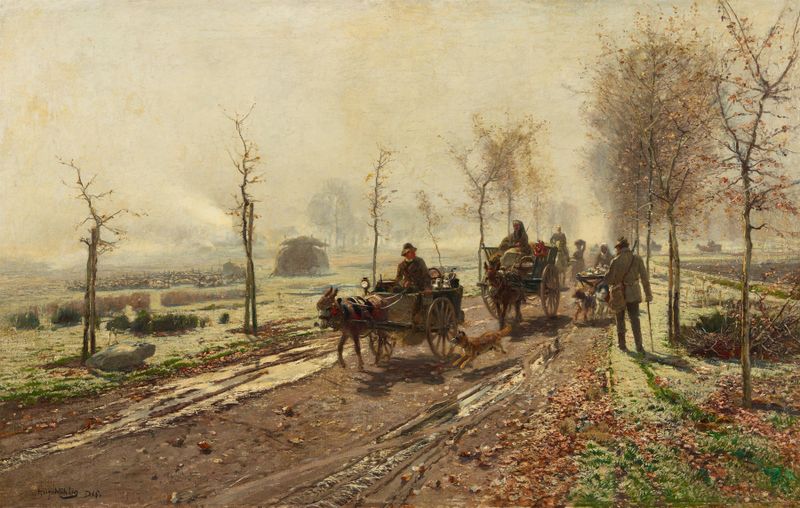
Herbstmorgen am Niederrhein
Hugo Mühlig
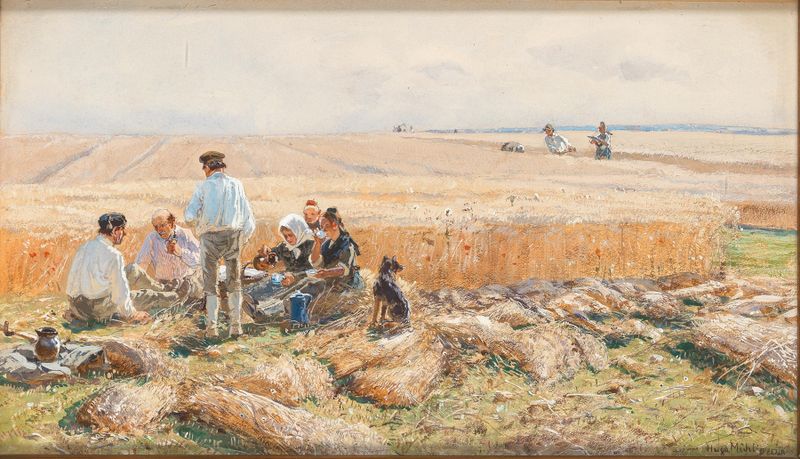
Rest in the field
Hugo Mühlig





