
Schäfer auf dem Heimweg — History & Facts
Is this a mirror — or a memory? In the quiet embrace of twilight, a solitary shepherd lingers in a world where past and present intertwine, reflecting the essence of creation itself. Begin your exploration by noticing the warm tones that envelop the shepherd, drawing your eyes first to his weathered face, etched with the wisdom of countless journeys. Look closely at the way the light caresses his hands, gently guiding a flock of sheep, their soft forms subtly blending into the landscape. The lush greens and earthy browns harmonize, while the soft blue of the sky hints at the approach of night — an invitation to introspection. Yet, it is the contrast between the shepherd's solitude and the bustling life of the sheep that speaks volumes.
Each sheep appears both a companion and an emblem of his duties, suggesting interdependence and the weight of responsibility. The looming shadows in the background suggest an unseen presence, perhaps the echoes of his thoughts or the distant memories of days long passed. This tension between light and dark, solitude and community, evokes a sense of longing and reflection. Painted during a time when Mühlig was exploring pastoral themes, Schäfer auf dem Heimweg emerged from an era steeped in the Romantic revival of nature and the human experience.
The exact date remains unclear, but in the late 19th century, the artist sought to connect with a simpler, more profound existence, reflecting the societal shifts of industrialization. Here, he captures not just a moment of return but a deeper dialogue with the essence of life itself.
More Artworks by Hugo Mühlig
Browse all →
Sommerliche Heuernte
Hugo Mühlig

Holzfäller am Feuer
Hugo Mühlig

Horse cart on a hill
Hugo Mühlig
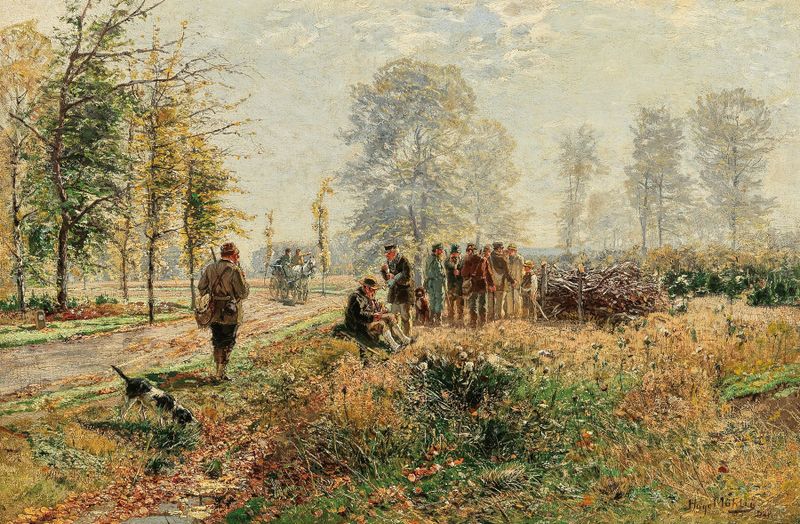
Aufbruch zur Jagd
Hugo Mühlig
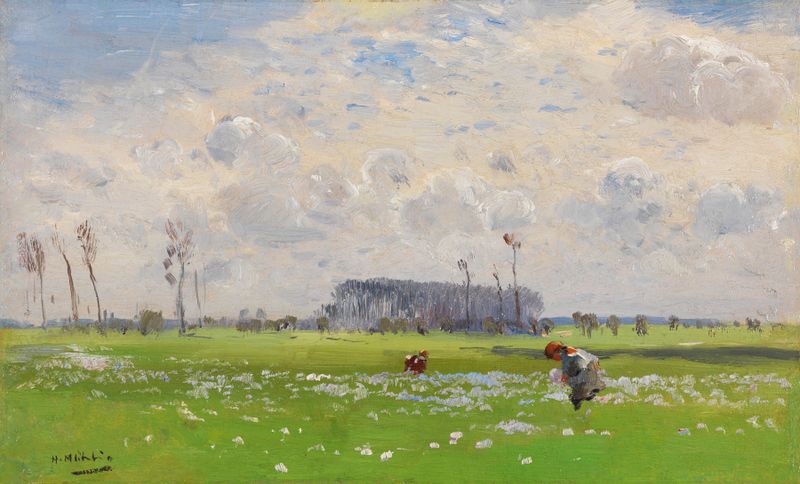
Sommerwiese mit blumenpflückenden Mädchen
Hugo Mühlig
Off to the Hunt
Hugo Mühlig

Bei der Ernte (Niederrhein)
Hugo Mühlig
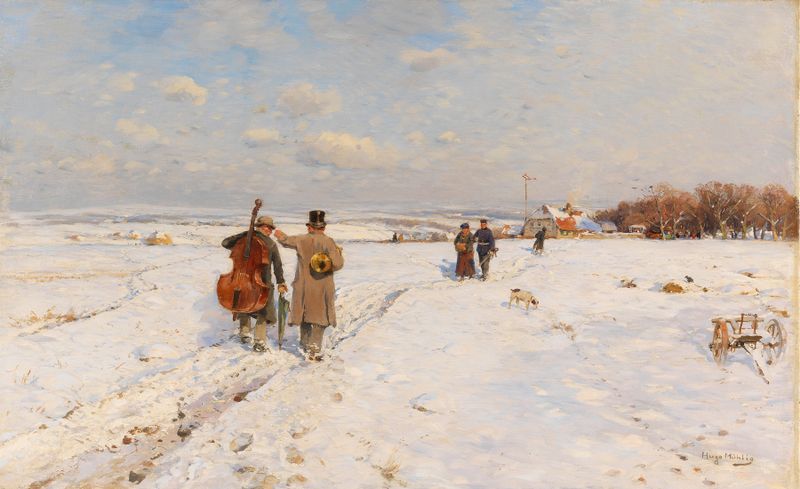
Heimkehrende Musikanten im Schnee
Hugo Mühlig
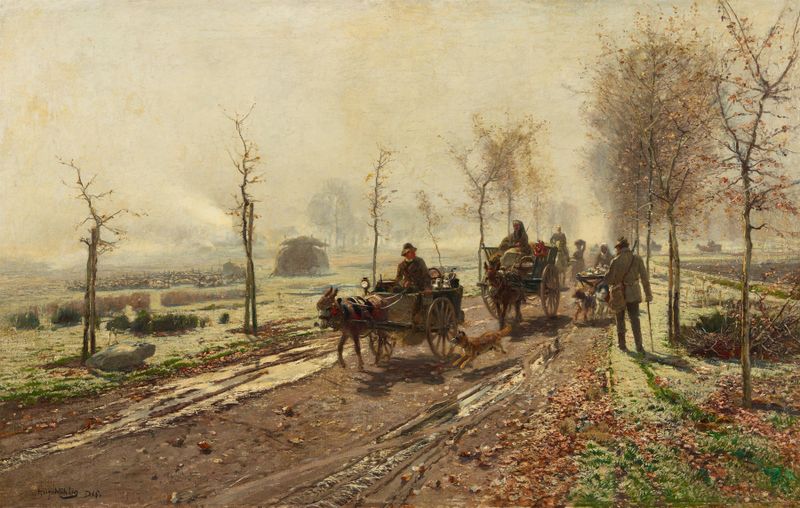
Herbstmorgen am Niederrhein
Hugo Mühlig
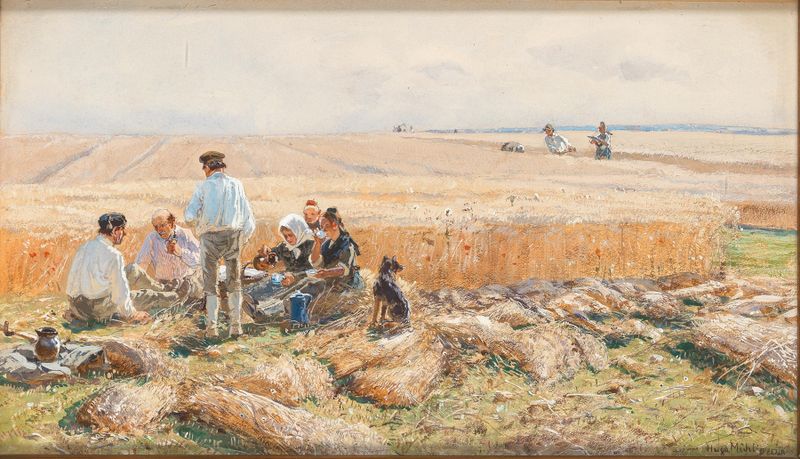
Rest in the field
Hugo Mühlig





