
Esch an der Sauer (Luxemburg) — History & Facts
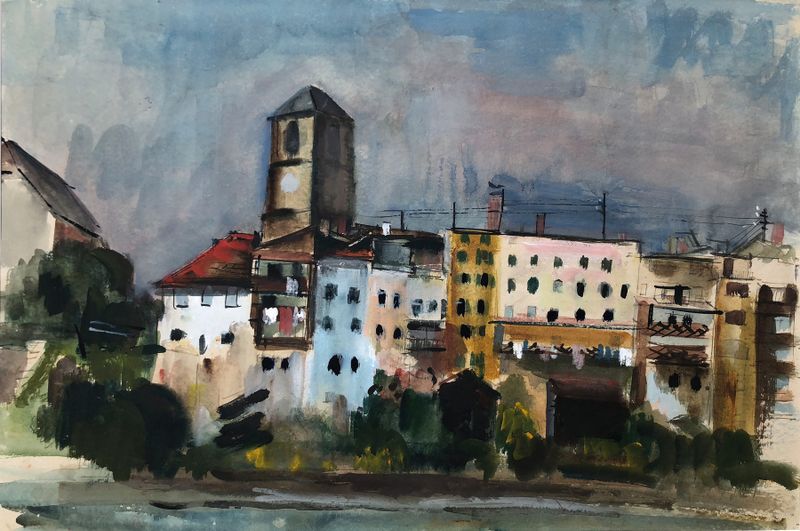
The delicate interplay of light and shadow reveals deeper truths hidden within the canvas. Look to the left at the shimmering river that winds its way through the serene landscape, capturing the eye with its reflective surface. Notice how the artist employs a muted palette of greens and browns, contrasting with the vibrancy of the water. The gentle brushstrokes breathe life into the foliage, while the distant hills loom quietly, creating a sense of both peace and solitude.
The composition guides you along the river’s path, inviting contemplation. Within the tranquil scene lies a tension between nature’s beauty and the harrowing context of its creation. Painted during a time of turmoil in 1943, the idyllic setting is a fragile facade concealing the artist’s struggle with the sociopolitical landscape of Europe. The golden light that bathes the scene serves as a reminder of hope amidst despair, while the darkened corners evoke an underlying sense of melancholy, reflecting the artist's internal conflict. Otto Geigenberger painted this piece while living in Luxembourg, a place marked by the scars of World War II.
As the war reshaped lives and landscapes, his work sought both refuge and reflection in the beauty of the natural world. This painting emerges from a period when many artists grappled with the challenges of representing both beauty and suffering, making it a poignant testament to the resilience of the human spirit.
More Artworks by Otto Geigenberger
Browse all →
Hohe Munde bei Seefeld in Tirol
Otto Geigenberger
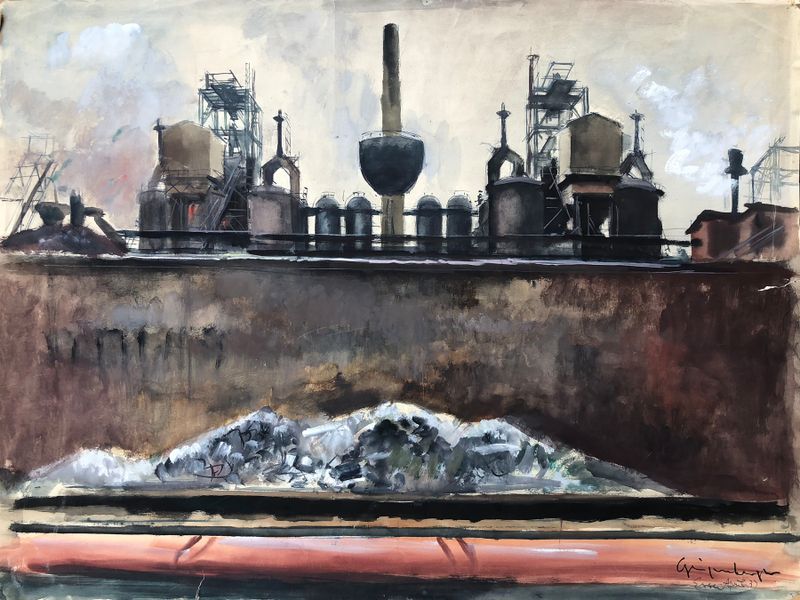
Stahlwerk Krupp in Essen
Otto Geigenberger

Landschaft mit Kirche
Otto Geigenberger

Passau am Inn 2
Otto Geigenberger
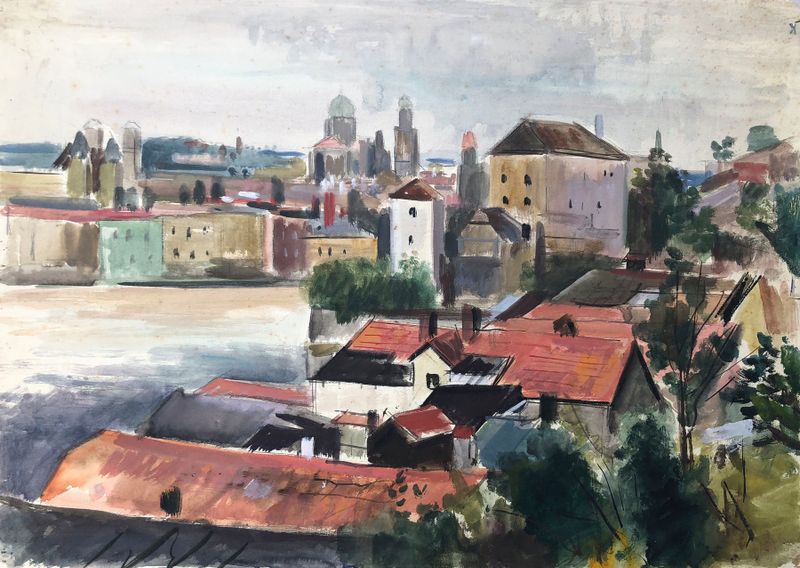
Passau am Inn
Otto Geigenberger
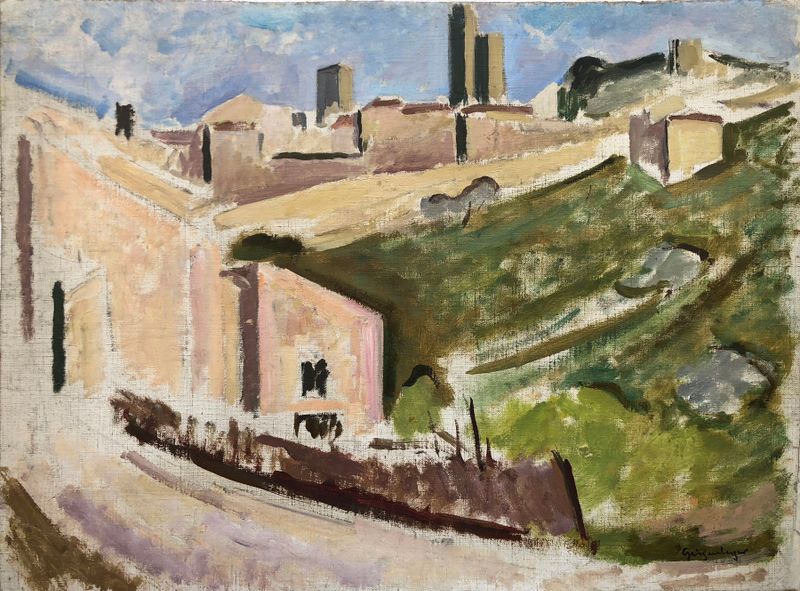
Südliche Stadt auf einem Hügel
Otto Geigenberger

Wasserburg am Inn – Häuserpartie am Inn
Otto Geigenberger

Wasserburg am Inn – Innfront
Otto Geigenberger
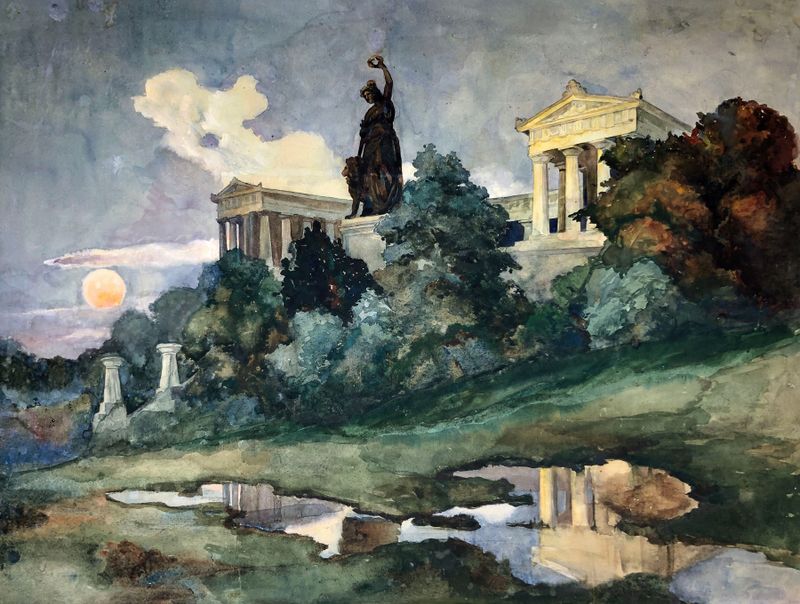
Sonnenuntergang an der Bavaria und Ruhmeshalle in München
Otto Geigenberger
Wasserburg am Inn – Innfront.
Otto Geigenberger





