Evening after rain, Auckland — History & Facts
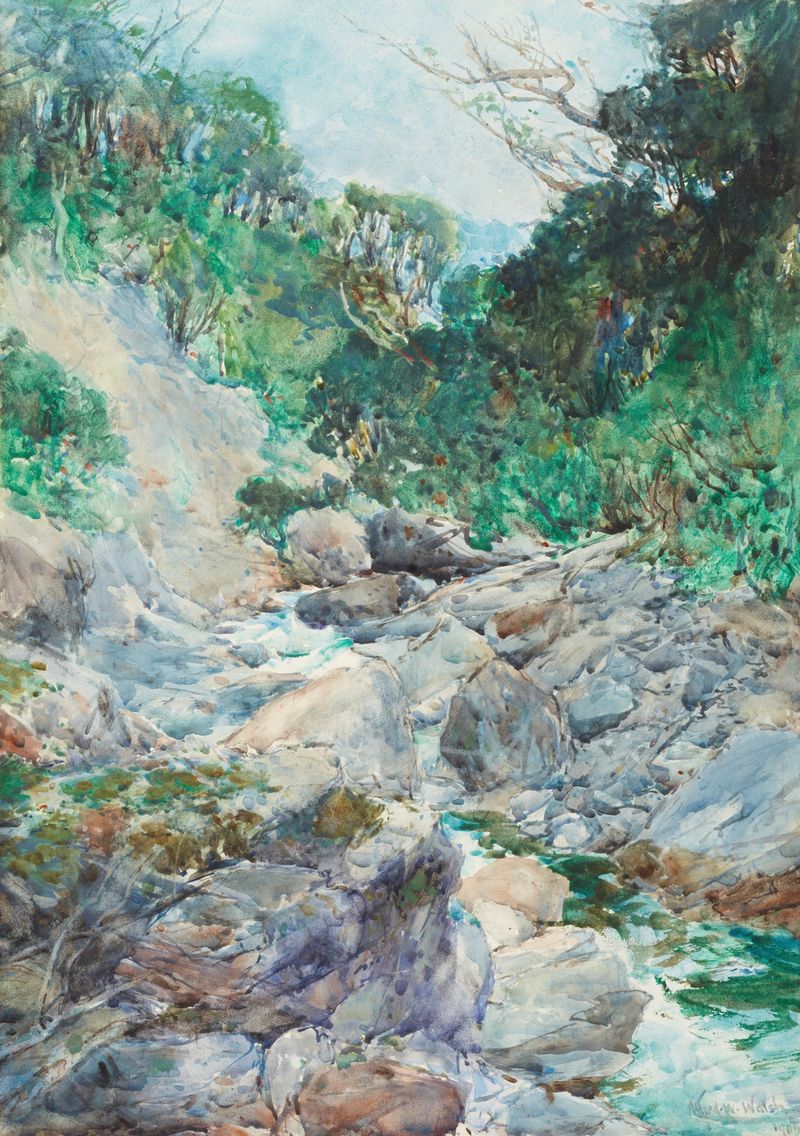
In the delicate intertwining of colors lies a yearning for serenity amid nature's turbulent beauty. Focus on the swirling clouds, where a gentle gradient of blues and grays hints at the aftermath of a fleeting storm. Notice how the artist has captured the soft glimmer of wet streets reflecting the last light of day — the asphalt glistens like a mirror, inviting you to step into the scene. Walsh’s brushwork dances across the canvas, weaving together vibrant greens and deep indigos, drawing your eye towards the horizon where intensity meets tranquility. What emerges is a poignant contrast between the remnants of the storm’s chaos and the calmness that follows.
The muted tones of the cityscape evoke a sense of solitude, while the ethereal glow offers a flicker of hope. Here, the interplay of light and shadow speaks to an emotional depth — an unspoken longing for connection and peace amid the unpredictable rhythms of life. In 1911, Walsh found himself in Auckland, a burgeoning city at the crossroads of innovation and tradition. This work reflects not only his personal artistic journey but also a broader movement towards the Impressionist style, where the ephemeral beauty of nature began to captivate artists.
The early 20th century was a time of exploration for Walsh, as he navigated his own identity while portraying the evolving landscape around him.