Harbour — History & Facts
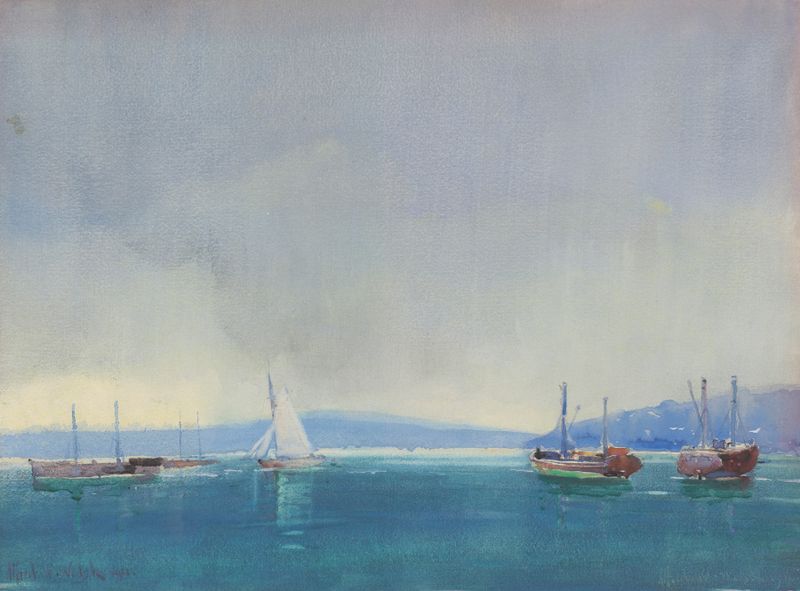
In Alfred Walsh’s Harbour, the quiet waters hold secrets that ripple beneath the surface, hinting at stories of betrayal and longing. Look to the foreground where muted, earthy tones meld seamlessly with the deep blues of the water. The boats, anchored yet restless, seem caught in a moment of waiting, their reflections dancing playfully in the waves. The subtle brushstrokes evoke a sense of melancholy; the horizon, where sky meets sea, is painted in soft grays that suggest a day nearing its end, amplifying the emotional weight of the scene. As you trace the edges of the canvas, notice how the isolation of the harbour mirrors feelings of abandonment.
The boats, though sturdy, appear vulnerable against the expansive backdrop, a powerful contrast to the serene yet ominous waters. This unsettling tranquility speaks of past betrayals—perhaps of sailors leaving loved ones behind or unfulfilled promises whispered in the night. Each detail, from the gentle undulation of the waves to the distant, fading light, encapsulates the tension between hope and despair. Walsh painted Harbour in 1912, during a period marked by artistic exploration and emotional depth in the face of modernity.
Living in the bustling atmosphere of early 20th-century art movements, he sought to capture the essence of human experience—balancing beauty with the weight of untold stories. This work stands as a testament to that pursuit, inviting viewers to reflect on the fragility of connection amidst the ever-flowing currents of time.