
Evening Landscape — History & Facts
In Evening Landscape, the artist captures a fleeting moment where the natural world transforms under the glow of twilight, an invitation to pause and reflect. Look to the horizon, where the last rays of sunlight lazily embrace the undulating hills. The deep, warm hues of orange and gold intermingle with the cool shadows creeping across the landscape, creating a gentle tension. Focus on the meticulous brushwork that outlines the trees, each stroke breathing life into the silhouette against the sky.
The composition draws your eye towards the distant horizon, leading you on a journey through this serene yet dynamic scene. This work speaks not only to the beauty of nature but also to the ephemeral nature of time itself. The contrast between light and shadow symbolizes the fleeting moments of day and night, a reminder of the inevitable passage of time. The tranquil water reflects the sky's palette, suggesting a world of transformation and duality, where every moment is both an ending and a beginning. Ferdinand Kobell painted Evening Landscape in 1771 during a period rich with artistic exploration in Germany.
He was immersed in the burgeoning Romantic movement, which emphasized emotion and the sublime beauty of nature. As he navigated his early career, Kobell was influenced by both landscape tradition and the desire to evoke deeper feelings through the depiction of the natural world, marking a significant moment in the evolution of landscape painting.
More Artworks by Ferdinand Kobell
Browse all →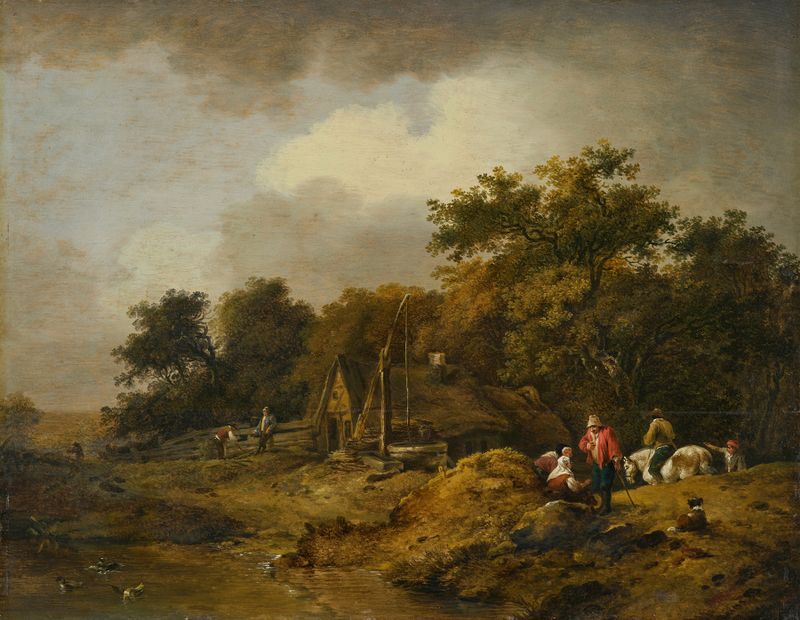
Landscape with Hut and Draw Well
Ferdinand Kobell

Mittelrheinische Flußlandschaft
Ferdinand Kobell

Mondscheinlandschaft mit Fischern am Lagerfeuer
Ferdinand Kobell
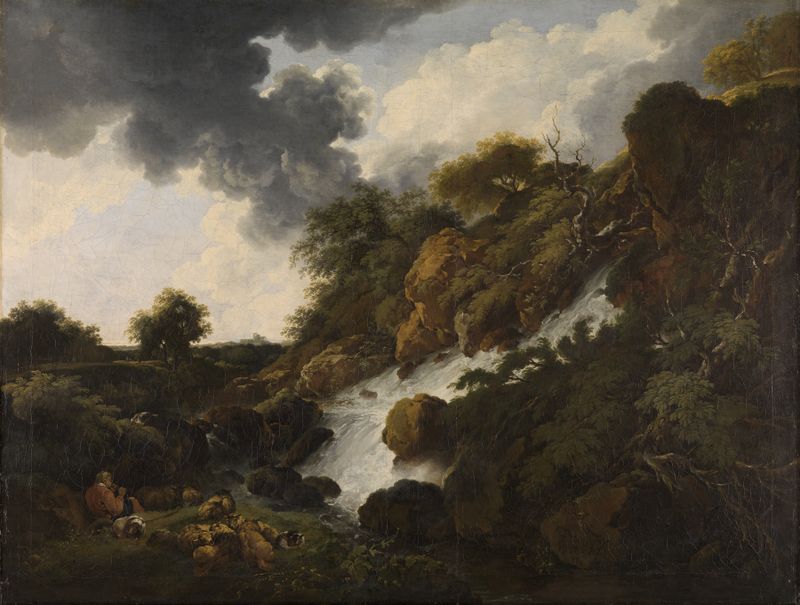
Gebirgslandschaft mit Wasserfall
Ferdinand Kobell
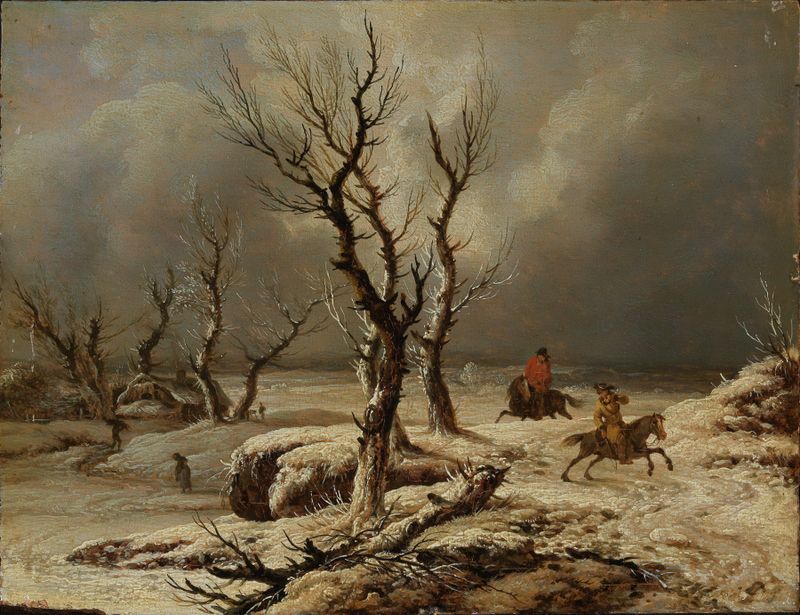
Winterlandschaft mit zwei Reitern
Ferdinand Kobell

Landscape with Travelers
Ferdinand Kobell
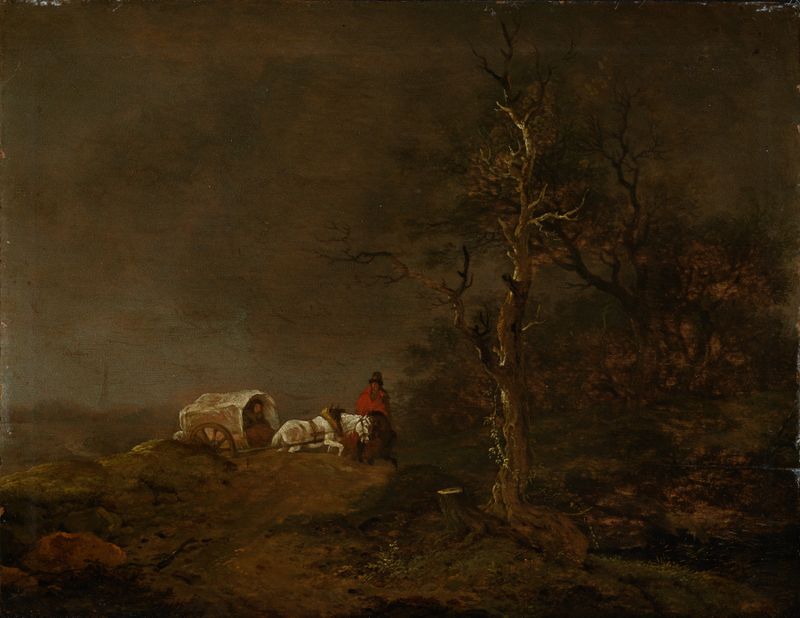
Gewitterlandschaft mit Bauernwagen
Ferdinand Kobell
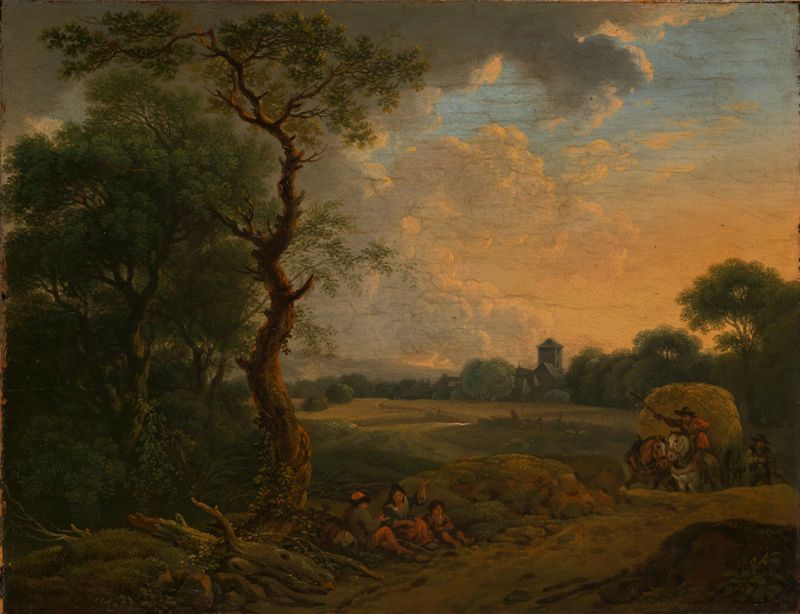
Abendlandschaft mit Heuwagen
Ferdinand Kobell
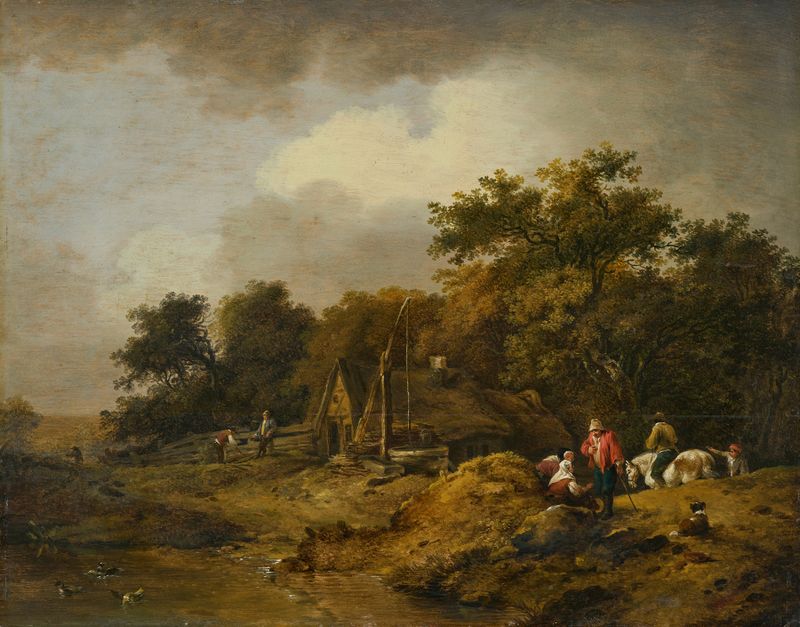
Landscape with Hut and Draw Well
Ferdinand Kobell

Burgruine mit Hirten und Herde
Ferdinand Kobell





