
Landscape with Hut and Draw Well — History & Facts
Could a single brushstroke hold eternity? In Landscape with Hut and Draw Well, the chaos of nature stands in stark contrast to the tranquility of human presence, inviting contemplation of the balance between the two. Focus first on the small, solitary hut nestled near the center of the canvas. Its modest structure is accentuated by muted earth tones, suggesting a humble existence. Notice how the erratic lines of the surrounding foliage dance around it, creating a sense of dynamic chaos that feels both inviting and foreboding.
The well, slightly to the left, is a focal point that captures the viewer's gaze, drawing attention to the human need for sustenance amidst nature's wildness. The light filters softly through the trees, creating an almost ethereal glow that captures the scene in a moment suspended in time. The juxtaposition of calm and chaos becomes palpable upon closer inspection. The frenetic brushwork in the trees evokes the untamed essence of the natural world, while the stable hut represents human resilience and the quest for order.
The well symbolizes not only a source of life but also a lifeline connecting the chaos of nature to the serenity of human existence. This tension reflects deeper themes of survival, isolation, and the harmony that can be found amid disorder. Ferdinand Kobell painted this work in 1771 during a period marked by the Enlightenment, where rational thought began to challenge traditional ideas. Living in Germany, he was influenced by the picturesque movement, which celebrated the beauty of rural landscapes.
His approach to realism in this piece captures the delicate interplay between man and nature, a reflection of both his personal experiences and the broader artistic currents of his time.
More Artworks by Ferdinand Kobell
Browse all →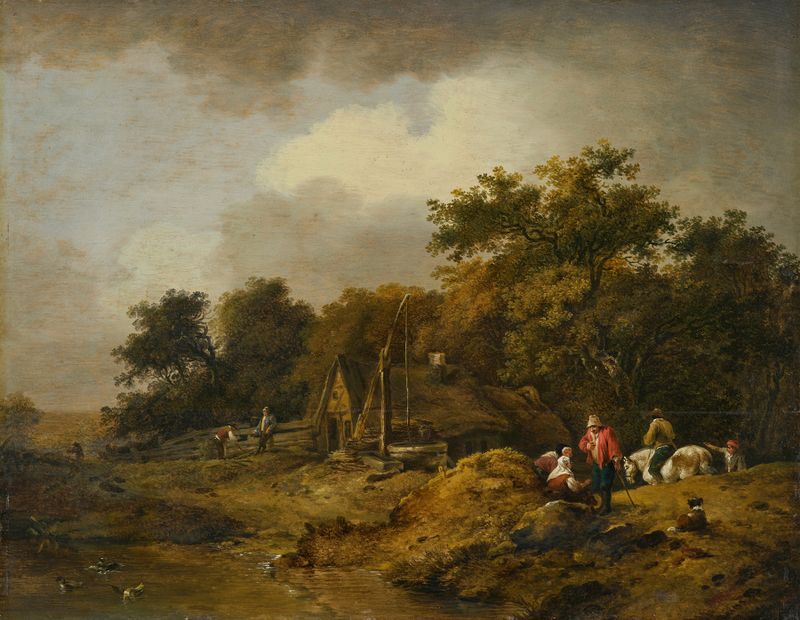
Landscape with Hut and Draw Well
Ferdinand Kobell

Mittelrheinische Flußlandschaft
Ferdinand Kobell

Mondscheinlandschaft mit Fischern am Lagerfeuer
Ferdinand Kobell
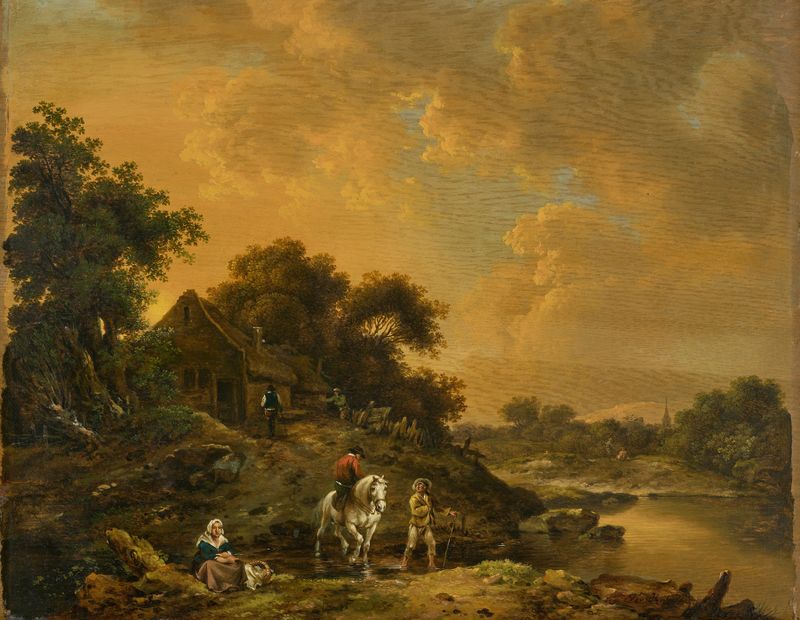
Evening Landscape
Ferdinand Kobell
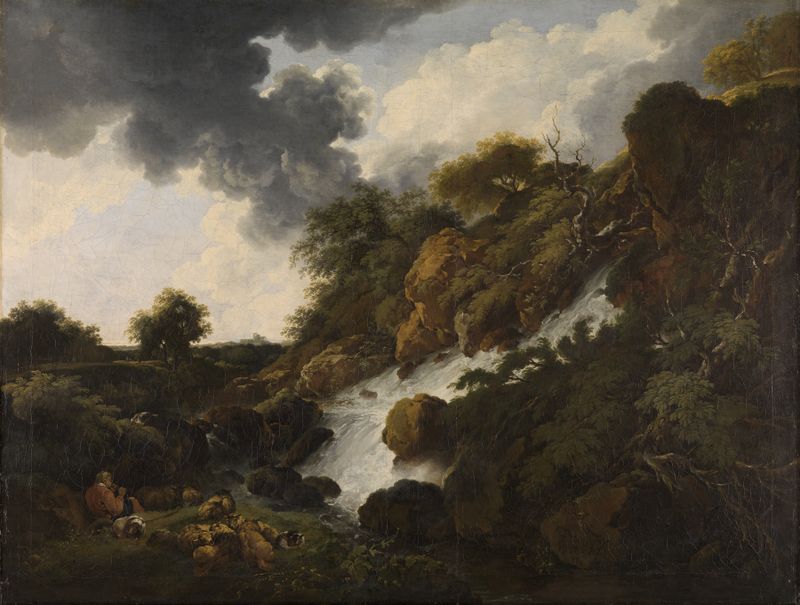
Gebirgslandschaft mit Wasserfall
Ferdinand Kobell
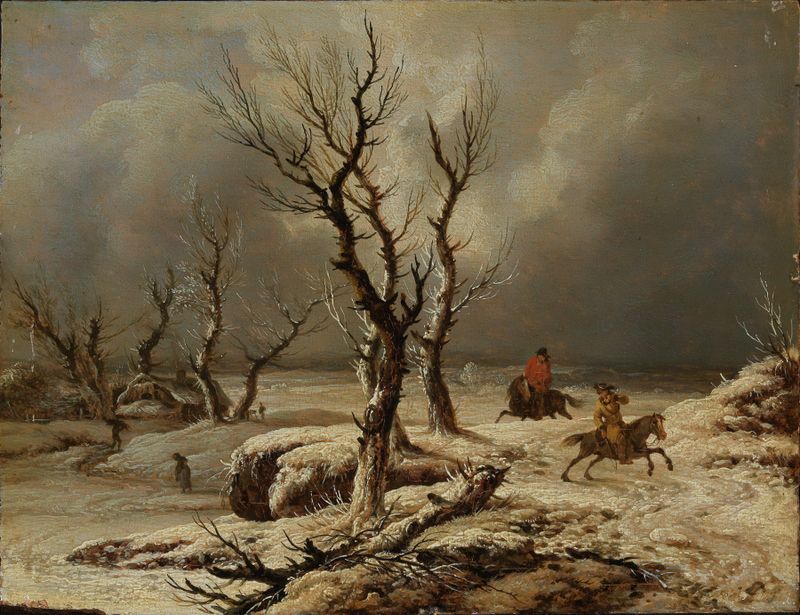
Winterlandschaft mit zwei Reitern
Ferdinand Kobell

Landscape with Travelers
Ferdinand Kobell
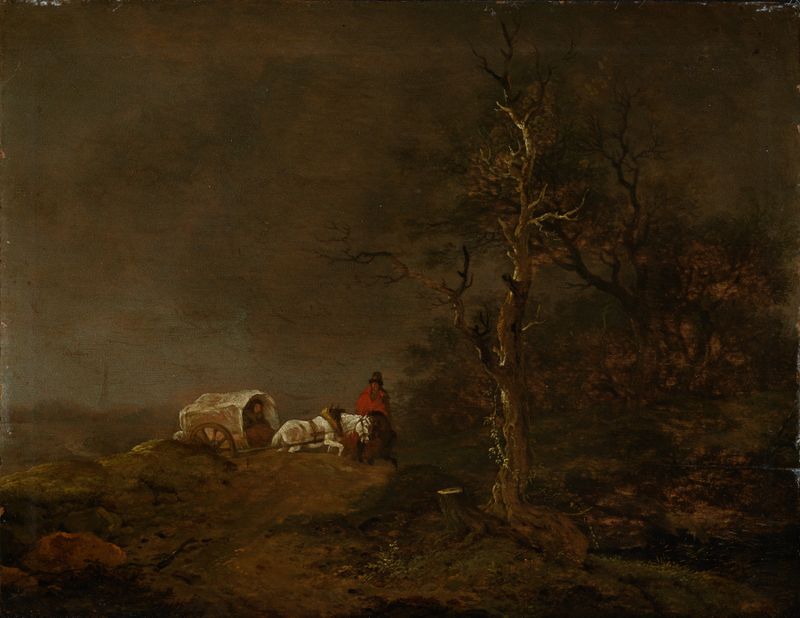
Gewitterlandschaft mit Bauernwagen
Ferdinand Kobell
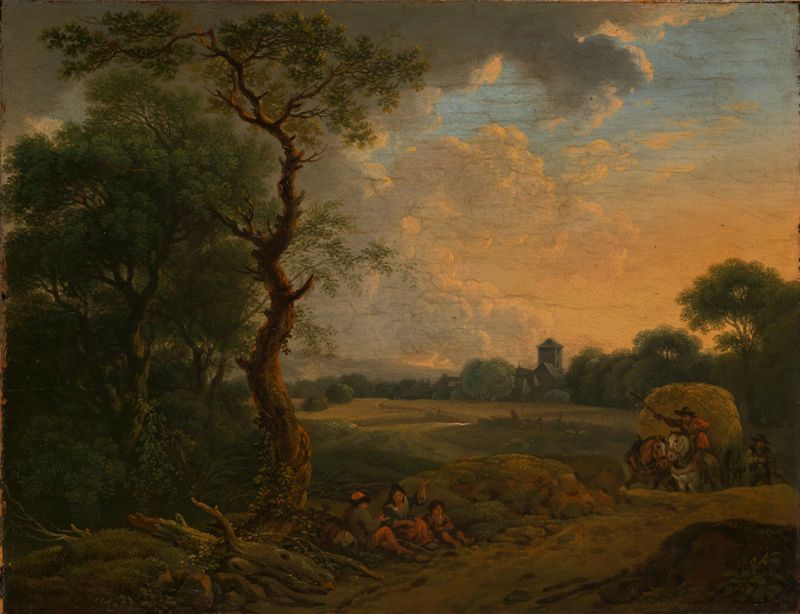
Abendlandschaft mit Heuwagen
Ferdinand Kobell

Burgruine mit Hirten und Herde
Ferdinand Kobell





