
Gewitterlandschaft mit Bauernwagen — History & Facts
Did the painter know this moment would outlive them? In Gewitterlandschaft mit Bauernwagen, a storm brews not just in the sky but also in the agricultural heart of a revolution. Look to the left, where dark, tumultuous clouds gather, their swirling forms a testament to nature's fury. The faint glimmer of sunlight manages to penetrate the storm, casting an ethereal glow on a rustic cart laden with hay, positioned prominently in the foreground. The ochres and greens of the landscape contrast sharply with the ominous grays above, underscoring the tension between the calm of the earth and the chaos of the heavens.
Each brushstroke evokes a palpable atmosphere, as if the viewer can feel the electricity crackling in the air. Delve into the details: notice the farmer in the cart, his posture a mix of resilience and vulnerability as he prepares to face the tempest. The wind seems to whisper of change, hinting at the societal upheavals that were on the horizon. The dynamic interplay of light and shadow here serves as a powerful metaphor for the uncertainty of the times; the storm symbolizes not just weather but also the potent shifts in the social order. In 1774, Kobell painted this landscape amidst a period of escalating tension in Europe, where the seeds of revolution were beginning to germinate.
Living in Mannheim, he observed the changing dynamics of agrarian life, reflecting the struggles of the peasant class amid enlightenment ideas. This work encapsulates a moment of anticipation, a visual prologue to the upheaval that lay just beyond the horizon.
More Artworks by Ferdinand Kobell
Browse all →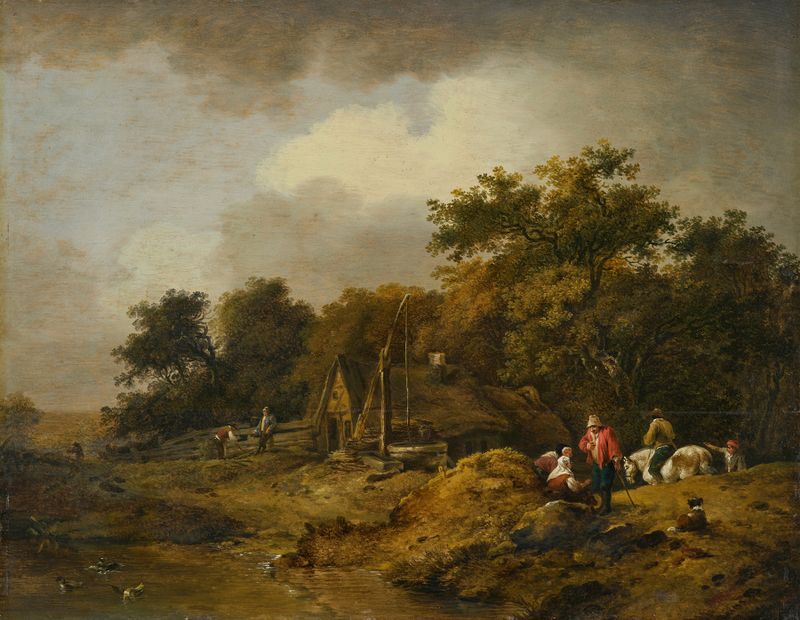
Landscape with Hut and Draw Well
Ferdinand Kobell

Mittelrheinische Flußlandschaft
Ferdinand Kobell

Mondscheinlandschaft mit Fischern am Lagerfeuer
Ferdinand Kobell
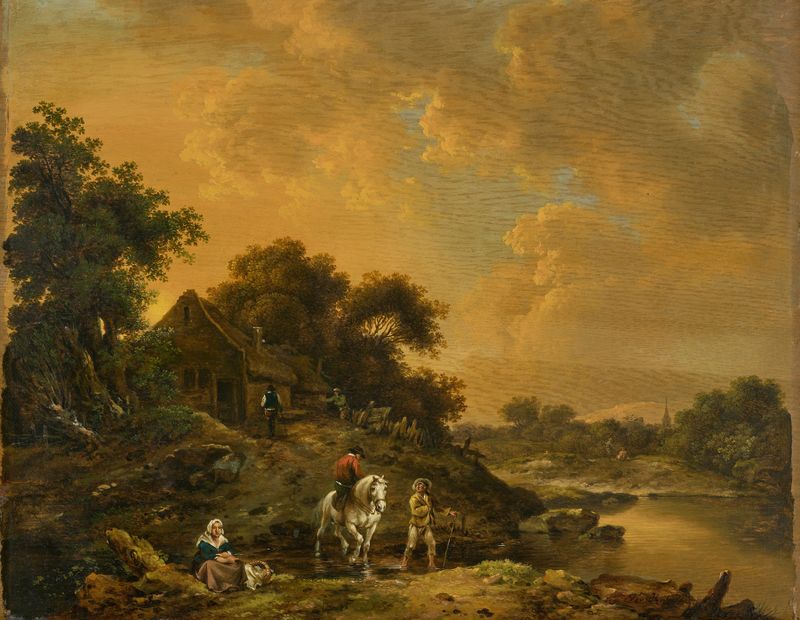
Evening Landscape
Ferdinand Kobell
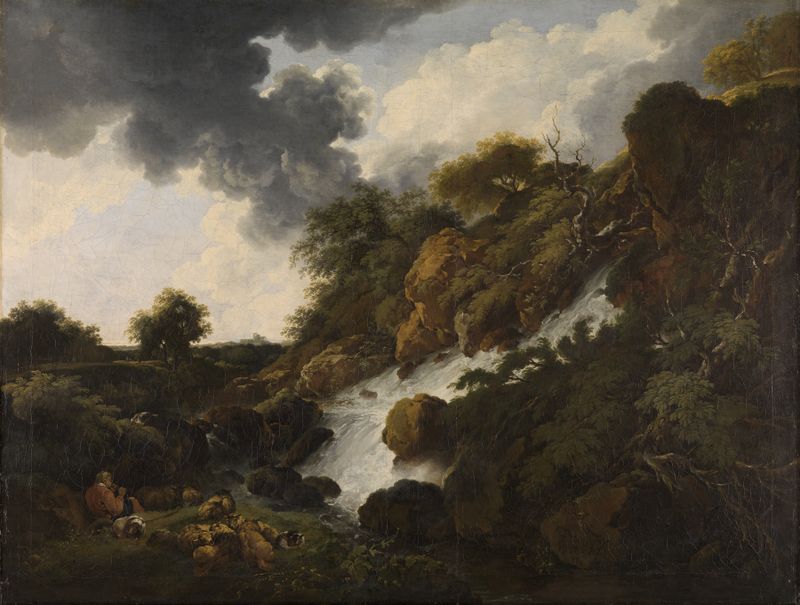
Gebirgslandschaft mit Wasserfall
Ferdinand Kobell
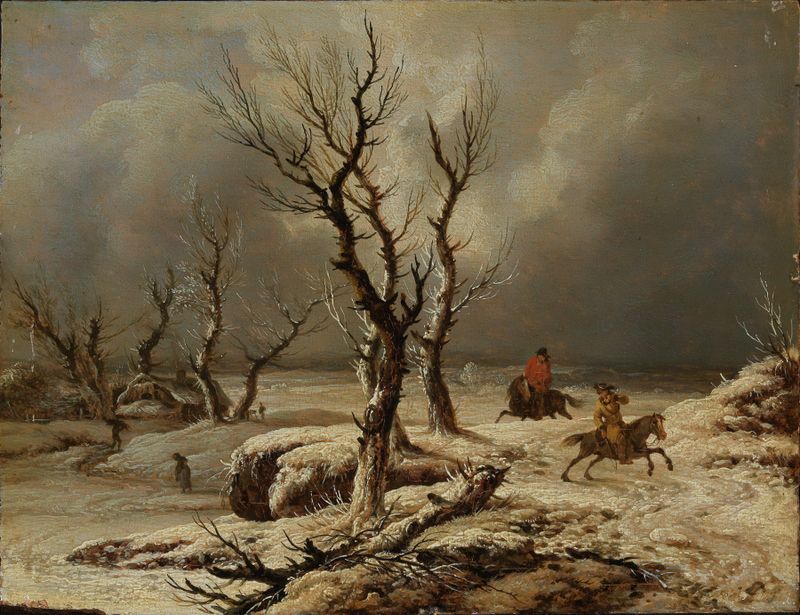
Winterlandschaft mit zwei Reitern
Ferdinand Kobell

Landscape with Travelers
Ferdinand Kobell
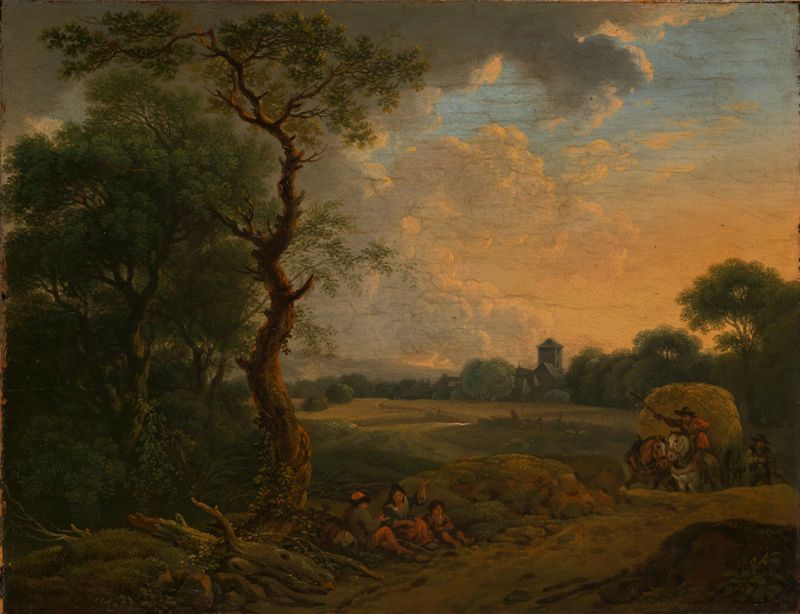
Abendlandschaft mit Heuwagen
Ferdinand Kobell
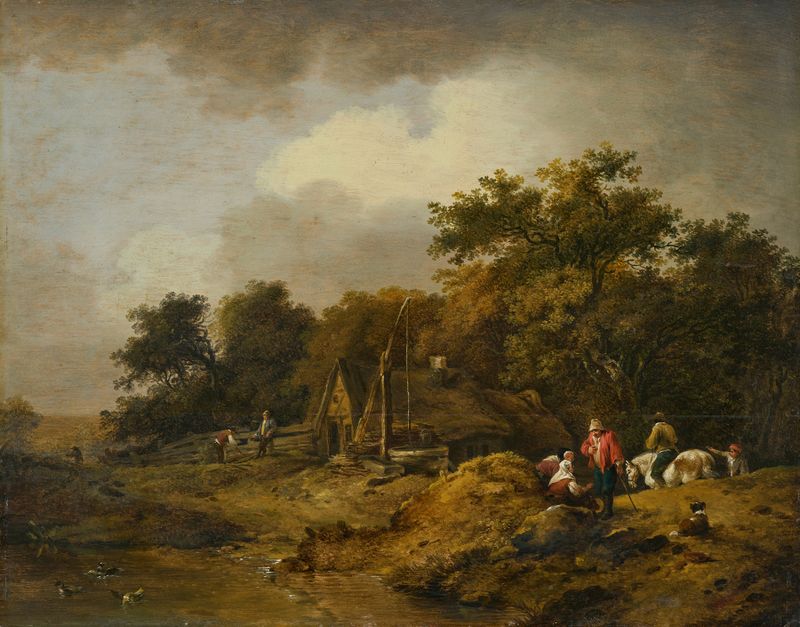
Landscape with Hut and Draw Well
Ferdinand Kobell

Burgruine mit Hirten und Herde
Ferdinand Kobell





