
Evening Pasture — History & Facts
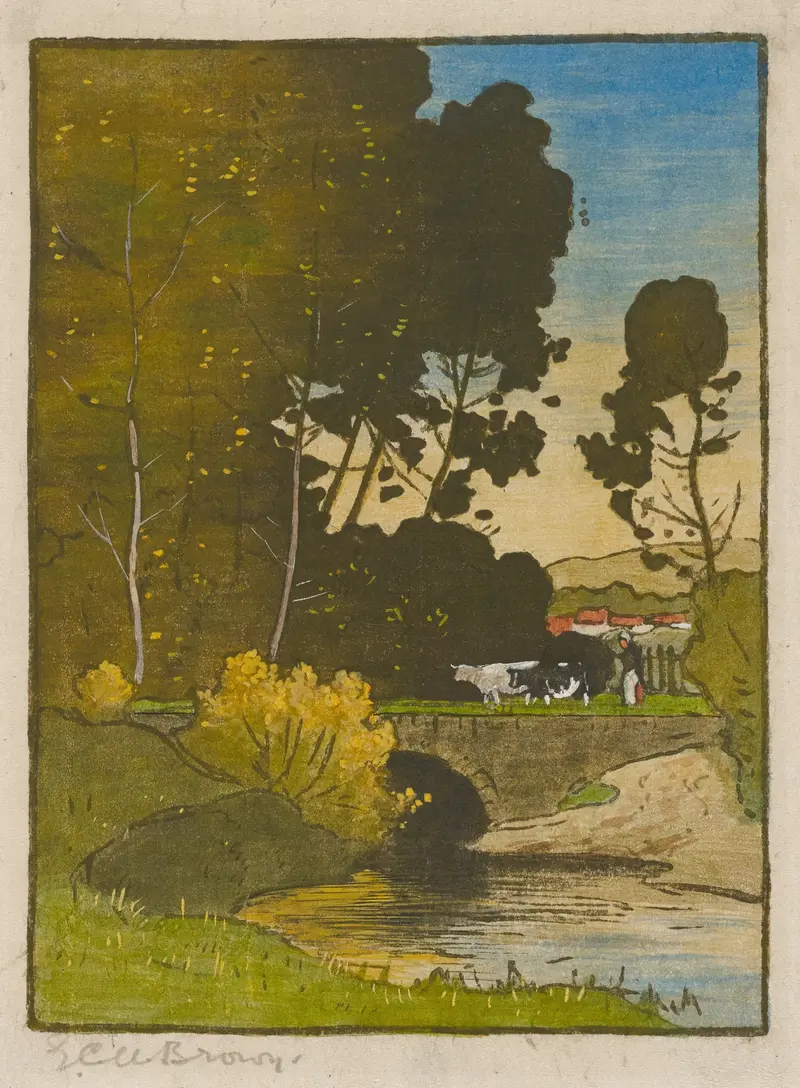
Is this a mirror — or a memory? The dance of light across the canvas beckons us to ponder the ephemeral nature of moments caught in time, suspended between reality and recollection. Focus on the gentle strokes of green that sweep across the lower half of the painting, representing the pasture in its evening glow. Notice how the light cascades softly, illuminating the tips of the grass as it mingles with the shadows, creating a captivating interplay that draws the eye deeper into the scene. The warm tones of orange and gold spill from the horizon, casting an inviting warmth that contrasts against the cool blues above, inviting viewers to feel the embrace of twilight. Here, the emotional tension unfolds in the juxtaposition of light and shadow, a delicate balance that suggests the fleeting nature of day.
The pools of sunlight seem to whisper of warmth and comfort, while the encroaching shadows hint at the mystery of what lies ahead. As you look closer, the subtle textures of the brushwork evoke a sense of nostalgia, as if the pasture itself holds stories longing to be told, preserving the remnants of memory in its embrace. Elizabeth Christie Austen Brown created Evening Pasture around 1920, a period marked by personal exploration and a burgeoning interest in modernist aesthetics. Living in the aftermath of the Great War, artists sought solace in nature, capturing its serene beauty as a refuge from the tumult of the world.
Brown, influenced by the natural landscapes she admired, infused her work with the essence of tranquility, reflecting a collective yearning for peace and harmony during a time of upheaval.
More Artworks by Elizabeth Christie Austen Brown
More Landscape Art

The Starry Night
Vincent van Gogh

View of Delft
Johannes Vermeer

Water Lilies
Claude Monet

The Grand Canal, Venice, looking north-west from the Ca' Corner to the Ca' Contarini degli Scrigni, with the campanile of Santa Maria della Carità
Canaletto

Windsor Castle
Canaletto

The Grand Canal looking North-East from the Palazzo Dolfin-Manin to the Rialto Bridge
Canaletto