
Evening rest — History & Facts
Under the brush, chaos becomes grace. In the serene embrace of twilight, light becomes a character, gently weaving through shades of blue and amber, revealing the beauty hidden in the shadows. Look to the left at the soft interplay between the light and the flowing lines of the figures resting peacefully. The warm hues of the fading sun cast a golden glow on the skin, illuminating the expressions of tranquil contentment.
Notice how the delicate strokes capture the texture of the fabric and the softness of the surroundings, inviting you to linger in the moment. The composition draws the eye inward, creating a sense of intimacy that is both inviting and reflective. The juxtaposition of light and dark carries a deeper significance; it suggests the fleeting nature of rest and the inevitable return to the chaos of life. The gentle curves of the bodies contrast against the sharp lines of the fading day, implying a harmony that can only be found in stillness.
These details whisper about the balance between serenity and turmoil, revealing a profound understanding of the human condition within quiet moments. In 1896, while painting this piece, the artist found himself immersed in a world that was rapidly transforming—innovations in both art and society were reshaping perceptions of beauty and form. Living in the United States during this period of transition, he explored new techniques and themes, capturing the subtle nuances of light and emotion that would define his legacy.
More Artworks by Louis Kinney Harlow
Browse all →
West Chop Light, Vineyard Sound, Mass.
Louis Kinney Harlow
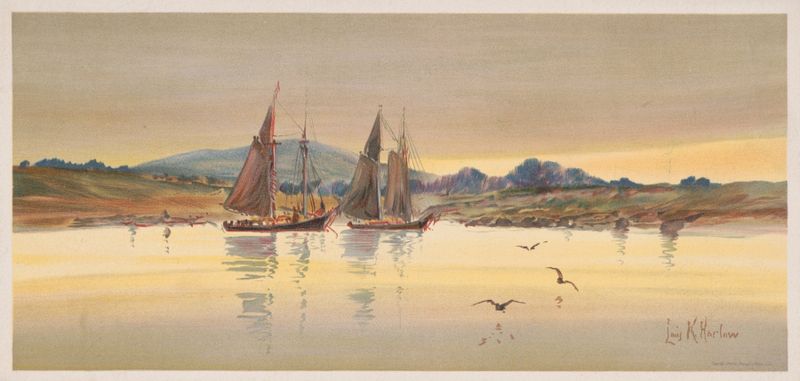
Sunset in Rockland Harbor
Louis Kinney Harlow
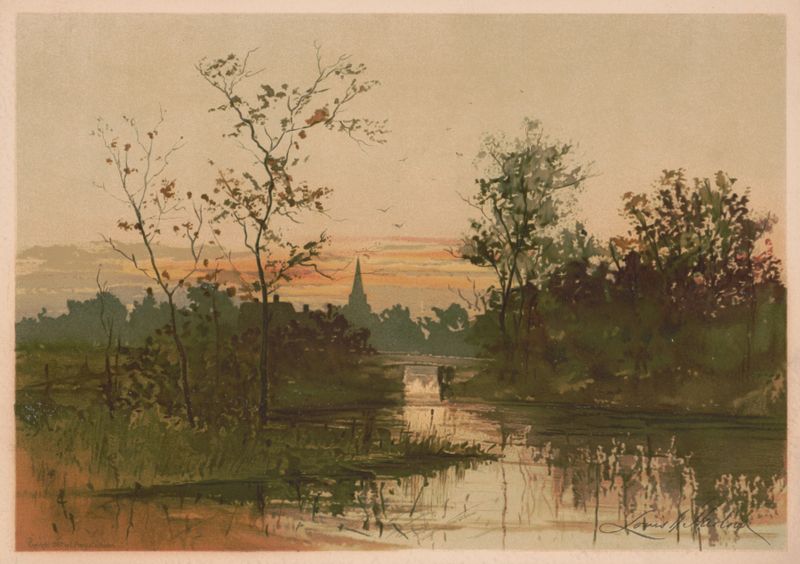
Nemasket River, Maine
Louis Kinney Harlow
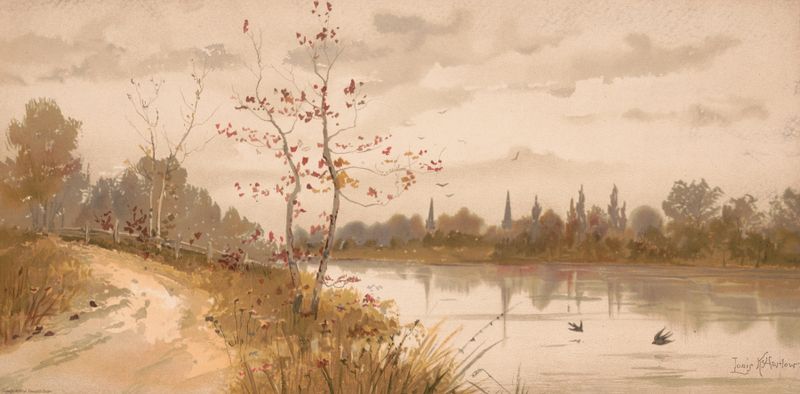
A river path
Louis Kinney Harlow

Castine, Maine
Louis Kinney Harlow

A bit of Monhegan, Maine
Louis Kinney Harlow
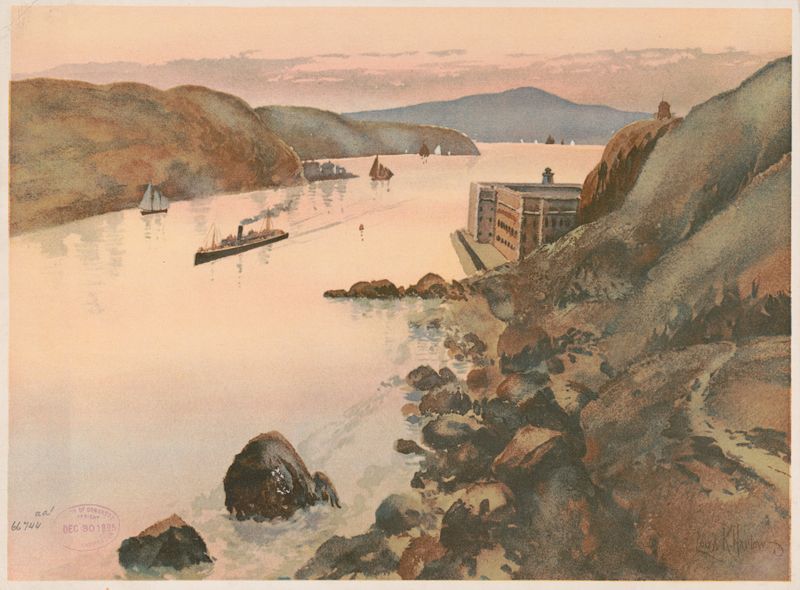
Fortifications and Golden Gate
Louis Kinney Harlow

Blue Hills, Camden, Me.
Louis Kinney Harlow

Near Boothbay Harbor, Maine coast
Louis Kinney Harlow

Two fishermen
Louis Kinney Harlow





