
Fortifications and Golden Gate — History & Facts
Who listens when art speaks of silence? In Fortifications and Golden Gate, the stillness of the landscape resonates with an unspoken narrative, inviting viewers to explore the movement embedded in its serene composition. Look to the left, where the fortress stands resolute against the backdrop of the distant hills. The strong lines of the ramparts contrast sharply with the soft, flowing curves of the water beneath the bridge, pulling the eye across the canvas. Notice how the warm golden hues of the setting sun bathe the scene in a gentle glow, illuminating the textures of the stone and the tranquility of the sea.
This careful interplay of light and shadow evokes a sense of both stability and fluidity, suggesting that while the fortifications are immovable, life continues to ripple around them. The juxtaposition of the static defenses and the dynamic waters creates a tension that speaks to the passage of time. The golden light hints at a fleeting moment, reminding us that even the most steadfast structures are subject to the inexorable flow of nature. Furthermore, the positioning of the bridge suggests a connection, a pathway that invites exploration yet remains untouched—a silent beckoning to venture forth while remaining anchored in place. In 1895, Harlow painted this work during a period of considerable artistic experimentation in America.
With rapid industrialization and social change, the artist found himself navigating a complex world where nature and man-made structures coexisted. Working from his studio in California, he sought to capture this balance, reflecting both the beauty of the landscape and the encroachment of civilization, a theme that resonated deeply within the art community of his time.
More Artworks by Louis Kinney Harlow
Browse all →
West Chop Light, Vineyard Sound, Mass.
Louis Kinney Harlow
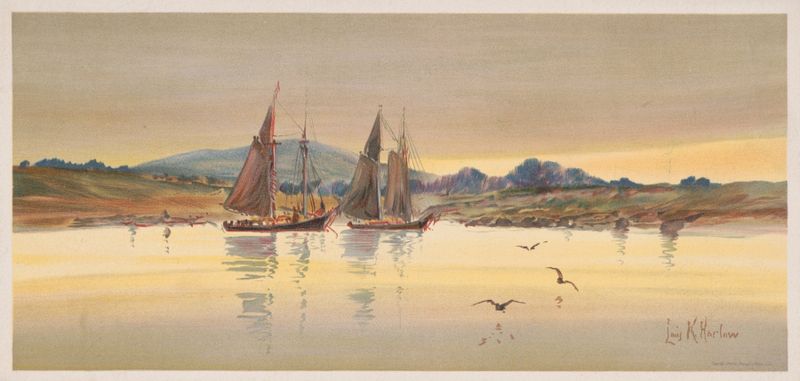
Sunset in Rockland Harbor
Louis Kinney Harlow
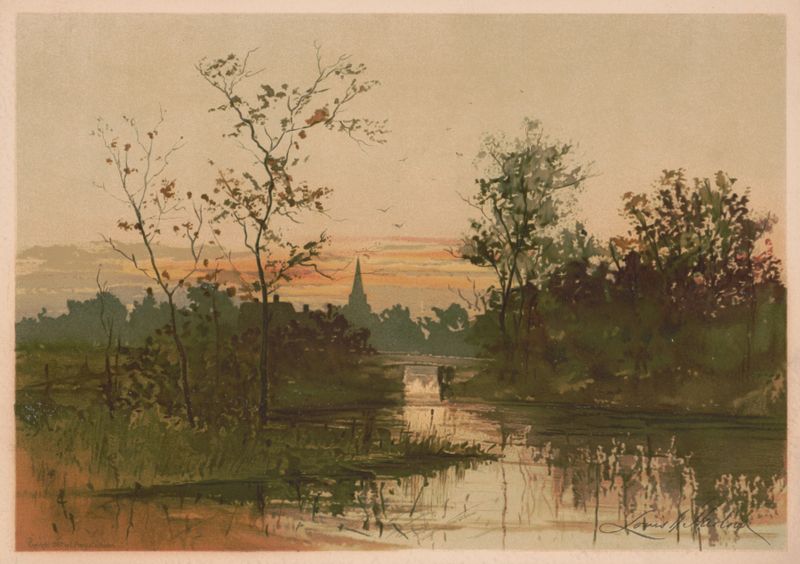
Nemasket River, Maine
Louis Kinney Harlow
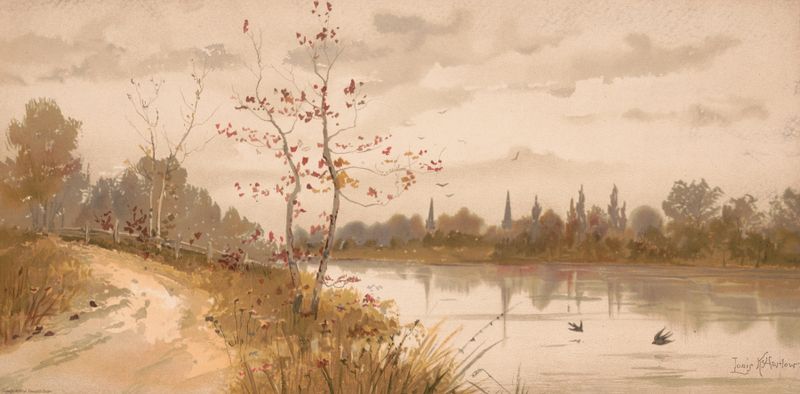
A river path
Louis Kinney Harlow

Castine, Maine
Louis Kinney Harlow

A bit of Monhegan, Maine
Louis Kinney Harlow

Blue Hills, Camden, Me.
Louis Kinney Harlow

Near Boothbay Harbor, Maine coast
Louis Kinney Harlow

Evening rest
Louis Kinney Harlow
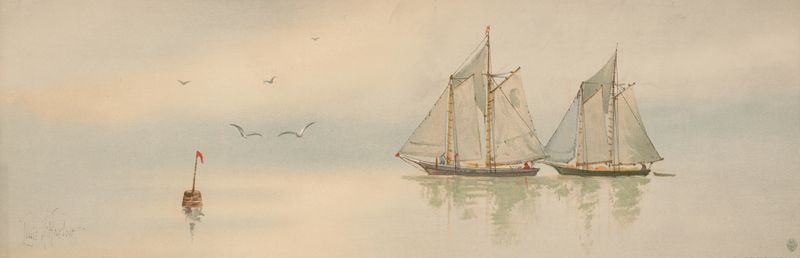
Two fishermen
Louis Kinney Harlow





