Falaises à Belle-Isle en mer — History & Facts
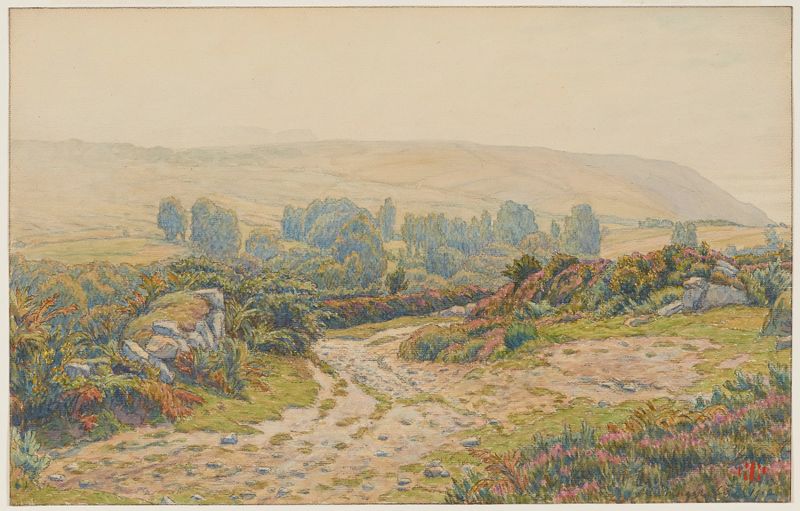
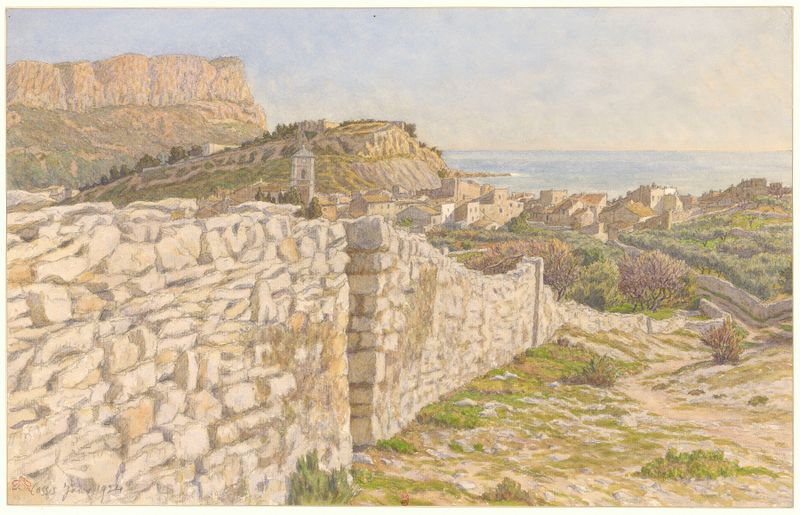
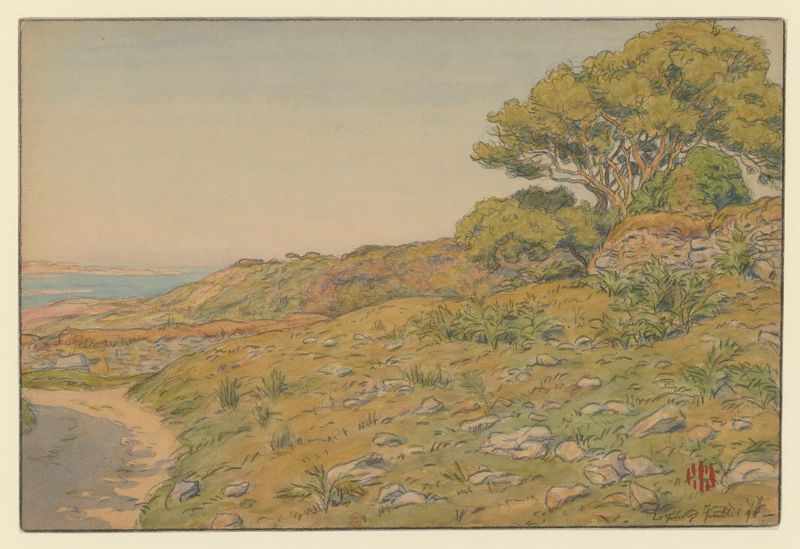
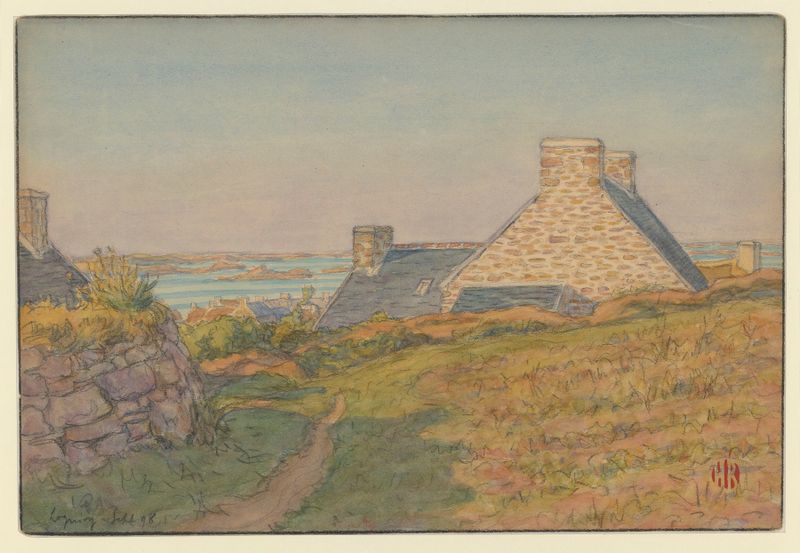
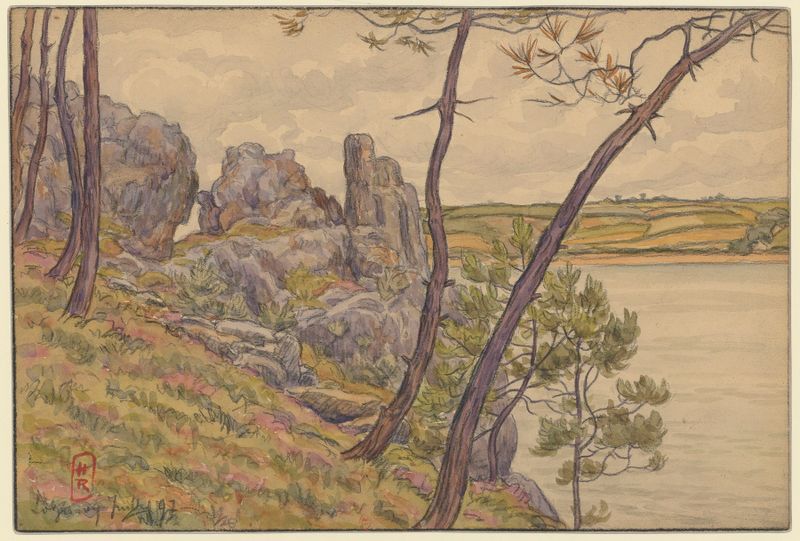
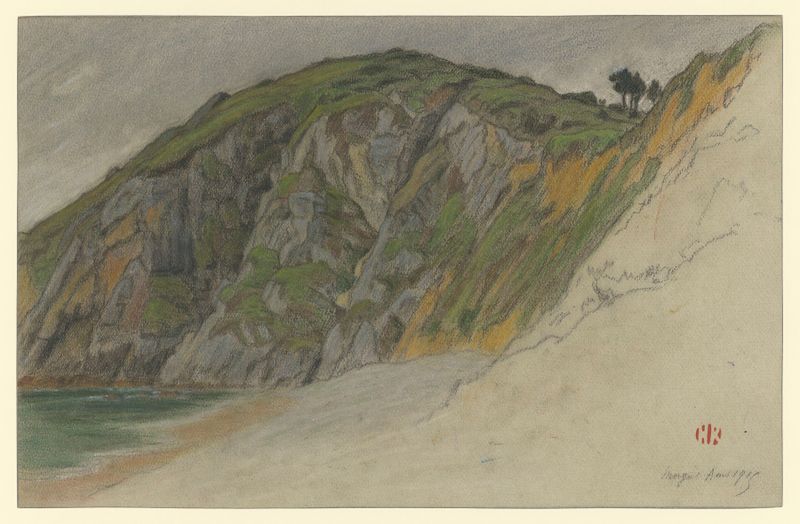
In the stillness of a coastal evening, the watercolor whispers tales of solitude and introspection, inviting the viewer to ponder what lies beyond the horizon. Look to the left at the jagged cliffs, their textured surfaces captured with fluid brushstrokes that evoke both strength and fragility. The delicate interplay of greens and grays suggests a world shaped by the relentless forces of nature, while the gentle waves below reflect a shimmering light as they lap against the rocky shore. Notice how the artist balances the vibrancy of nature with the muted tones of the sky, creating an atmosphere that breathes both life and quietude into the canvas. Beneath the surface, contrasts emerge—a juxtaposition of solidity and fluidity, permanence and transience.
The cliffs stand resolute against the passage of time, yet the soft hues of the ocean suggest an ephemeral beauty, a moment captured forever in the ebb and flow of life. This tension resonates with the viewer, hinting at the unspoken stories of those who have stood upon the shore, gazing out into the vast unknown. Created in 1910, this artwork reflects Rivière's connection to the landscapes of Brittany, where he often found inspiration. At this time, the artist was deeply engaged with the Symbolist movement, exploring themes of nature and emotion through his unique style.
His immersion in the coastal scenery, coupled with the broader cultural shifts in France, allowed him to craft a piece that captures both the visual splendor of the seascape and the profound silence that it evokes.