
Farm at Goldsheim — History & Facts
Who listens when art speaks of silence? In Farm at Goldsheim, stillness echoes through the verdant fields, inviting contemplation of life and mortality amidst the beauty of the natural world. Look closely at the left side of the painting, where the rich greens of the landscape meet the gentle hues of the sky. The artist's brushstrokes capture the play of light as it spills over the rolling hills, creating a serene yet haunting atmosphere. Notice how the farmhouse stands isolated, its facade warm and inviting, yet surrounded by an expanse that hints at solitude.
The careful arrangement of elements — the trees framing the scene, the distant mountains — creates a harmonious yet melancholic balance that beckons for deeper exploration. In this tranquil tableau, contrasts emerge between the vibrancy of life and the inevitable passage of time. The verdant fields, lush with growth, symbolize the vitality of nature, while the solitary farmhouse suggests human fragility. The presence of the distant mountains, shrouded in clouds, evokes a sense of foreboding, a reminder that beauty is often intertwined with the fleeting nature of existence.
This interplay of life and stillness speaks to the heart of mortality, urging viewers to reflect on their own transient journeys. Adolph Tidemand created Farm at Goldsheim in 1838 while living in Norway, during a period of increasing Romanticism in art. The landscape genre was flourishing, as artists sought to capture the essence of their homeland and the emotions it inspired. Tidemand, influenced by his surroundings and the cultural shifts of the time, embraced the melancholic beauty of nature, marking a pivotal moment in his exploration of the relationship between humanity and the landscape.
More Artworks by Adolph Tidemand
Browse all →
Bridal Procession on the Hardangerfjord
Adolph Tidemand

Fra Haugsbygd
Adolph Tidemand

Domkirkeruinen, Hamar
Adolph Tidemand
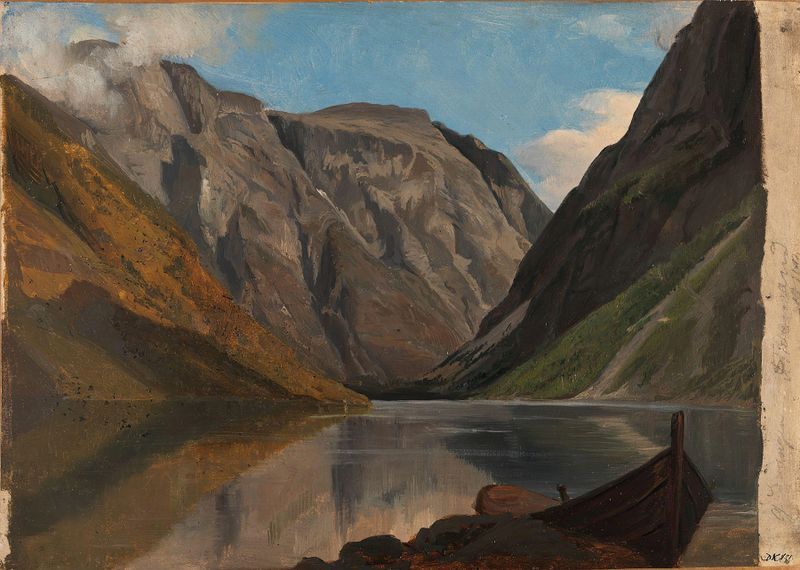
View of Gudvangen
Adolph Tidemand

Hagestad prestegård, Ulvik i Hardanger
Adolph Tidemand

View from Gudvangen
Adolph Tidemand

Fra Gulsvik
Adolph Tidemand

From Kullen in Sweden
Adolph Tidemand

Country Road
Adolph Tidemand

Untitled
Adolph Tidemand





