
Femme au bord de l’eau — History & Facts
What secret hides in the quiet of the canvas? In Femme au bord de l’eau, the stillness of the scene invites contemplation, allowing reflections to dance between the viewer and the painting's serene subject. Look to the left, where the figure of a woman emerges, clad in flowing garments that flutter gently in an unseen breeze. Notice the delicate brushstrokes that capture the shimmering surface of the water, reflecting the sky above and the ethereal beauty of the surrounding nature. The soft palette of greens and blues creates a tranquil atmosphere, while the dappled light filtering through the trees suggests the warmth of a fading day, inviting an intimate connection with the scene. There’s a palpable contrast between the figure’s calm demeanor and the rippling water that surrounds her, symbolizing the tension between inner peace and the relentless currents of life.
Her gaze, though directed towards the horizon, hints at introspection, as if she is lost in thoughts that ripple just beneath the surface. The surrounding foliage frames her perfectly, serving not only as a backdrop but also as a reminder of the vibrant world that envelops her, urging the viewer to ponder their own reflections and quiet moments. Created in the late 19th century, Femme au bord de l’eau reflects Paul Désiré Trouillebert's interest in capturing the interplay of light and nature during a time of shifting artistic values. Working during an era defined by Impressionism, he embraced a style that celebrated the beauty of the natural world, often exploring themes of solitude and contemplation in his works.
More Artworks by Paul Désiré Trouillebert
Browse all →
Paysage aux lavandières
Paul Désiré Trouillebert
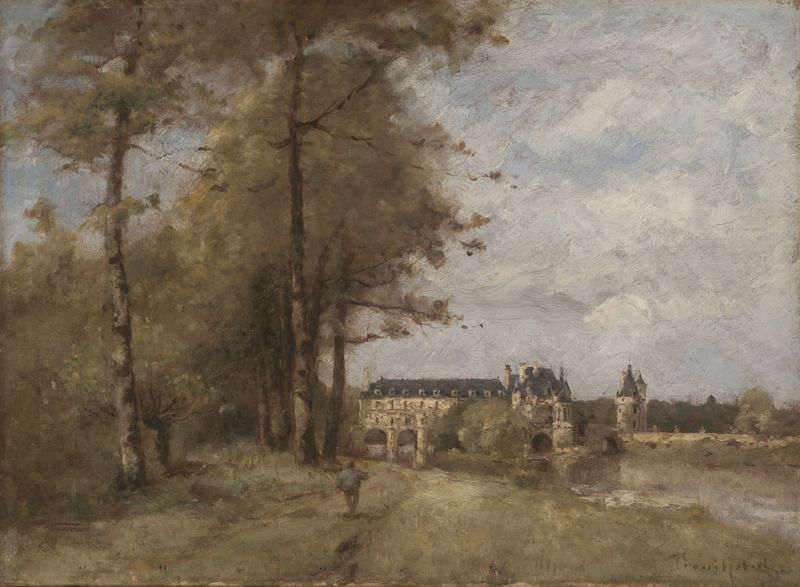
El castillo de Chenonceaux
Paul Désiré Trouillebert
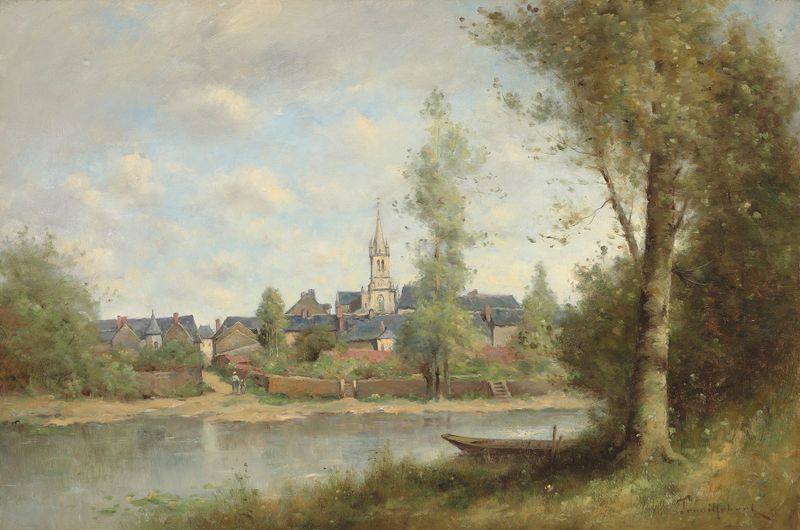
Vue De La Flèche
Paul Désiré Trouillebert

Heimweg am Fluss
Paul Désiré Trouillebert
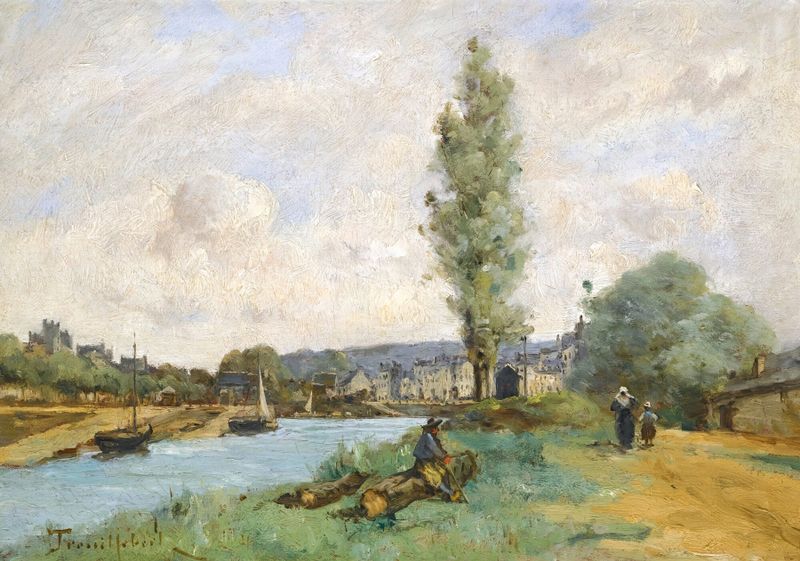
Le Pont De Landernau, Finistere
Paul Désiré Trouillebert
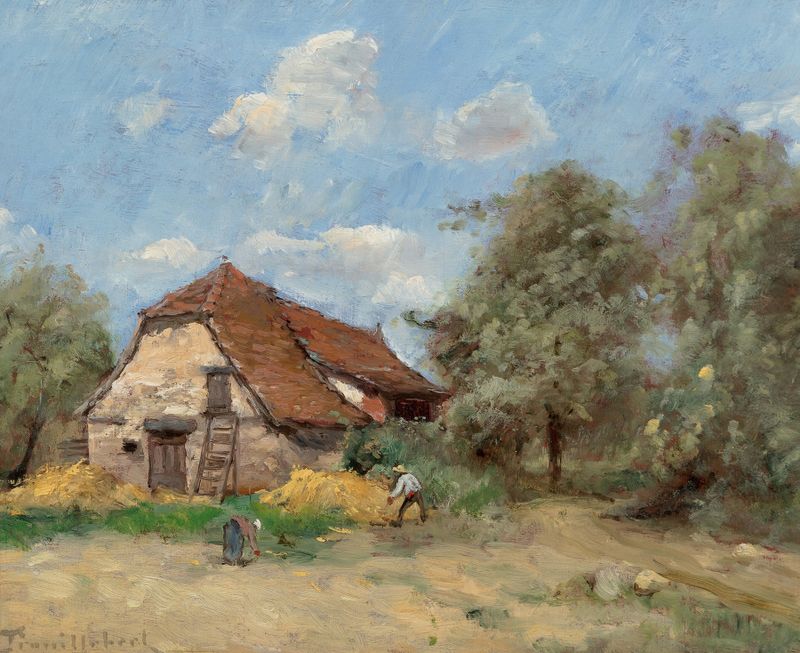
Le faucheur près de la ferme
Paul Désiré Trouillebert
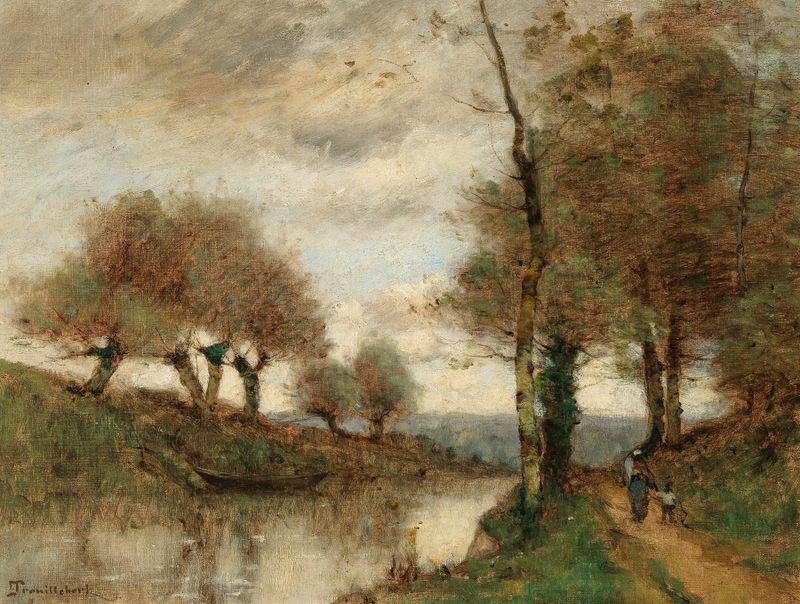
Returning Home along the River
Paul Désiré Trouillebert

Les Fagoteuses Au Bord De L’eau
Paul Désiré Trouillebert
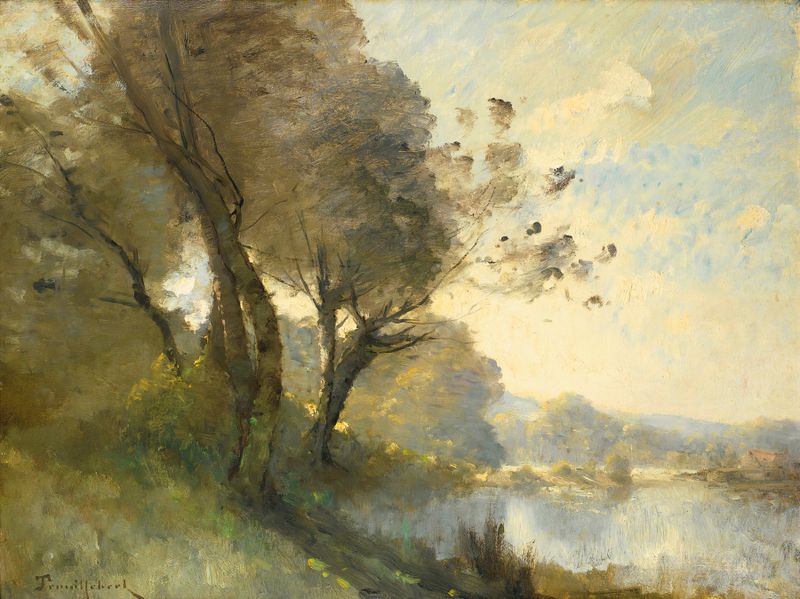
Barrage En Ruine Sur La Vienne
Paul Désiré Trouillebert
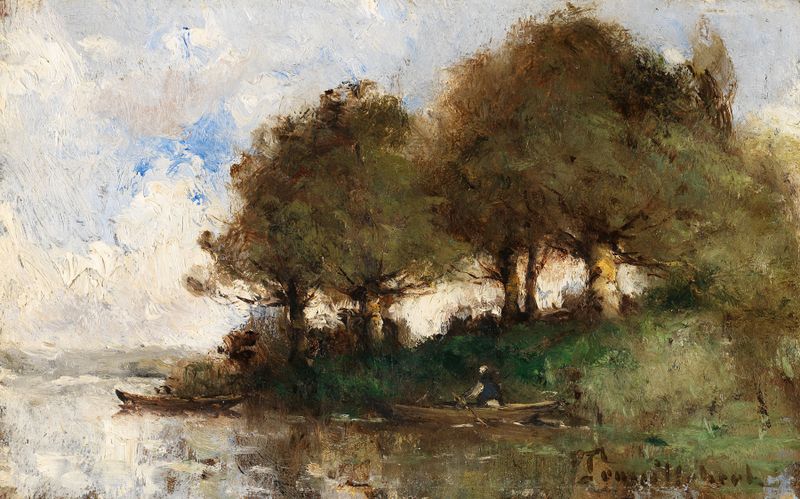
Flussufer
Paul Désiré Trouillebert





