Discover insights about this artwork
Femmes Animaux et Feuillages — History & Facts
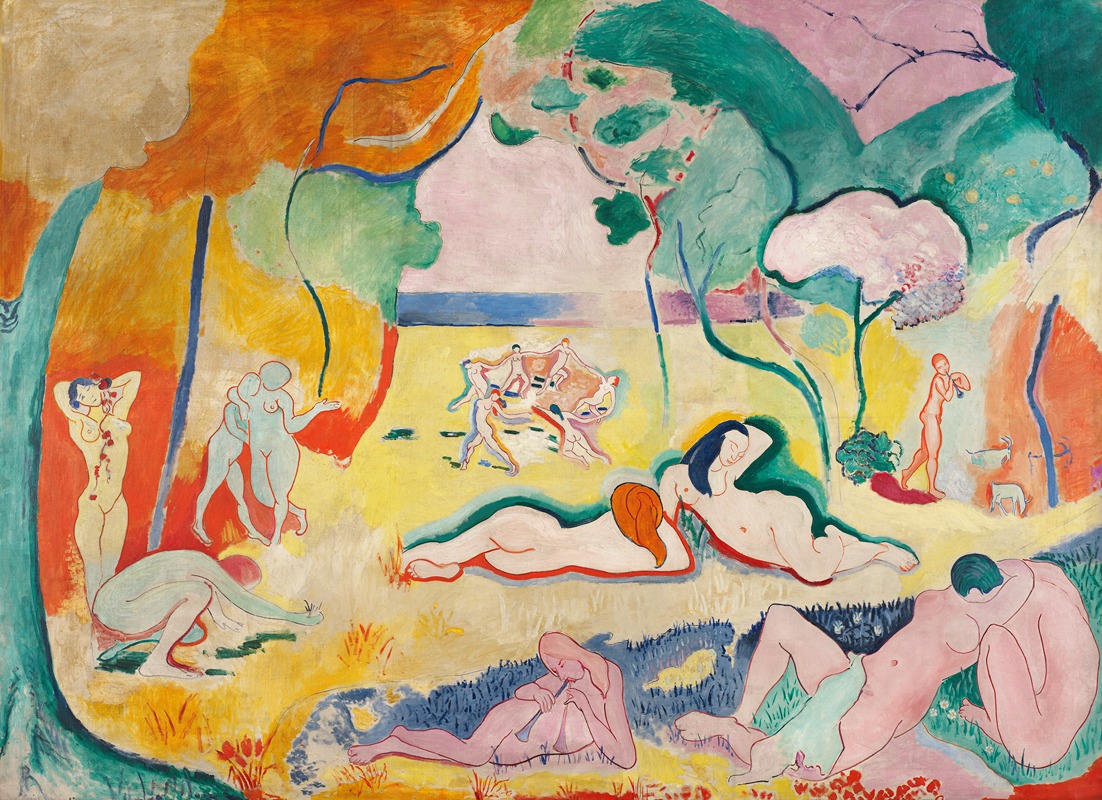
In Femmes Animaux et Feuillages, vibrant colors dominate the canvas, showcasing figures of women intertwined with lush foliage and animals. The use of bold greens, deep reds, and bright yellows creates a lively atmosphere. The figures appear to be part of the natural world, blending seamlessly into the surrounding plants and creatures.
This fusion of humanity and nature is a hallmark of Gauguin's style. The painting is executed in oil on canvas, a medium that allows for rich color application and texture. Gauguin's brushwork is expressive, with visible strokes that add depth and movement to the scene. The composition is balanced yet dynamic, drawing the viewer's eye across the canvas.
The approximate dimensions of the work are 80 x 100 cm, making it a substantial piece that invites close inspection. Paul Gauguin was a leading figure in the Post-Impressionism movement, known for his bold use of color and symbolic content. Femmes Animaux et Feuillages reflects his interest in the relationship between humans and nature, a recurring theme in his work. An interesting fact about this painting is that it was created during Gauguin's time in Tahiti, where he sought to escape European civilization and find inspiration in the island's culture.
This work exemplifies his desire to depict a world that is both exotic and deeply connected to the natural environment.
More Artworks by Paul Gauguin
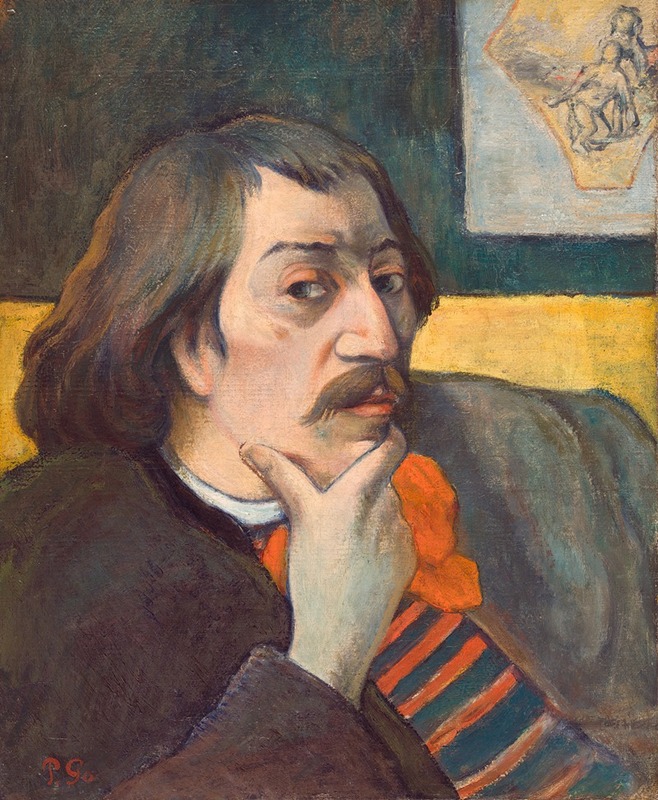
Self Portrait
Paul Gauguin
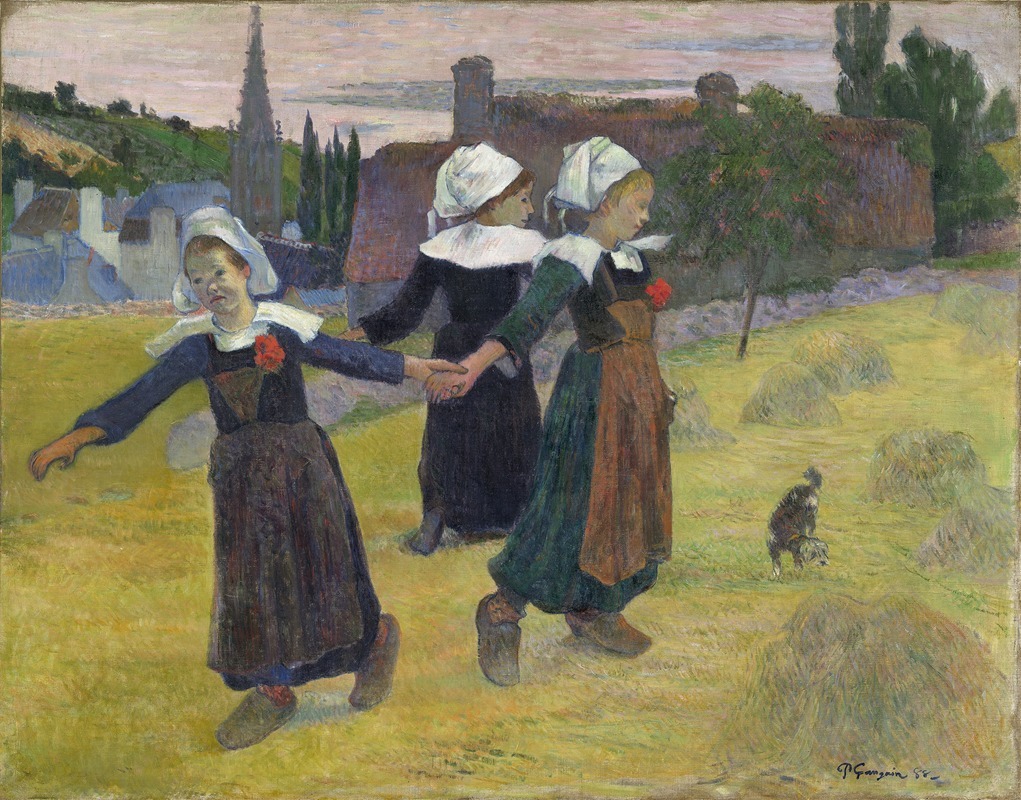
Breton Girls Dancing,Pont-Aven
Paul Gauguin
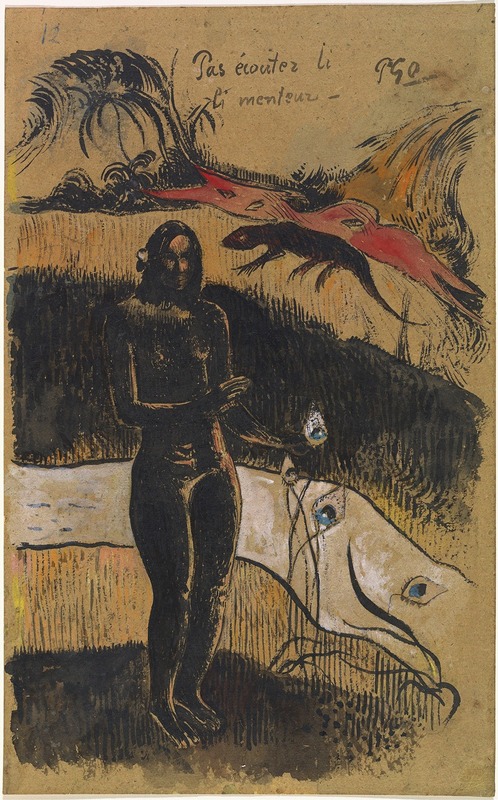
Nave Nave Fenua
Paul Gauguin
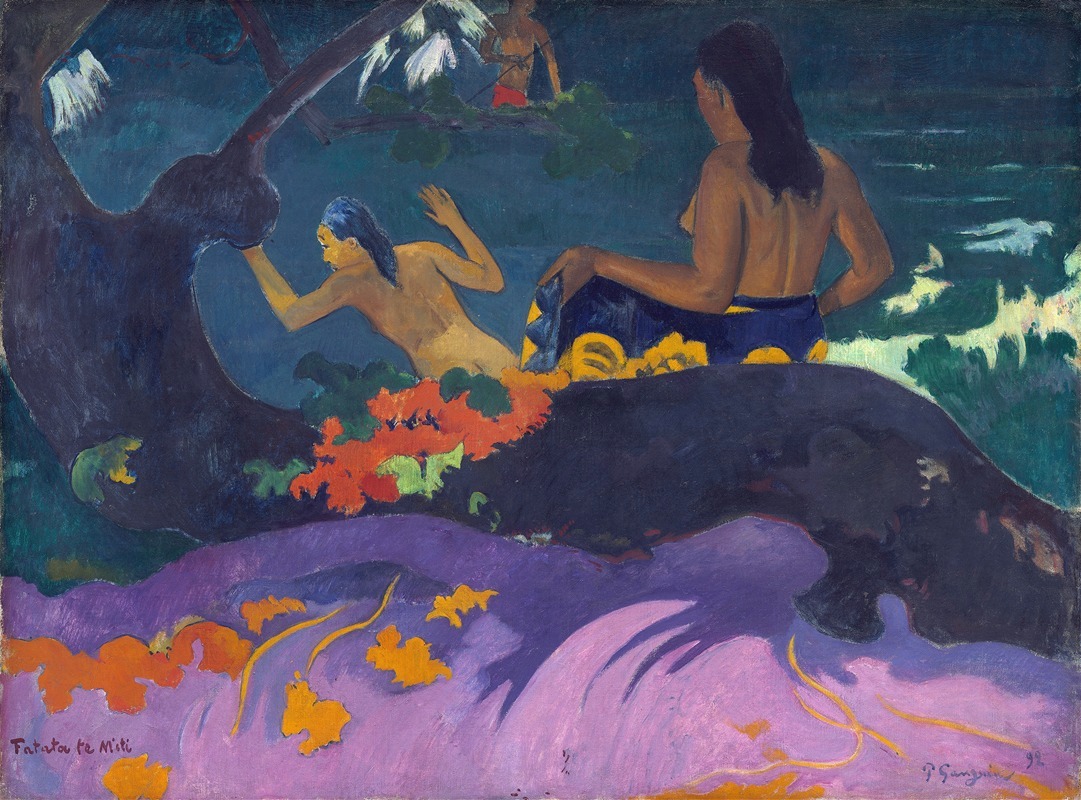
Fatata te Miti (By the Sea)
Paul Gauguin
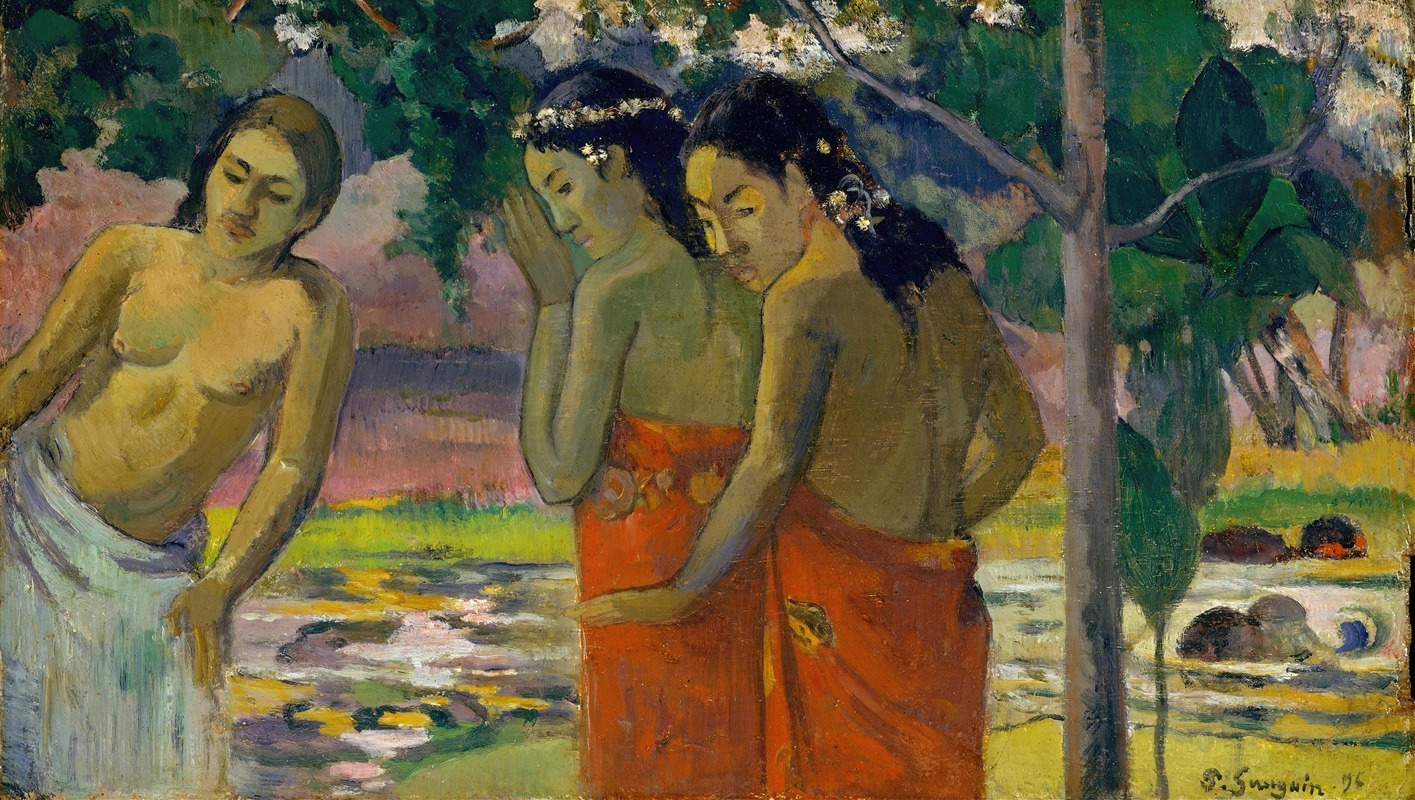
Three Tahitian Women
Paul Gauguin
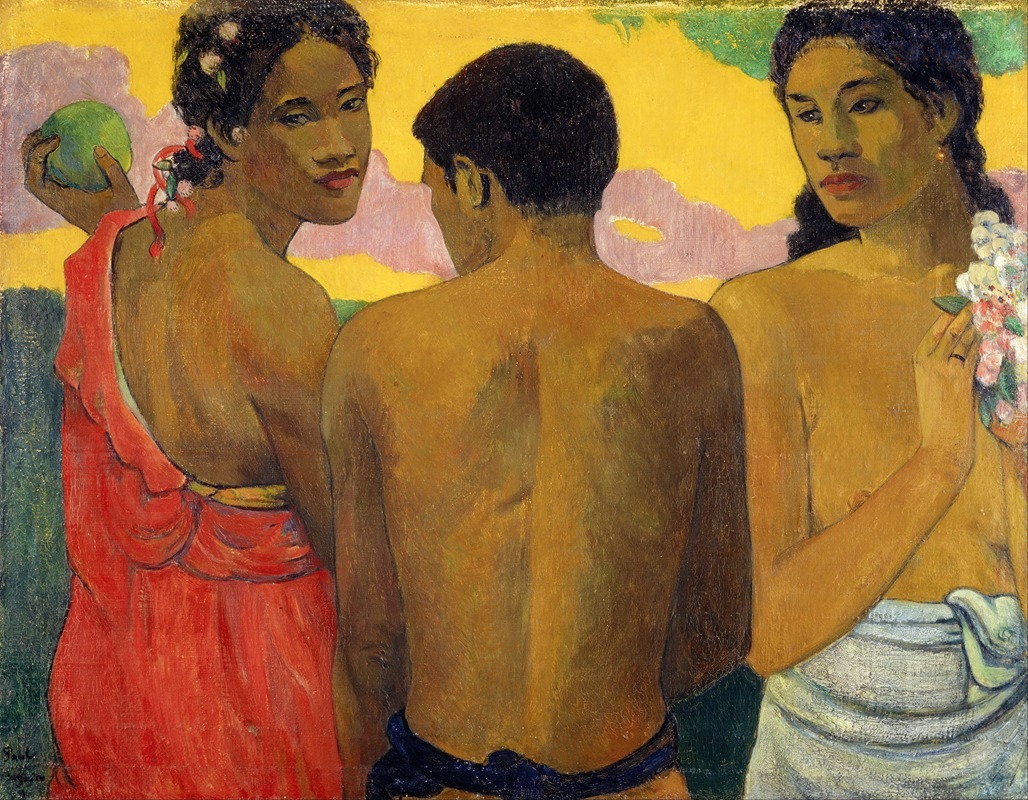
Three Tahitians
Paul Gauguin
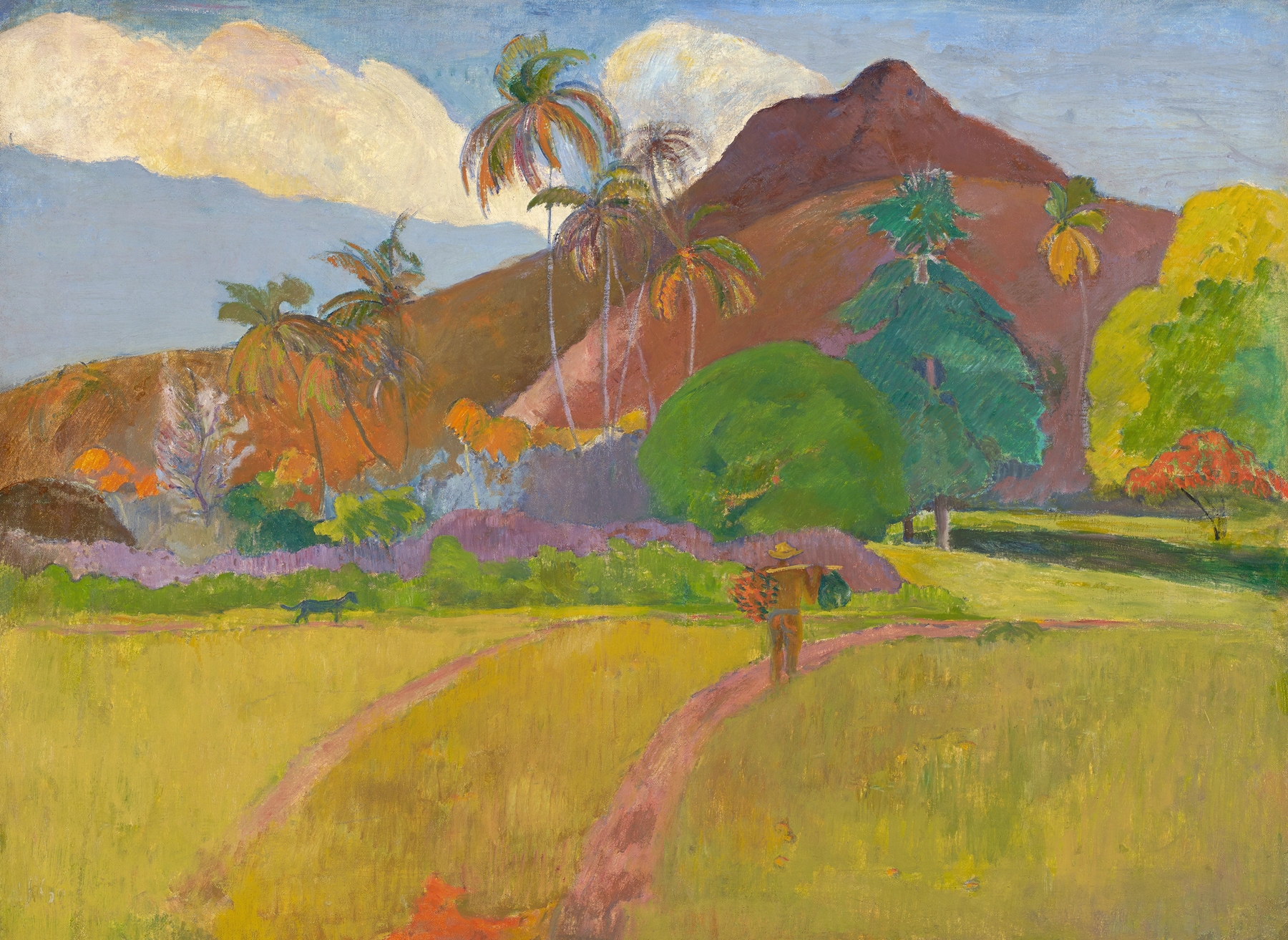
Tahitian Landscape
Paul Gauguin
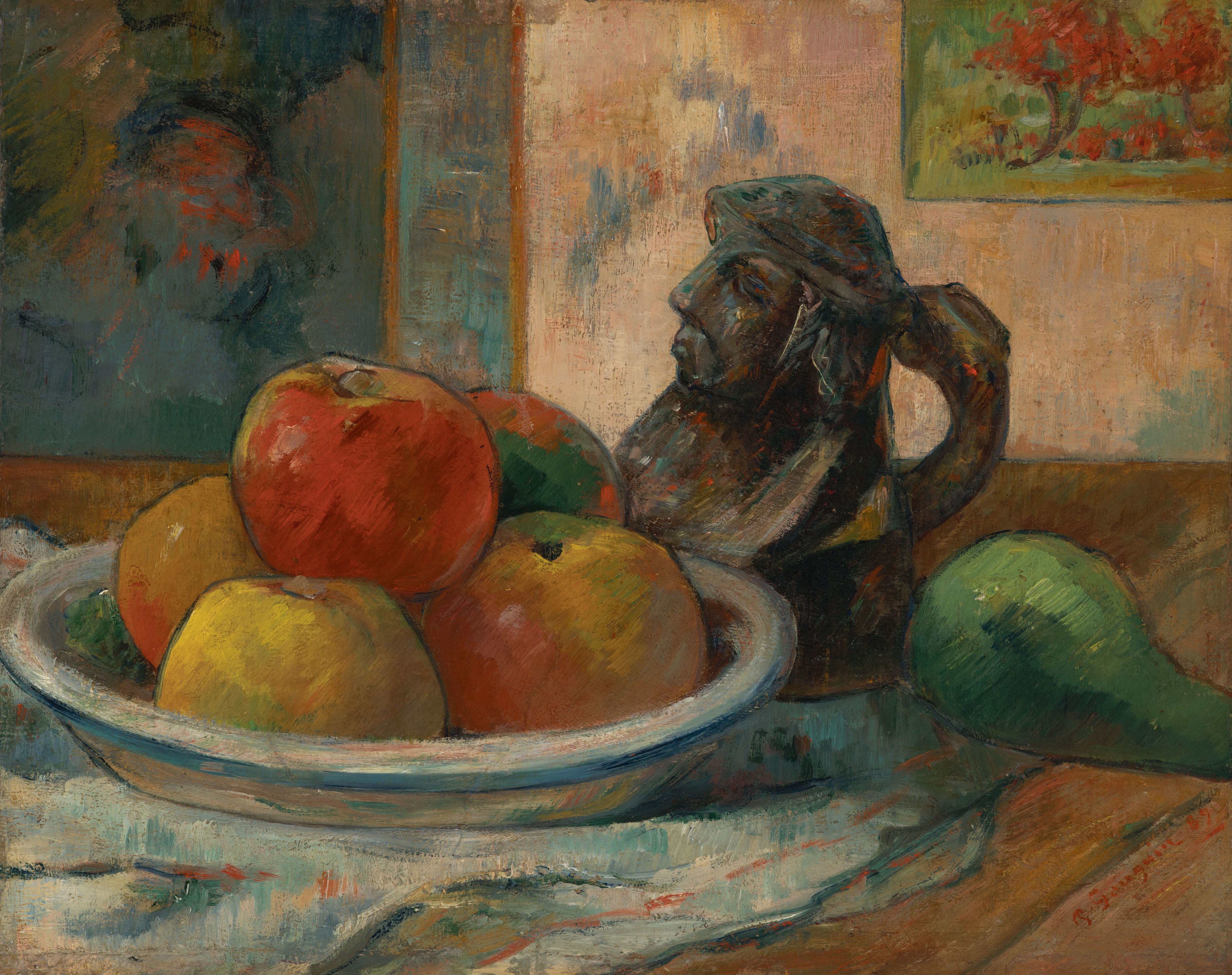
Still Life with Apples, a Pear, and a Ceramic Portrait Jug
Paul Gauguin
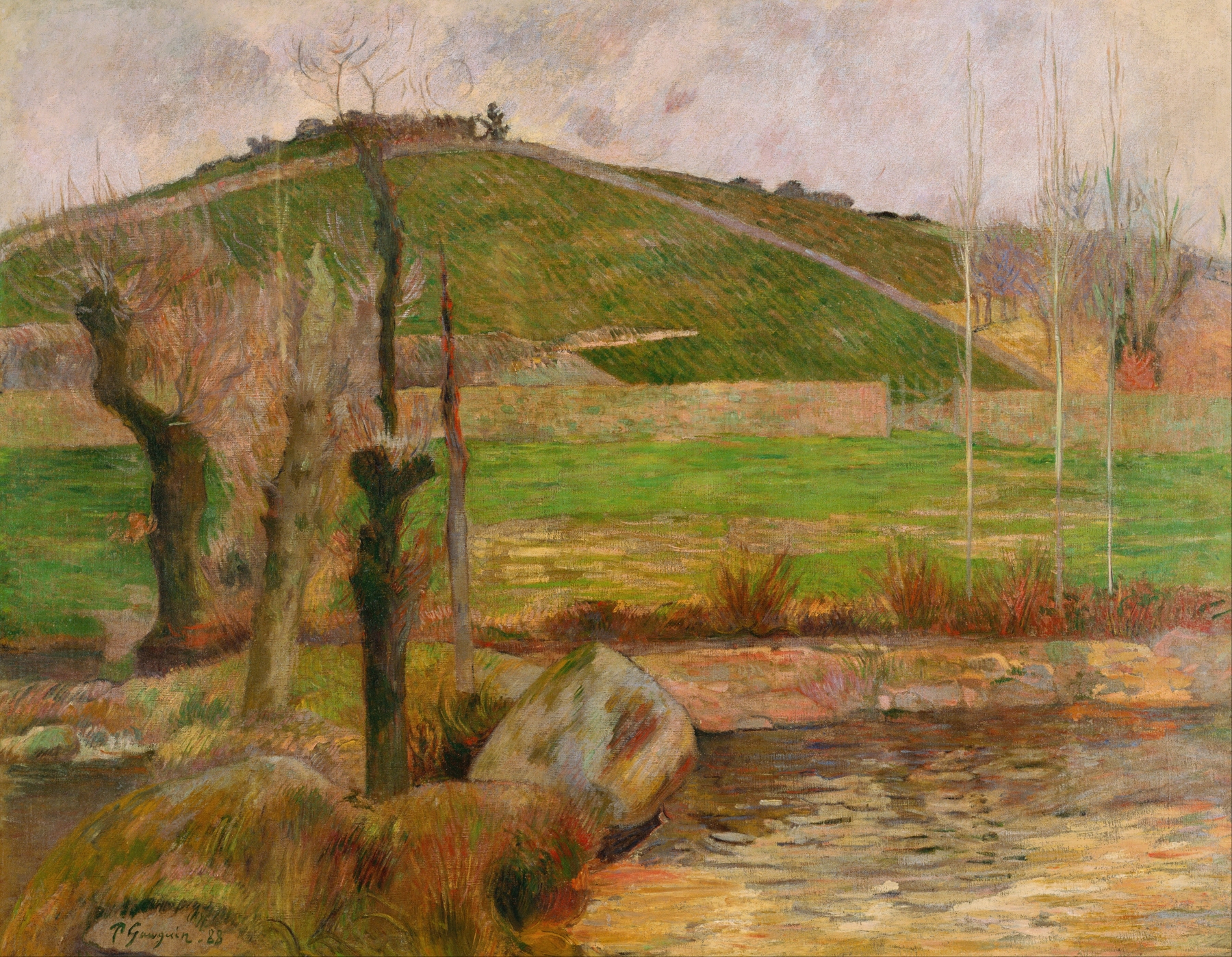
Landscape near Pont-Aven
Paul Gauguin

No te aha oe riri (Why Are You Angry?)
Paul Gauguin