
Figures in a Colonnade — History & Facts
Could a single brushstroke hold eternity? In Figures in a Colonnade, the delicate interplay of light and shadow invites us into a world where time bends and beauty reveals its transient nature. Look to the left at the majestic columns, their wear and tear telling stories of an age long past. The soft hues of ochre and muted greens evoke a sense of nostalgia, while dappled sunlight dances on the weathered surfaces, creating a mesmerizing contrast between illumination and shadow. The figures, both monumental and minute, blend seamlessly into their surroundings, embodying the passage of humanity against the backdrop of enduring architecture. Beneath the surface, the painting captures the tension between decay and permanence.
Notice how the vibrant life of the figures—caught in moments of conversation and contemplation—juxtaposes the crumbling colonnade, symbolizing the ephemeral nature of existence against the backdrop of history. Each stroke articulates not just a scene, but a philosophy: that beauty can thrive in decay, urging us to reflect on what remains when the vibrancy fades. In 1780, Hubert Robert created this piece amidst the sweeping changes of the Enlightenment, as artists began to explore the tension between nature and man-made structures. Living in Paris during a time of rich artistic exchange, Robert was influenced by the burgeoning Romantic movement.
His choice to depict a classical ruin, infused with human presence, speaks to an era grappling with both its illustrious past and the inevitability of decline.
More Artworks by Hubert Robert
Browse all →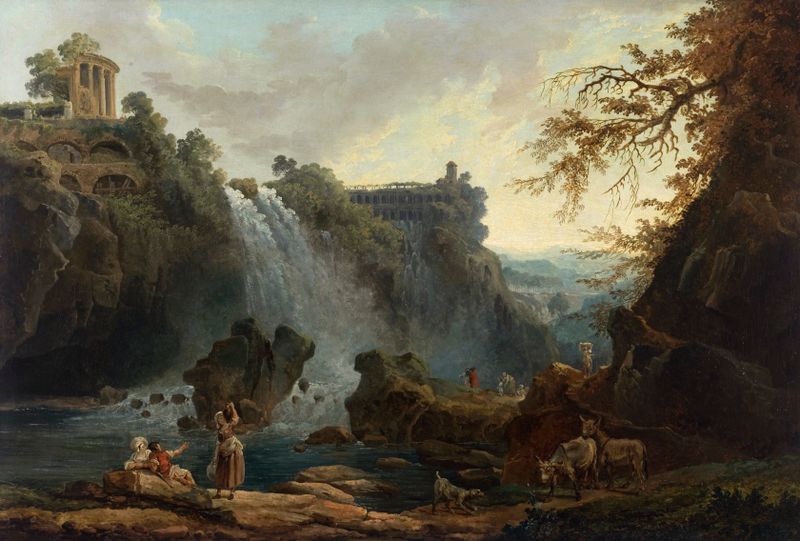
Les Cascatelles de Tivoli
Hubert Robert
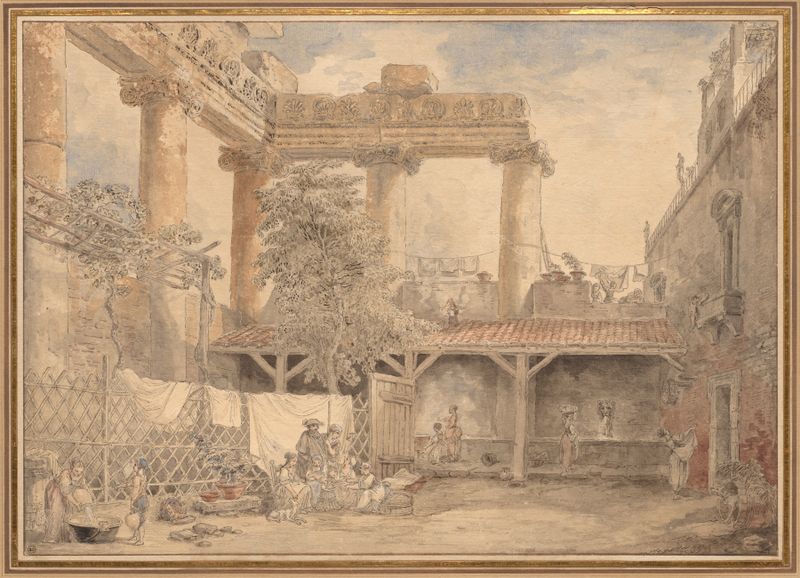
Roman Ruins, Villa Pamfili
Hubert Robert

The Rustic Bridge, Château de Méréville, France
Hubert Robert

The Portico of a Country Mansion
Hubert Robert

Architectural Capriccio
Hubert Robert

The Obelisk
Hubert Robert
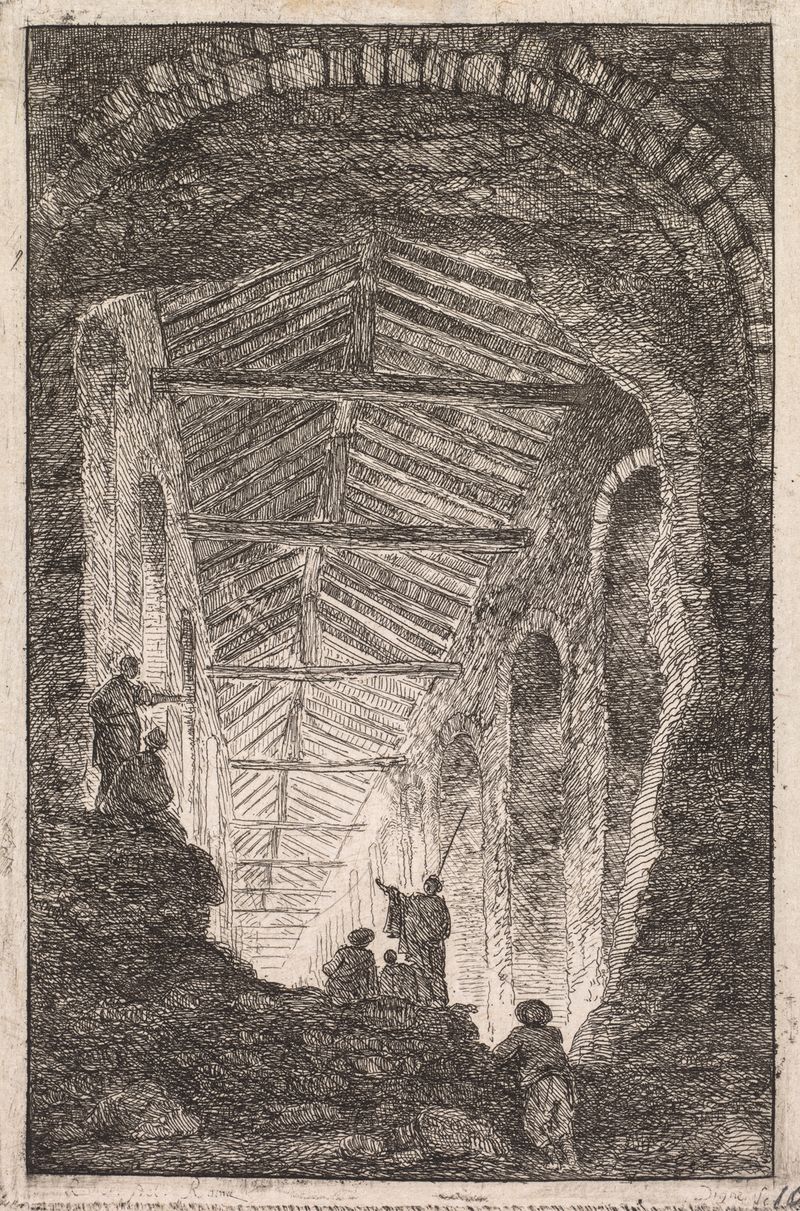
The Antique Gallery
Hubert Robert

L’incendie de l’Opéra, vu des jardins du Palais-Royal, le 8 juin 1781
Hubert Robert
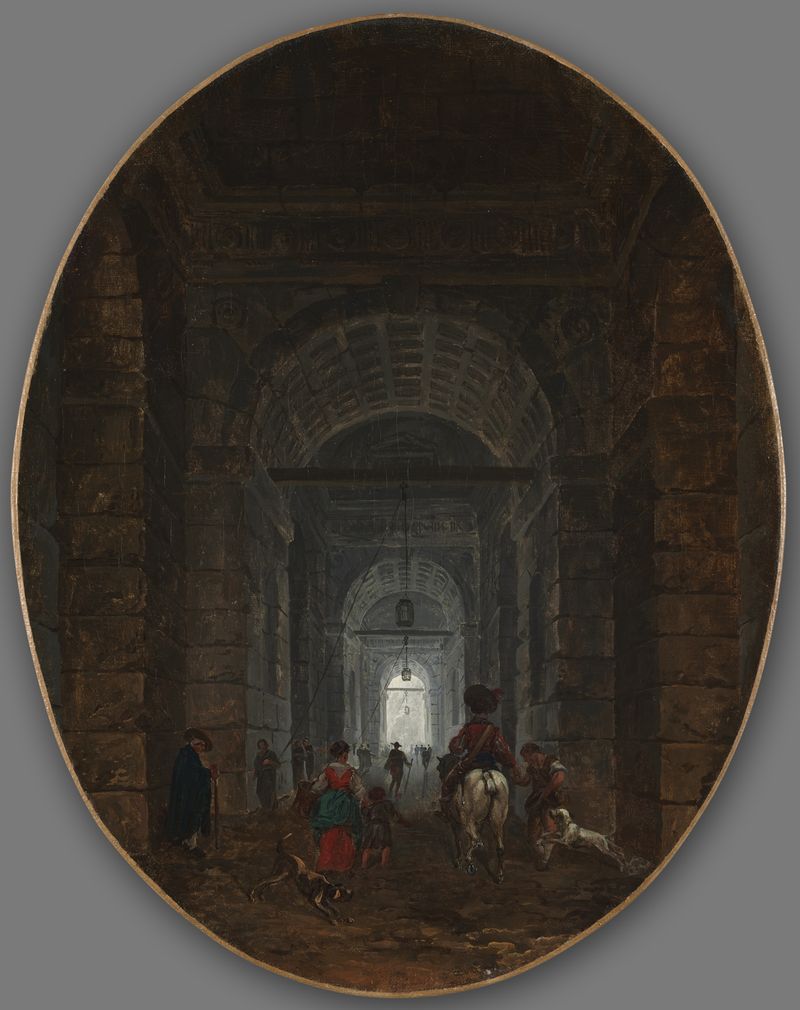
The Grotto of Posillipo
Hubert Robert

Architectural Capriccio with ruins of the Temple of Saturn and the Colosseum in the background
Hubert Robert
More Architecture Art
Browse all →
The statue of Liberty
Frédéric Auguste Bartholdi

View of Houses in Delft, Known as ‘The Little Street’
Johannes Vermeer

View of Houses in Delft, Known as ‘The Little Street’
Johannes Vermeer

The Cathedral in Rouen. The portal, Grey Weather
Claude Monet

The yellow house
Vincent van Gogh

The Church in Auvers-sur-Oise, View from the Chevet
Vincent van Gogh