Fishing cutters in the moonlit night — History & Facts
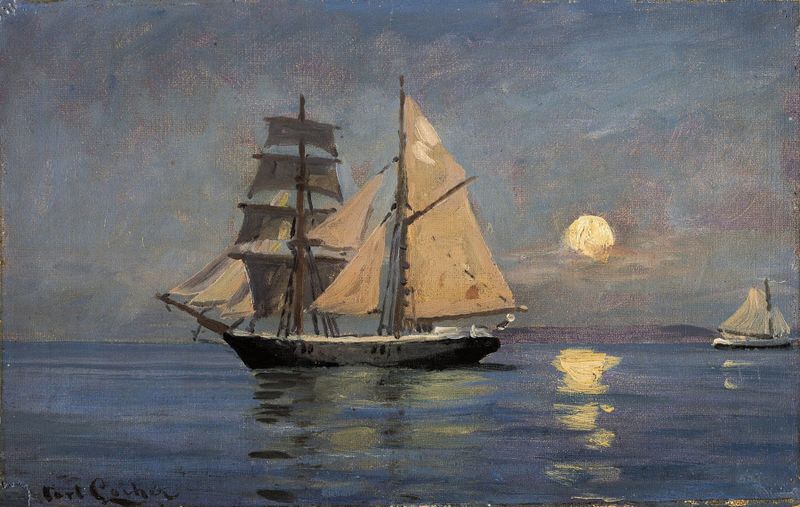
Did the painter know this moment would outlive them? In the quiet embrace of the night, the canvas breathes life into the serene yet haunting world of fishing cutters, illuminated by a silvery moon. The stillness evokes a sense of timelessness, inviting the viewer to ponder the fragile connection between man and nature, as the boats float like ghosts across the water. Look to the left at the silhoutted form of a fishing cutter, its sail billowing gently against the night sky. Notice how the moonlight dances on the waves, creating a shimmering path that guides the eye deeper into the tranquil scene.
The colors are rich yet muted, blending deep blues and soft grays, suggesting both the calm and the mystery of the sea at night. This interplay of light and shadow gives the painting a haunting depth, where every brushstroke tells the story of a night shared between the fishermen and the vast, indifferent ocean. Hidden within this serene surface are emotional nuances; the solitude of the fishermen, braving the uncertainty of the dark waters, speaks to the universal struggle against isolation. The contrast between the warm glow of the moon and the cool tones of the water reflects the tension between safety and peril, evoking the ever-present threat lurking beneath the placid surface.
Each boat becomes a vessel not just of fish, but of dreams, hopes, and the silent conversations between nature and man. In 1888, Carl Locher painted this piece during a period of artistic exploration and change in Denmark. Having settled in Skagen, a fishing village, he sought to capture the interplay of light and life around him. This work emerges from a time when realism was giving way to impressionism, reflecting the painter's desire to convey not just what he saw, but what he felt in the profound silence of the night, where every stroke of his brush was an homage to the fleeting moments of existence.