Flachlandschaft und niederer Wald — History & Facts
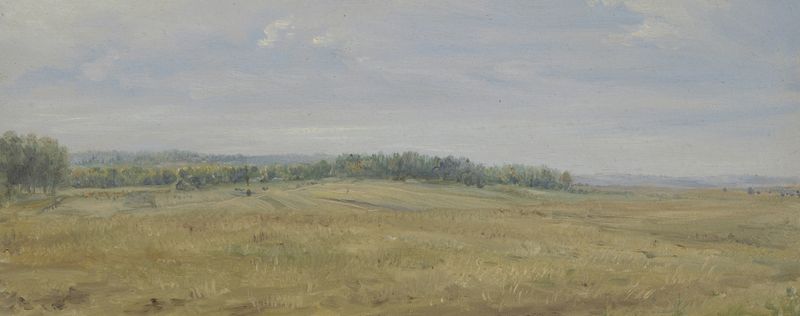
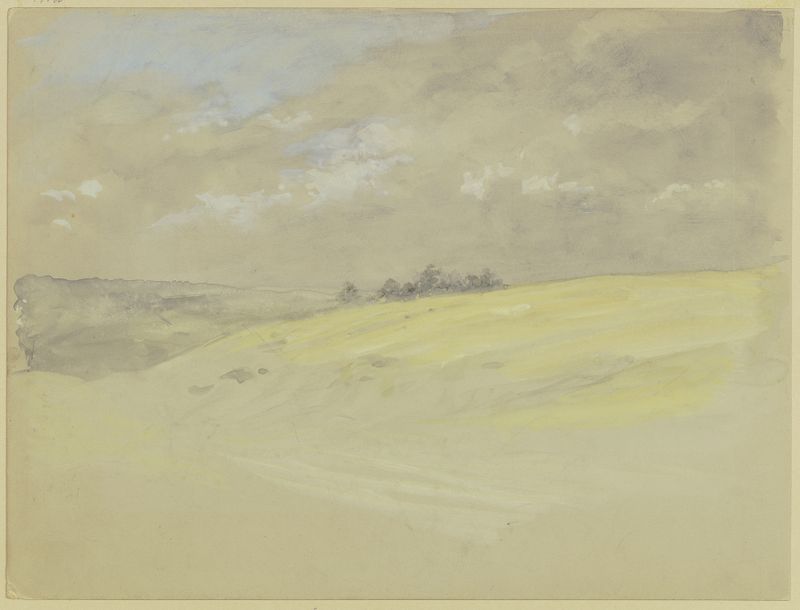
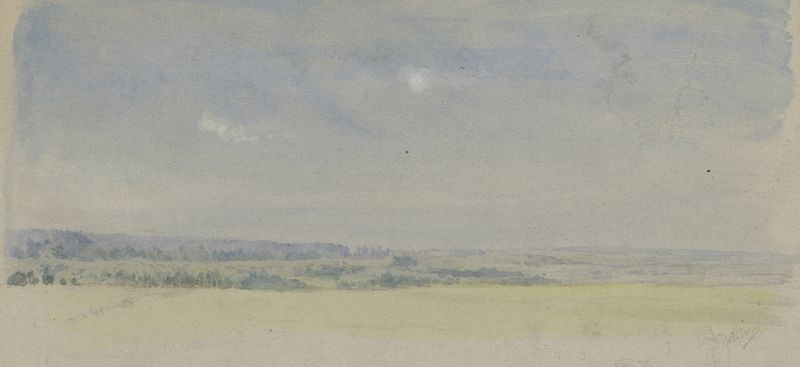
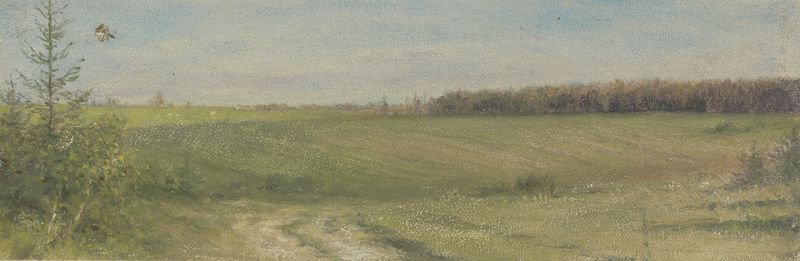
Could a single brushstroke hold eternity? In Flachlandschaft und niederer Wald, the artist captures a moment suspended in time, inviting viewers to linger on the fleeting beauty of nature and memory. Look to the foreground where gentle rolling hills unfold beneath a serene sky. The muted palette of greens and browns is punctuated by delicate touches of light, guiding the eye to the horizon where the landscape embraces the sky. Notice how the brushstrokes vary in texture, from the smooth, fading tones of the distant woods to the rougher, more tactile strokes in the grass, evoking both depth and distance.
This contrast creates a palpable sense of tranquility, as if the scene breathes in harmony with the viewer. The simplicity of the composition belies deeper emotional currents. The quiet woods, shrouded in soft light, seem to harbor stories waiting to be told, echoing with nostalgia that resonates beyond the canvas. Each element—be it a solitary tree or the interplay of light and shadow—suggests a yearning for connection to the past, a reminder of fleeting moments that shape our existence.
The painting serves as a portal, inviting contemplation about the beauty of what once was and the inevitable passage of time. Created during an undetermined period, the work reflects the artist's exploration of landscape painting, a genre that was gaining prominence in the 19th century. Wilhelm Amandus Beer was immersed in a world that craved the sublime, capturing the essence of nature's tranquility at a time when industrialization was transforming the landscape of Europe. This artwork stands as a testament to both personal and collective memory, blending the artist's experience with the broader artistic movements of his time.