Flat landscape with meadows — History & Facts
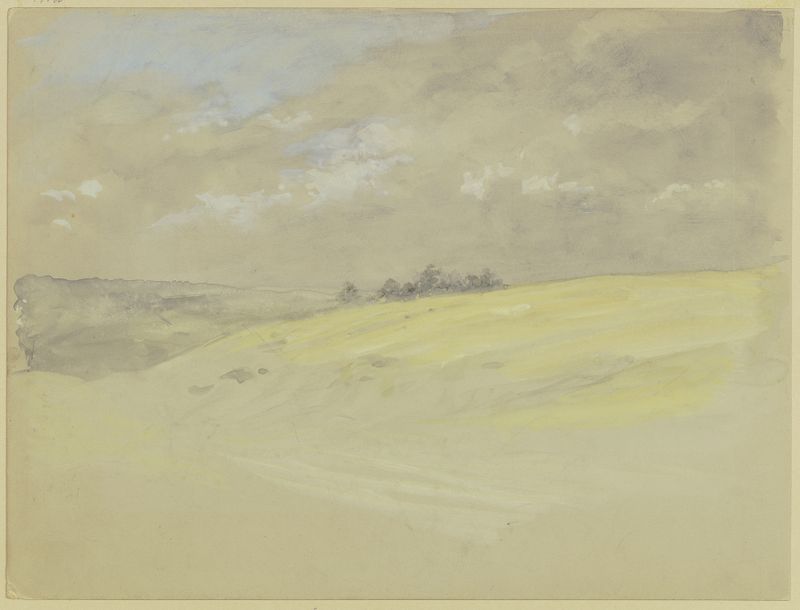
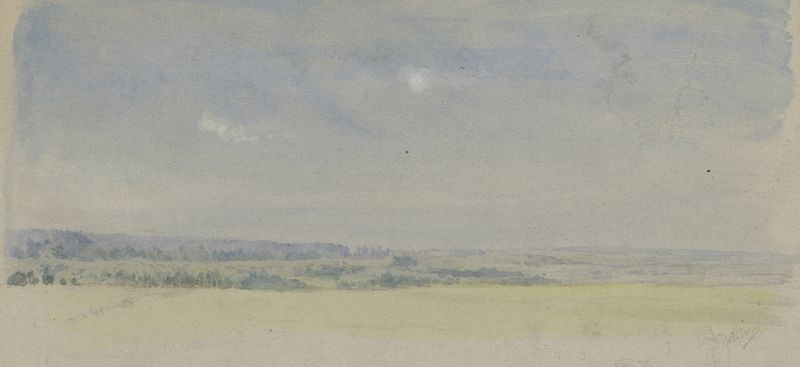
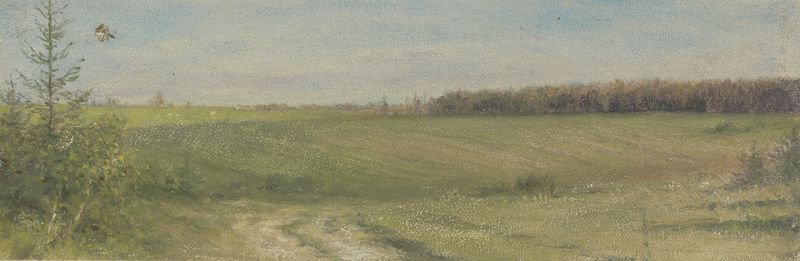
When did color learn to lie? This question lingers, hinting at the layers of emotion embedded within a seemingly simple landscape. In Flat Landscape with Meadows, desire weaves through the lush greens and golden hues, inviting a deeper exploration of the human connection to nature. Focus on the horizon, where the meadows stretch infinitely under a vast sky, painted in subtle gradients of blue and soft yellow. Notice how the artist employs broad, sweeping brushstrokes to create a sense of movement, as if the breeze dances across the fields.
The interplay of light and shadow breathes life into the scene, making each blade of grass seem to whisper stories of longing and tranquility. Yet, amid this serene expanse lies an undercurrent of tension. The flatness of the landscape evokes a sense of stagnation, a yearning for something just out of reach. The contrasting vibrant colors against muted tones suggest the duality of desire — the hope of fulfillment battling against the weight of unfulfilled dreams.
Small details, like the distant trees silhouetted against the sky, hint at the complexities of life beyond the horizon, embodying both peace and the ache of ambition. Wilhelm Amandus Beer created this piece during a time when Romanticism was shaping artistic expression, reflecting the emotional depth and connection to nature sought by many artists. The absence of a specific date suggests it may belong to a transitional phase in his career, a moment when he was exploring the boundaries of landscape painting. In this work, he encapsulates the essence of longing, inviting viewers to ponder their own desires while contemplating the beauty of the natural world.